
Chef Zohra
Boushnikha
A Ramadan sweet lighter than chebakia: fine milk dough drawn into threads, fried until crisp, then bathed in orange-blossom honey and shared from a generous plate.
A cooking platform built around craft, culture, and the stories behind what we eat.

Created by
A northern Moroccan tea biscuit shaped by the old hand machine: citrus-scented dough, sesame under the teeth, ridged ribbons baked pale gold and dipped at the ends in chocolate.
The whole charm is in the turning of the handle. You feed the dough into the makina, the hand grinder fitted with its cookie plate, and it comes out in ridged ribbons, ready to be cut into little fingers. If the dough is too soft, the ridges slump. If it's too stiff, you fight the machine. Keep it tender but obedient, that's the lesson.
Halwa l'Makina belongs to the 20th-century northern Moroccan biscuit repertoire, especially around Tétouan and the old Andalusi-influenced towns where tea tables carry both older pastries and newer home cookies. The dish takes its name from the household machine, usually a manual grinder with a shaped biscuit plate, which became common in Moroccan kitchens as imported metal kitchen tools spread through trade and urban markets. Its exact first date is not fixed, but its place is clear: a make-ahead celebration cookie for Eid, weddings, and afternoon tea.
Quantity
3 large
Quantity
150g
Quantity
120ml
Quantity
80g
melted and cooled
Quantity
1 tsp
Quantity
1 tsp
Quantity
2 tbsp
Quantity
2 tsp vanilla sugar or 1 tsp extract
Quantity
80g
toasted and cooled
Quantity
550g, plus more only if needed
Quantity
12g
Quantity
1/4 tsp
Quantity
150g
chopped, for dipping
Quantity
1 tsp
for the chocolate
| Ingredient | Quantity |
|---|---|
| eggs | 3 large |
| granulated sugar | 150g |
| neutral oil | 120ml |
| unsalted buttermelted and cooled | 80g |
| orange zest | 1 tsp |
| lemon zest | 1 tsp |
| orange blossom water | 2 tbsp |
| vanilla sugar or vanilla extract | 2 tsp vanilla sugar or 1 tsp extract |
| sesame seedstoasted and cooled | 80g |
| all-purpose flour | 550g, plus more only if needed |
| baking powder | 12g |
| fine sea salt | 1/4 tsp |
| dark chocolatechopped, for dipping | 150g |
| neutral oilfor the chocolate | 1 tsp |
Toast the sesame seeds in a dry pan over medium heat, stirring often, until they smell nutty and turn just a shade deeper. Tip them onto a plate to cool. Don't add them hot to the dough, or they soften the butter and change the texture.
In a wide bowl, whisk the eggs and sugar until the sugar begins to dissolve and the mixture looks lighter. Whisk in the oil, melted butter, orange zest, lemon zest, orange blossom water, and vanilla. It should smell like a tea table before the flour even arrives.
Stir in the toasted sesame. Mix the flour, baking powder, and salt, then add them gradually with your hand or a sturdy spoon. Stop when the dough is smooth, soft, and no longer sticky. La balance est dans les yeux, the scale is in the eyes: you may need a spoonful more flour, but don't make the dough dry.
Cover the dough and let it rest for 15 minutes at room temperature. This short rest lets the flour drink and makes the dough easier to push through the makina without tearing.
Heat the oven to 180°C. Fit a manual grinder or cookie press with the ridged plate. Feed in handfuls of dough and turn the handle steadily, catching the ridged strip as it comes out. Cut into 7 to 8 cm fingers and lay them on lined baking sheets, leaving a little space between them.
Bake for 12 to 15 minutes, until the bottoms are lightly golden and the tops stay pale with the ridges clear. These are tea biscuits, not dark cookies. Let them firm on the tray for 5 minutes, then move them to a rack.
Melt the chocolate gently with 1 teaspoon of oil until glossy. Dip one or both ends of each cooled biscuit, then set them on parchment until the chocolate firms. Serve with mint tea and make the plate fuller than you think you need. A table is a door you leave open.
1 serving (about 25g)
Culinary guides, cultural storytelling, and the editorial depth that makes cooking meaningful.
Discover Culinary ExplorerChef Zohra
A Ramadan sweet lighter than chebakia: fine milk dough drawn into threads, fried until crisp, then bathed in orange-blossom honey and shared from a generous plate.
Chef Zohra
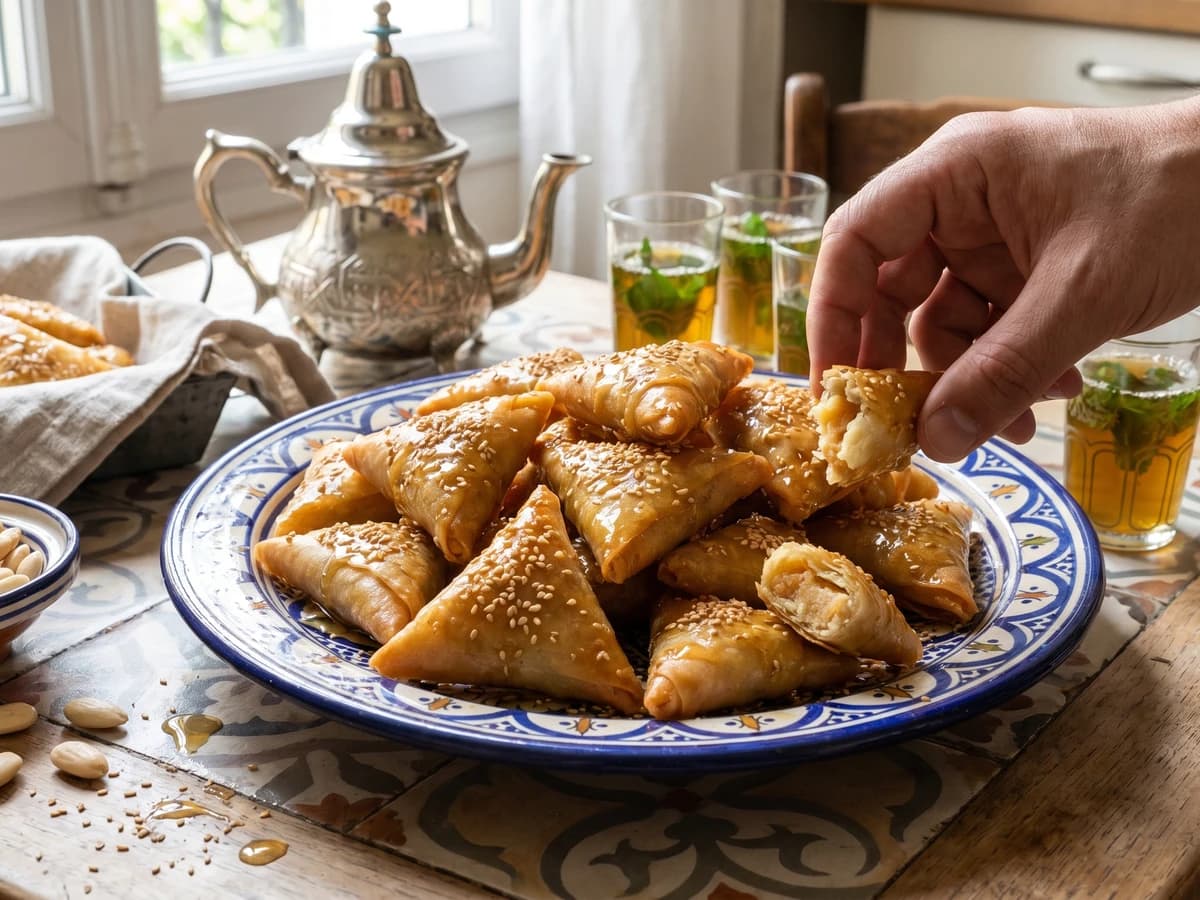
Tissue-thin warqa folded into small triangles around orange-blossom almond paste, fried until gold, then dipped warm into honey. This is the sweet Fassi briouat that makes tea feel like a feast.

Chef Zohra
The flower of the Ramadan table: dough scented with toasted sesame, anise, saffron, and orange blossom water, fried crisp, then soaked in warm honey beside harira.

Chef Zohra
Slim warqa cigars filled with orange-blossom almond paste, fried until crisp under the teeth, then soaked in warm honey for the festive table.