Culinary Explorer
A cooking platform built around craft, culture, and the stories behind what we eat.
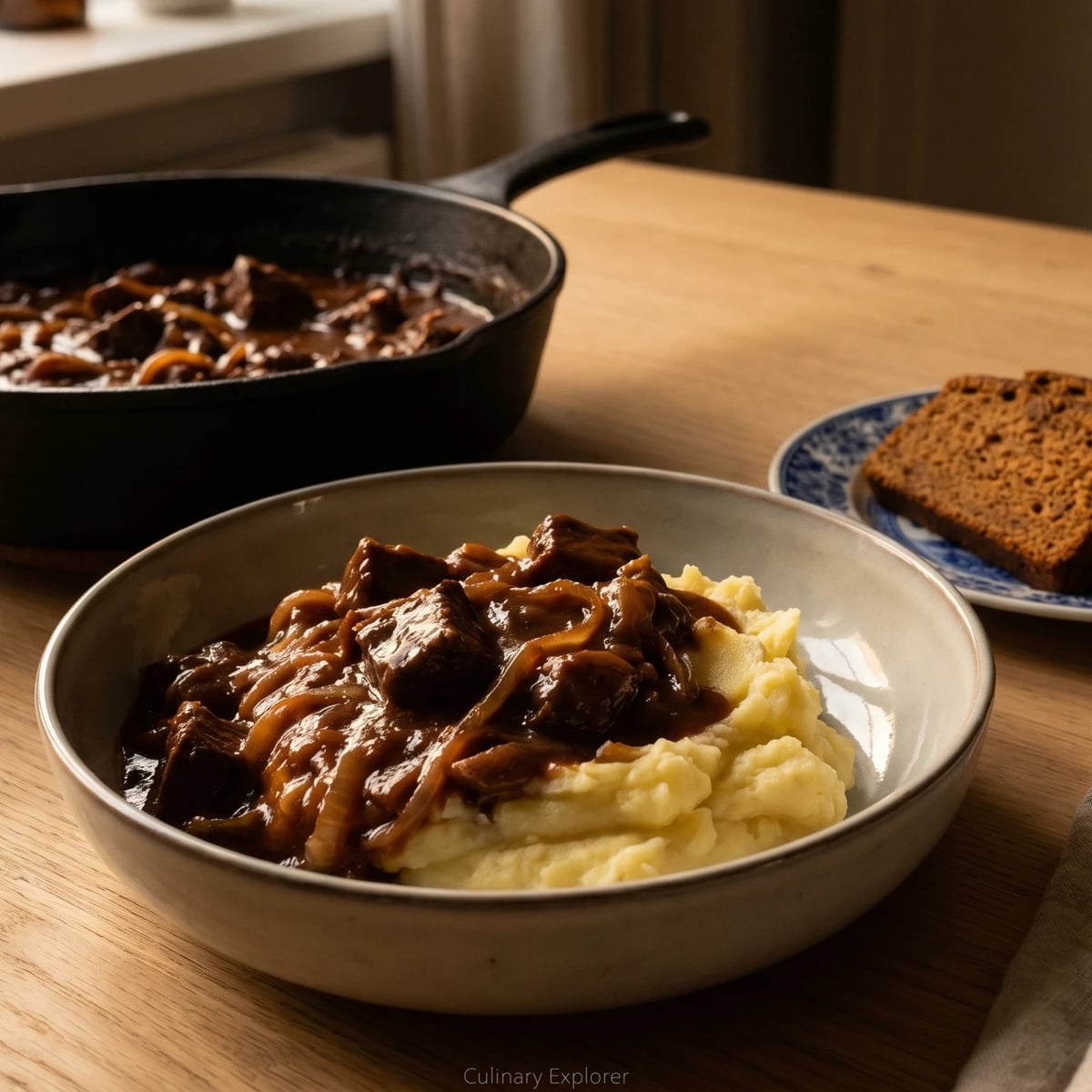
Hachee met Kruidkoek
Created by Chef Joost
The name means chopped, but the soul is patience: beef, a mountain of onions, vinegar, bay, clove, and spiced cake melting into the old Dutch Christmas stew.
In my grandmother's second notebook, hachee sits in the winter pages, the ones that smell faintly of onions even now. Not because the paper remembers, no, because every Dutch family recipe book has one page where vinegar, bay leaf, clove, and patience have left their mark. At Christmas it came to table beside red cabbage and potatoes, darker than it had any right to be, with kruidkoek, spiced breakfast cake, melted into the sauce like a spice merchant hiding in plain sight.
But let me tell you a secret. Hachee sounds thoroughly Dutch because it behaves thoroughly Dutch: frugal, steady, a little suspicious of ornament. The name already tells you otherwise. It comes from French hachee, chopped, from hacher, to chop. It once spoke of cut-up meat made useful again; our version uses fresh stewing beef because modern prosperity has made leftovers scarce (a historical problem I accept without tears).
The kruidkoek is the cleverness. A slab of dark spiced cake, heavy with cinnamon, clove, ginger and syrup, thickens the sauce while giving it the sweet-sour depth old Dutch meat dishes love. Vinegar sharpens, onions sweeten, the cake gathers everything into a glossy brown gravy. Hou het altijd simpel, always keep it simple: brown well, cook the onions properly, let the pot murmur until the meat yields. Then stop fussing and let it rest. Hachee is better after it has slept.
Ingredients
beef chuck or stewing beef
Quantity
1 kg
cut into 4 cm pieces and patted dry
unsalted butter
Quantity
50g
neutral oil
Quantity
2 tablespoons
| Ingredient | Quantity |
|---|---|
| beef chuck or stewing beefcut into 4 cm pieces and patted dry | 1 kg |
| unsalted butter | 50g |
| neutral oil | 2 tablespoons |
Where cooking meets culture.
Culinary guides, cultural storytelling, and the editorial depth that makes cooking meaningful.
Discover Culinary Explorer