Culinary Explorer
A cooking platform built around craft, culture, and the stories behind what we eat.
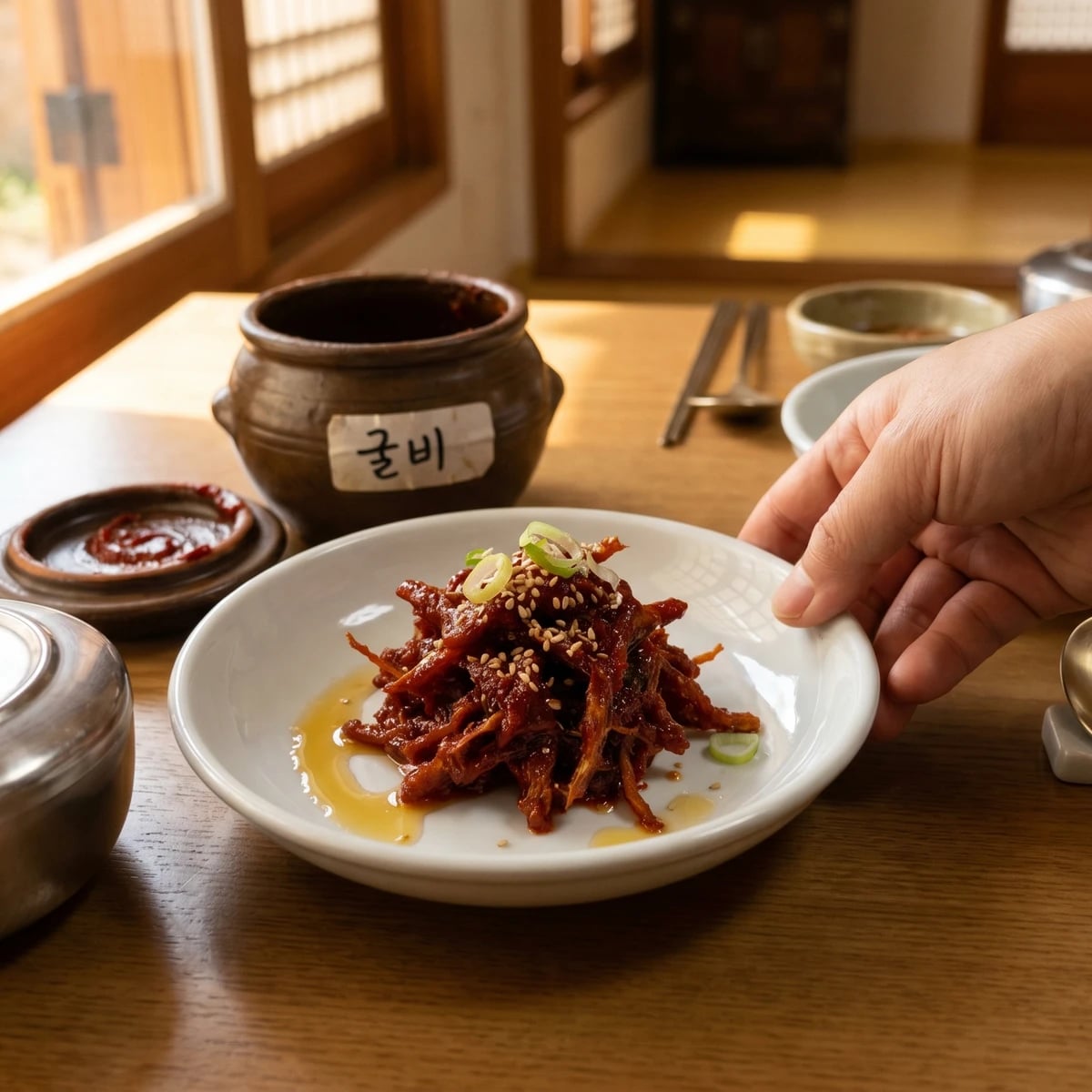
Gulbi-jangajji (Gochujang-Cured Dried Croaker)
Created by Chef Jeong-sun
Salted dried croaker from the Jeolla preserved table, pulled clean from the bone, dried again, then cured in a restrained gochujang paste for small bites over rice.
Gulbi-jangajji lives or dies before the gochujang touches it. Pull the flesh off the bone first. After curing, the paste hides every fine bone, and then a careful dish becomes a punishment at the table. My teacher would tap the plate once and say nothing. That was worse than scolding.
This is not a dish you eat by the bowl. It is a preserved banchan, salty, deep, and meant for one chopstickful against hot rice. Jeolla tables know how to make a little strong thing carry a meal, and gulbi does that work beautifully when you don't bury its own flavor under sugar and chili. The croaker should still taste like dried fish from the sea wind, not like gochujang with a memory of fish.
Tonight this asks you for patience in your hands: wiping, steaming lightly, boning while warm, shredding along the grain, and drying the flesh again so the paste clings instead of turning loose and wet. 손맛 is real; I measure it anyway. Write down the saltiness of the gulbi you bought, because the next bundle may need less soy sauce, and memory is a borrowed bowl.
Ingredients
dried salted yellow croaker (gulbi)
Quantity
3 medium, about 450 to 500g whole
wiped clean, steamed, boned, and shredded
gochujang (Korean red chili paste)
Quantity
1/2 cup
rice syrup (jocheong) or honey
Quantity
2 tablespoons
| Ingredient | Quantity |
|---|---|
| dried salted yellow croaker (gulbi)wiped clean, steamed, boned, and shredded | 3 medium, about 450 to 500g whole |
| gochujang (Korean red chili paste) | 1/2 cup |
| rice syrup (jocheong) or honey | 2 tablespoons |
Where cooking meets culture.
Culinary guides, cultural storytelling, and the editorial depth that makes cooking meaningful.
Discover Culinary Explorer