Culinary Explorer
A cooking platform built around craft, culture, and the stories behind what we eat.
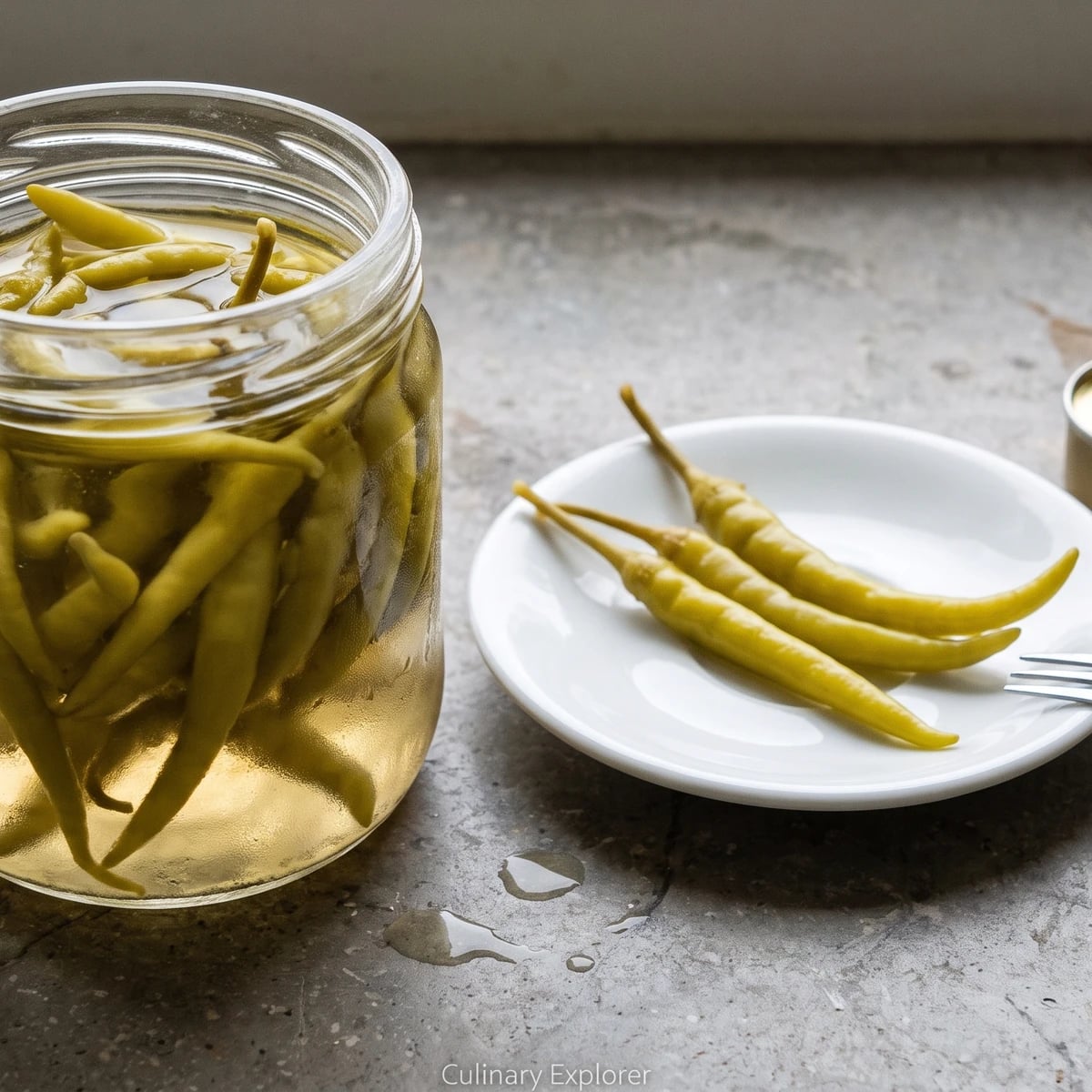
Guindillas de Ibarra en Vinagre
Created by Chef Isabel
Ibarra's slender green piparras, packed raw under cool white wine vinegar brine, stay mild, firm and gently tangy, exactly what a proper Donostia Gilda needs.
Guindillas de Ibarra en vinagre are Basque, from Ibarra in Gipuzkoa: young piparras preserved whole in white wine vinegar, water and salt until their bright green settles to olive and their grassy bite turns gently tangy. The thin skin, narrow body and mild heat make this a different pickle from a thick pepperoncino or a fierce green chilli. It is the backbone of a proper Gilda, not decoration on the skewer.
The method that decides the jar is simple. Dissolve the salt, cool the liquid completely, then add the vinegar and cover the raw peppers. Hot brine cooks their delicate walls and leaves them limp. Keep them under the liquid and give them time. Pésalo, no lo adivines, weigh it, don't guess, because the balance of vinegar, water and salt is what preserves their clean, mild character.
If Ibarra piparras don't grow where you are, use the youngest, narrowest mild green frying chillies you can find. Turkish sivri biber is the closest useful substitute, with shishito at a pinch. The first may carry more heat, while shishitos are shorter, wrinklier and less tidy on a Gilda. The jar cannot honestly bear Ibarra's name, but the method remains sound. No hace falta haber pisado España.
Give them two weeks before judging them, and three or four if you can wait. My margin beside this preserve says only, "brine cold, peppers under." Do those two things and it comes out. Siempre sale, si lo sigues.
Ingredients
fresh piparras de Ibarra
Quantity
300g, about 30 to 36
washed, dried and stems trimmed to 1cm
white wine vinegar
Quantity
375ml
labelled 5% acidity or higher
filtered water
Quantity
375ml
| Ingredient | Quantity |
|---|---|
| fresh piparras de Ibarrawashed, dried and stems trimmed to 1cm | 300g, about 30 to 36 |
| white wine vinegarlabelled 5% acidity or higher | 375ml |
| filtered water | 375ml |
Where cooking meets culture.
Culinary guides, cultural storytelling, and the editorial depth that makes cooking meaningful.
Discover Culinary Explorer