
Chef Lupita
Agua de Alfalfa
Ciudad de México's highland market agua fresca, fresh alfalfa blended with pineapple and lime until bright green, strained clean, and poured cold from the vitrolero.
A cooking platform built around craft, culture, and the stories behind what we eat.

Created by
Costa Chica nanche steeped with sugar, salt, and cold water until the fruit perfumes the jar. Tart, floral, inexpensive, and made for drinking outside.
Guerrero's Costa Chica knows nanche. You see it in market buckets in Ometepec, Cuajinicuilapa, and along the hot roads toward the coast, little yellow fruits with thin skin, strong perfume, and a flavor that does not apologize for being sour.
This agua is not a blender drink. The women who make it well bruise the fruit just enough to open the flesh, then let water and sugar pull out the flavor. The pit stays inside. Break the pits and you bring bitterness into the jar. No me vengas con atajos. A good agua fresca is not always blended to death.
The defining ingredient is ripe nanche, yellow and fragrant, not green and hard. If the mercado is not selling good nanche, make agua de jamaica or tamarindo today. Mexican grandmothers cook with the season in front of them. Cada estado, su propia cocina, and this one tastes like Guerrero heat, clay cups, and fruit you eat with your fingers after the glass is empty.
Nanche, also called nance in parts of Central America, is the fruit of Byrsonima crassifolia, a tropical tree native to Mexico and widely established in the Pacific and southern lowlands. In Guerrero, especially the Costa Chica and Tierra Caliente, the fruit is used fresh in aguas frescas, preserved in syrup, and fermented into local drinks. Its strong aroma and short harvest window kept it tied to local markets rather than national supermarket supply chains, which is why many Mexicans know it as a regional fruit, not an everyday national one.
Quantity
2 cups
yellow and fragrant, rinsed well
Quantity
3/4 cup, plus more to taste
Quantity
1/4 teaspoon
Quantity
8 cups
divided
Quantity
2 tablespoons
only if the fruit needs brightness
Quantity
for serving
| Ingredient | Quantity |
|---|---|
| ripe fresh nancheyellow and fragrant, rinsed well | 2 cups |
| cane sugar | 3/4 cup, plus more to taste |
| fine sea salt | 1/4 teaspoon |
| cold waterdivided | 8 cups |
| fresh lime juice (optional)only if the fruit needs brightness | 2 tablespoons |
| ice (optional) | for serving |
Pick through the nanche and discard any fruit that is blackened, moldy, or hard green. Ripe nanche should be yellow, soft enough to give under your fingers, and strongly fragrant. If it smells flat, the agua will taste flat. Si no conoces el mercado, no conoces la cocina.
Rinse the nanche in two changes of cool water. Drain well. Put the fruit in a wide clay bowl or glass pitcher and press each one gently with clean fingers or a wooden spoon. You want to split the skin and bruise the flesh, not crush the pits. The pit is hard and bitter. Leave it alone.
Add the cane sugar and salt to the bruised fruit. Rub everything together with your hand for one minute, then let it sit for 15 minutes. The sugar will draw juice from the nanche and turn glossy around the fruit. The salt is not there to make it salty. It makes the fruit taste more like itself.
Add 4 cups of the cold water and stir hard for one minute, pressing the fruit against the side of the bowl without breaking the pits. Let it stand for 20 minutes. The water should turn pale golden and smell floral, tart, and a little musky. That perfume is the point of nanche.
Add the remaining 4 cups cold water. Taste. Add more sugar if the nanche is sharply sour. Add the lime juice only if the fruit tastes dull, not because every agua fresca needs lime. This is nanche water, not lemonade wearing a costume. Stir until the sugar is fully dissolved.
Serve cold over ice, spooning several whole nanche fruits into each glass. You drink the agua and eat the fruit as you go, working the flesh off the pit with your teeth. That is part of the pleasure. Recetas probadas y garantizadas.
1 serving (about 295g)
Culinary guides, cultural storytelling, and the editorial depth that makes cooking meaningful.
Discover Culinary ExplorerChef Lupita
Ciudad de México's highland market agua fresca, fresh alfalfa blended with pineapple and lime until bright green, strained clean, and poured cold from the vitrolero.
Chef Lupita
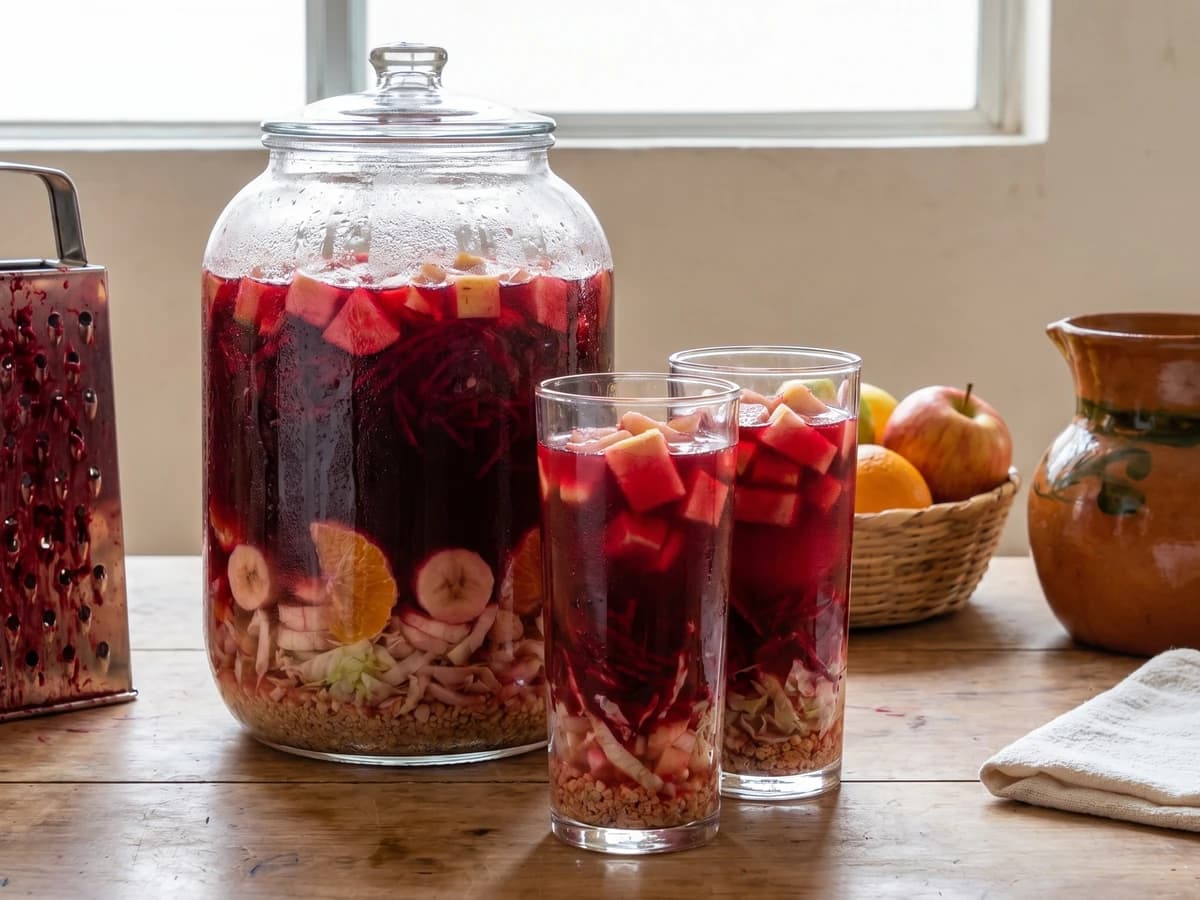
Aguascalientes' Lenten agua fresca, jewel-red from cooked beet and full of apple, banana, orange, lettuce, and ground peanuts, served cold when Holy Week meets the Feria de San Marcos.

Chef Lupita
Sonora and Sinaloa's creamy malted barley water, built on toasted cebada perla, Mexican canela, vanilla from Papantla, and evaporated milk. Pink-beige, rich, and served cold over heavy ice in a heavy glass tumbler. Liquid cookie comfort the northwest way.

Chef Lupita
Yucatán's everyday tonic of boiled chaya leaves blended with lima agria, sugar, and ice. The bright green jarra that sits on every Peninsula table from Mérida to Valladolid.