
Chef Klaus
Bethmännchen
Frankfurt's Advent marzipan ball is small, pale gold, and exacting: real almond paste, rosewater, three almond halves pressed on firmly, then a short bake for gloss.
A cooking platform built around craft, culture, and the stories behind what we eat.
Created by
The weeknight milk pudding that lives or dies in one minute: semolina rained into moving vanilla milk, then rested so the grains swell soft instead of turning into paste.
Grießbrei is not feast food; it's the sweet milk supper of cold evenings, school nights, and the Sunday when the soup was the work and dessert had to come from the cupboard. It doesn't belong to one province the way Sauerbraten belongs to the Rhineland. It belongs wherever milk and grain sat in the pantry.
Still, the regions argue. In the north, a spoon of Rote Grütze, red berry compote, cuts the pale pudding sharp and ruby. In the south and along the Alpine edge, the same bowl often gets butter, cinnamon sugar, and sometimes egg for more body. Im Norden anders, im Süden anders.
The minute that decides it is the minute the semolina goes in. I heat the milk until it trembles at the edge, then rain in the Grieß, semolina, while the whisk is already moving. Dump it in and each grain gels on the outside before the centre drinks milk, so you trap dry pockets and spend supper chasing lumps. Runter mit der Temperatur after that; milk scorches before it forgives you.
This is thrift cooking, but not thin cooking. A litre of milk and a scoop of grain feed four, and yesterday's thick leftovers can be chilled, sliced, and fried in butter. Weggeworfen wird nichts. Finish with a knob of butter, cinnamon sugar, or fruit put up from summer. Schön ist, was schmeckt.
The word Grieß comes from Old High German grioz, meaning coarsely ground grain; Grütze, the northern berry topping often spooned over it, belongs to the same old family of coarse-grain words. By the nineteenth century, German household books such as Henriette Davidis's 1845 Praktisches Kochbuch had fixed sweet milk dishes like semolina puddings in the written home kitchen. The split on the bowl still follows the map: northern kitchens like the acid of Rote Grütze, while the south and Alpine edge often serve Grießkoch with butter, cinnamon sugar, and sometimes egg.
Quantity
1 litre
Quantity
100g
Quantity
40g
Quantity
8g vanilla sugar or 1 teaspoon extract
Quantity
1 small strip
Quantity
1 pinch
Quantity
25g
diced, plus more for serving if liked
Quantity
1
separated
Quantity
2 tablespoons sugar + 1 teaspoon ground cinnamon
mixed for serving
Quantity
250g
for serving
| Ingredient | Quantity |
|---|---|
| whole milk | 1 litre |
| fine soft wheat semolina (Weichweizengrieß) | 100g |
| sugar | 40g |
| vanilla sugar or vanilla extract | 8g vanilla sugar or 1 teaspoon extract |
| lemon peel (optional) | 1 small strip |
| fine salt | 1 pinch |
| unsalted butterdiced, plus more for serving if liked | 25g |
| egg (optional)separated | 1 |
| cinnamon sugarmixed for serving | 2 tablespoons sugar + 1 teaspoon ground cinnamon |
| Rote Grütze or apple compote (optional)for serving | 250g |
Rinse a heavy saucepan with cold water and pour it out; the wet film gives the milk a cleaner start against the metal, which helps keep the first layer from catching. Add the milk, 40g sugar, vanilla, lemon peel if using, and salt. Bring it over medium heat until the surface trembles and tiny bubbles collect at the edge; a hard boil throws milk up the pan and catches on the bottom before the grain has done anything useful.
Take the pan off the heat for ten seconds, pull out the lemon peel, then set the whisk moving and sprinkle in the semolina in a steady thin stream. The whisk must move before the grain lands, because each little grain swells as soon as hot milk hits it; dump it in a mound and the outside gels around dry pockets. Whisk hard for 30 seconds, scraping the corners.
Set the pan back over low heat, runter mit der Temperatur, and cook for 3 to 5 minutes, stirring, until the pudding thickens and a spoon leaves a slow track that closes behind it. Low heat gives the semolina time to drink the milk all the way through; high heat scorches the milk and leaves the grains gritty in the centre.
If you're using the egg, separate it while the semolina cooks and beat the white to soft peaks. Off the heat, whisk the yolk with a spoon of hot Grießbrei, stir it back into the pot, then fold in the beaten white. Set the pot over the lowest heat for 1 minute, folding slowly, until no wet egg streaks remain; tempering keeps the yolk from scrambling, and the low heat cooks the white without making the pudding tight. For the plain version, leave the egg out and keep moving.
Take the pot off the heat, cover it, and leave it 5 minutes. That rest is not decoration; semolina keeps drinking milk after the flame is off, so the grains soften without you scraping a scorched bottom. Stir in the diced butter until the surface turns glossy. Spoon into bowls while soft; if it stands like mortar, whisk in a splash of hot milk. Dust with cinnamon sugar and add Rote Grütze or Apfelmus if you like.
1 serving (about 355g)
Culinary guides, cultural storytelling, and the editorial depth that makes cooking meaningful.
Discover Culinary ExplorerChef Klaus
Frankfurt's Advent marzipan ball is small, pale gold, and exacting: real almond paste, rosewater, three almond halves pressed on firmly, then a short bake for gloss.
Chef Klaus
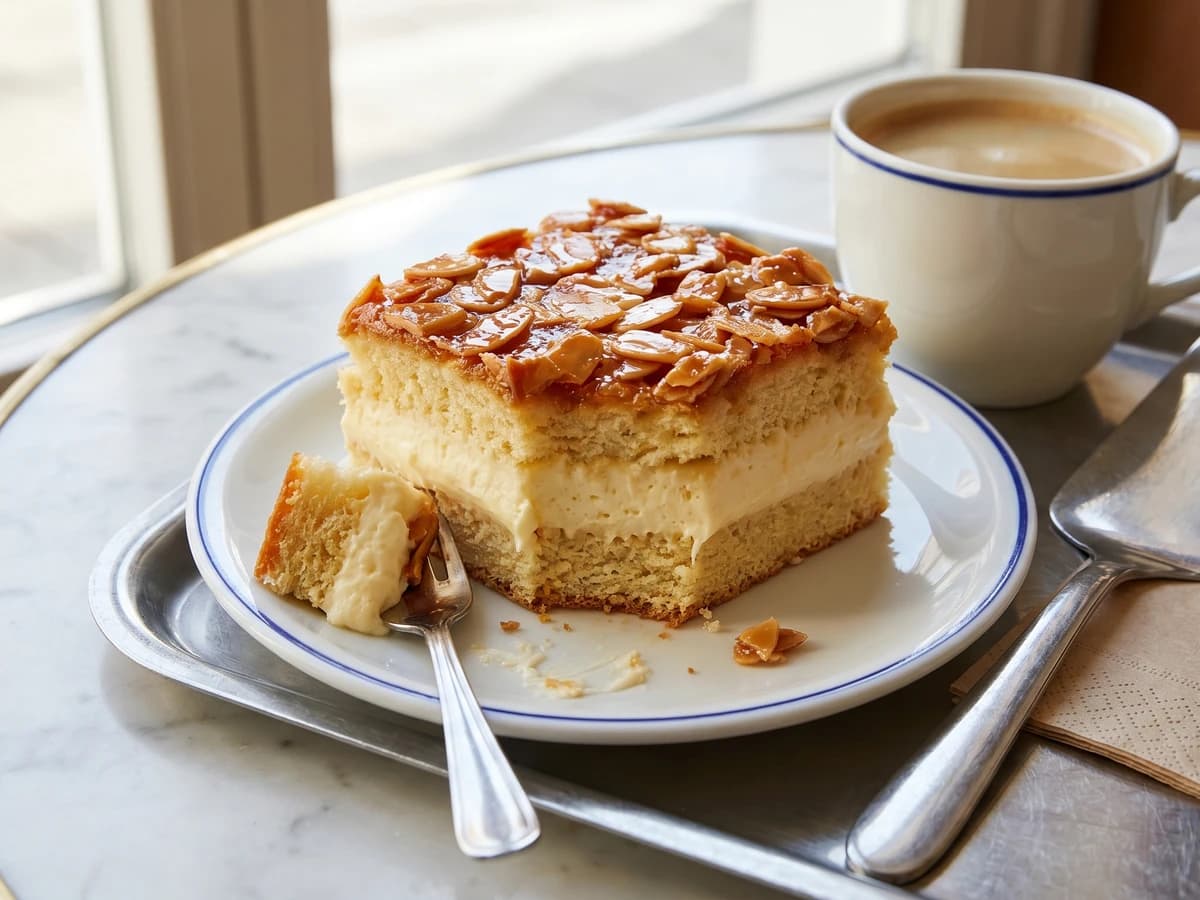
Bienenstich works when the almond top caramelises without burning and the yeast cake cools before the cream goes in. Rush either one and the bee has stung you.

Chef Klaus
North Germany's Freud-und-Leid-Kuchen, the cake for joy and sorrow both: a yeast sheet pressed full of cold butter, sugar, and almonds until the top turns crisp.
Chef Klaus
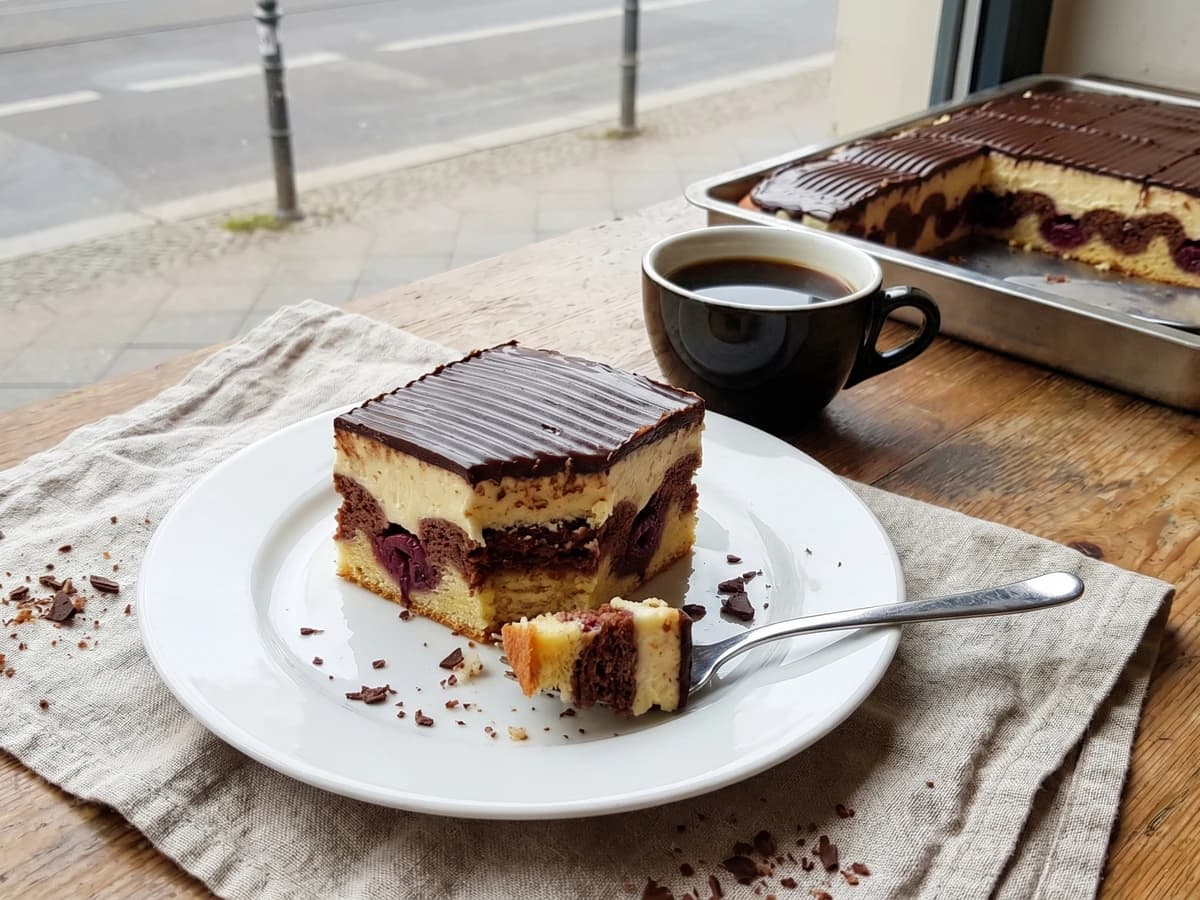
A German coffee-table cake built in layers: pale and cocoa batter, sour cherries sinking into the wave, cool buttercream, and dark chocolate combed like the Danube.