
Chef Lupita
Acambaritas de Acámbaro
Guanajuato's daily bread from Acámbaro, a small glazed roll built on pata, enriched with manteca de cerdo, and baked until the top shines lightly for merienda.
A cooking platform built around craft, culture, and the stories behind what we eat.
Created by
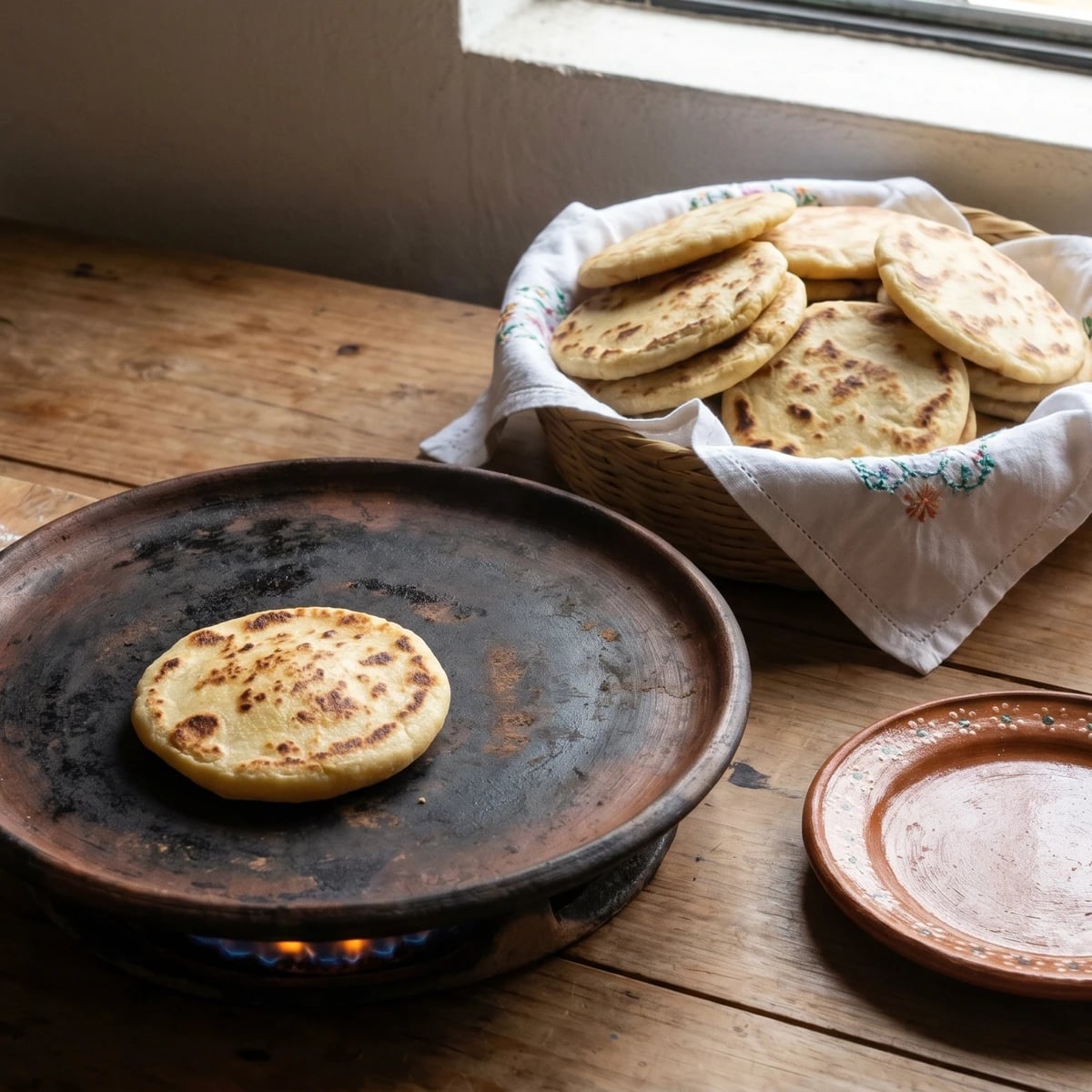
Hidalgo's sweet comal cakes, built from fresh nata de leche and wheat flour, cooked low and patient until the outside turns golden and the center stays soft.
Hidalgo, especially the central highland corridor around Pachuca, Actopan, Tulancingo, and the Valle del Mezquital, knows what to do with milk. These gorditas de nata live in markets, roadside panaderias, and home kitchens where nothing from the pot is wasted. The thick cream skimmed from boiled raw milk becomes breakfast, merienda, and comfort food.
The ingredient that matters is nata de leche. Not butter. Not oil. Nata. It carries the sweetness of cooked milk and gives the gordita its tender, almost creamy crumb. The comal finishes the work, browning the outside slowly while the baking powder lifts the center just enough. This is not a tortilla and not a pancake. Cada estado, su propia cocina.
I learned this style from a panadera near the market in Actopan who shaped each round by hand while talking prices with three customers at once. She did not measure with spoons. She watched the dough. Too dry, a splash of milk. Too sticky, a pinch of flour. My mother used to say the same thing in Colonia Roma: the hand learns before the head admits it. Saber cocinar es saber vivir.
Gorditas de nata belong to the central Mexican dairy and wheat traditions that expanded after cattle and wheat arrived with Spanish colonization in the 16th century. In Hidalgo, especially in market towns connected to ranching, pulque estates, and regional bakeries, nata became a practical ingredient because cream skimmed from boiled milk could be folded into sweet breads instead of wasted. The comal-cooked version sits between home baking and panaderia work: quicker than horno bread, richer than a plain flour gordita, and tied to the central highlands rather than to northern flour tortilla culture.
Quantity
2 1/2 cups, plus more for dusting
Quantity
1/2 cup
Quantity
2 teaspoons
Quantity
1/2 teaspoon
Quantity
1/2 teaspoon
Quantity
1 cup
thick cream skimmed from boiled raw milk
Quantity
1
Quantity
1 teaspoon
Quantity
2 to 4 tablespoons
only if the dough is dry
| Ingredient | Quantity |
|---|---|
| all-purpose wheat flour | 2 1/2 cups, plus more for dusting |
| granulated sugar | 1/2 cup |
| baking powder | 2 teaspoons |
| fine sea salt | 1/2 teaspoon |
| ground Mexican cinnamon | 1/2 teaspoon |
| fresh nata de lechethick cream skimmed from boiled raw milk | 1 cup |
| large egg | 1 |
| Mexican vanilla extract | 1 teaspoon |
| whole milk (optional)only if the dough is dry | 2 to 4 tablespoons |
Whisk the flour, sugar, baking powder, salt, and Mexican cinnamon in a wide bowl. Break up any lumps with your fingers. These gorditas are tender, not airy like cake, so measure the flour without packing it down.
Add the nata de leche and rub it into the flour with your fingertips until the mixture looks sandy and holds together when squeezed. The nata is the fat and the flavor. Do not replace it with whipped cream from a can. That is dessert foam, not bakery nata.
Beat the egg with the vanilla, then add it to the bowl. Mix with your hand until a soft dough forms. If dry flour remains at the bottom, add milk one tablespoon at a time. The dough should feel tender and slightly tacky, never wet. Knead only 8 to 10 times. Too much kneading makes tough gorditas.
Cover the dough with a clean servilleta and rest it for 15 minutes. This gives the flour time to drink the nata and lets the baking powder begin its work. No me vengas con atajos. A short rest is still a rest.
Divide the dough into 14 to 16 balls, each about the size of a small lime. Pat each one into a thick round, about 3 inches wide and 1/3 inch thick. Dust the board lightly with flour if needed, but do not bury the dough in flour. Excess flour burns on the comal.
Heat a dry comal or heavy cast iron skillet over medium-low heat. Cook the gorditas in batches for 3 to 4 minutes per side, until golden brown with darker toasted spots and a spongy center. If they brown too fast before the middle cooks, lower the heat. A panadero in Hidalgo watches the comal, not the clock.
Stand the cooked gorditas in a cloth-lined basket for 5 minutes so the crumb settles. Serve warm or at room temperature with cafe de olla, atole, or a glass of milk. They should bend slightly when pulled apart, with a creamy crumb and a toasted milk smell. Recetas probadas y garantizadas.
1 serving (about 47g)
Culinary guides, cultural storytelling, and the editorial depth that makes cooking meaningful.
Discover Culinary Explorer
Chef Lupita
Guanajuato's daily bread from Acámbaro, a small glazed roll built on pata, enriched with manteca de cerdo, and baked until the top shines lightly for merienda.

Chef Lupita
Michoacan's Tinguindin aguacatas are flat, leaf-scored sweet breads made with harina de trigo, piloncillo, anise, and manteca de cerdo, shaped by hand for the wood oven.

Chef Lupita
From Ajijic on Lake Chapala, Pan Tachihual is a lightly sweet wedding loaf built with harina de trigo, harina de maiz, piloncillo, manteca, anise, and the old Guadalajara pata.

Chef Lupita
Comitán's pan de yema shaped into little pigs, birds, and rabbits, a Chiapas bakery bread rich with egg yolks, manteca de cerdo, and anís, baked golden on hoja de plátano.