Culinary Explorer
A cooking platform built around craft, culture, and the stories behind what we eat.
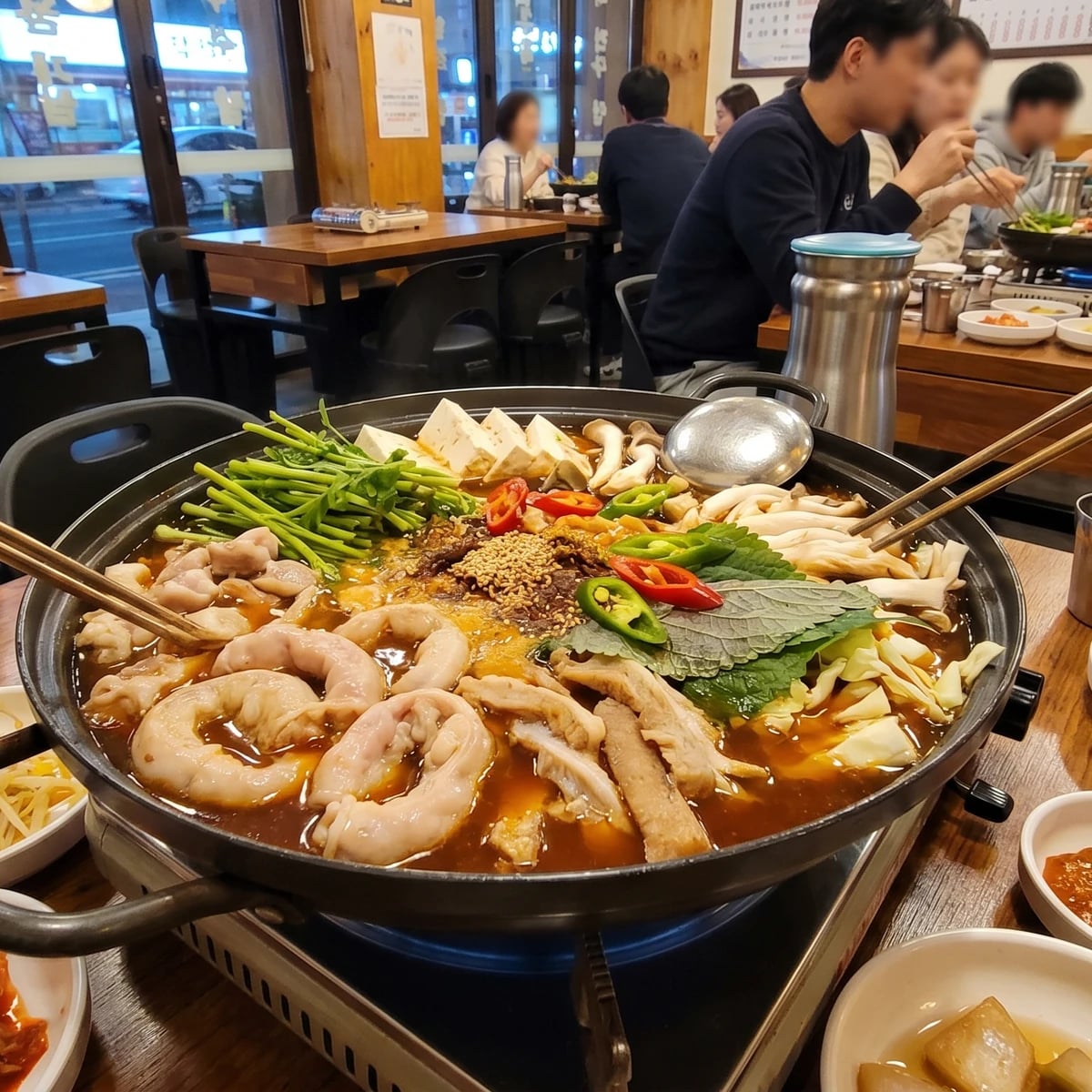
Gopchang-jeongol (Beef Intestine and Tripe Hot Pot)
Created by Chef Jeong-sun
A shared Korean hot pot of cleaned beef intestine, tripe, greens, mushrooms, and spicy broth, where the chew is earned before the pot ever reaches the burner.
Gopchang-jeongol lives or dies before the broth goes in. People talk about the red seasoning first, but the real work is cleaning, parboiling, and cutting the innards so they taste clean and keep their chew. If that part is careless, no amount of gochujang can forgive it.
A jeongol is not jjigae. Jjigae usually names one main thing and comes to the table already cooked; jeongol carries several ingredients arranged together, then cooks in front of the people eating. That order matters. Lay the white onion and cabbage, brown mushrooms, green minari, red chili seasoning, pale tofu, and ivory gopchang in clear sections before the broth touches them. It is not decoration. The table sees what it is about to share, and each ingredient cooks at its own pace.
I won't tell you this is easy. It asks for a good butcher, a little patience, and the courage to smell the pot honestly at each stage. But when the broth turns deep red-brown, the minari stays green, and the gopchang gives under the teeth instead of fighting, you understand why this dish gathers the brave and the devoted. 손맛 is real; I measure it anyway, so the next cook does not have to guess.
Ingredients
cleaned beef small intestine (gopchang)
Quantity
600g, or 450g gopchang plus 150g beef tripe (yang)
coarse salt
Quantity
2 tablespoons
for scrubbing
all-purpose flour
Quantity
3 tablespoons
for scrubbing
| Ingredient | Quantity |
|---|---|
| cleaned beef small intestine (gopchang) | 600g, or 450g gopchang plus 150g beef tripe (yang) |
| coarse saltfor scrubbing | 2 tablespoons |
| all-purpose flourfor scrubbing | 3 tablespoons |
Where cooking meets culture.
Culinary guides, cultural storytelling, and the editorial depth that makes cooking meaningful.
Discover Culinary Explorer