
Chef Zohra
Boushnikha
A Ramadan sweet lighter than chebakia: fine milk dough drawn into threads, fried until crisp, then bathed in orange-blossom honey and shared from a generous plate.
A cooking platform built around craft, culture, and the stories behind what we eat.

Created by
The peanut ghriba that cracks open in the oven, chewy at the center and snowy with sugar, a celebration sweet made when almonds cost too much.
The peanut tells you everything here. Roast it until it smells warm and full, then grind it fine but not to paste, because the cookie needs its own little grain under the tooth. Kawkaw, peanuts, are not a lesser almond. They are the people's almond, the one that lets a full tray appear when money is tight and guests are still coming.
Ghriba lives by its cracks. The dough must be soft enough to slump a little, firm enough to roll, and coated generously in icing sugar so the top splits into pale ridges as it bakes. That crack is not decoration. It tells you the outside has set while the inside stays tender and chewy.
Bake them gently and pull them before they look completely dry. They finish on the tray, and if you wait for them to harden in the oven, you've gone too far. Make them the day before a celebration, stack them with the other sweets, pour tea, and leave one more place at the table. La cuisine du lien, the cooking of connection, can be as small as a peanut cookie passed from hand to hand.
Ghriba is an old North African cookie family, known in Morocco from home kitchens to wedding trays, with versions made from almonds, semolina, coconut, walnuts, or peanuts depending on region and means. Peanut ghriba became especially important in the 20th century as imported and locally grown peanuts offered a more affordable path to festive sweets when almonds were costly. Its exact origin is not tied to one city, which is right for des cuisines marocaines: the same form travels through Fassi, coastal, eastern, Amazigh, and family repertoires, changing by hand and household.
Quantity
350g
roasted and cooled
Quantity
180g
Quantity
2 large
Quantity
2 tbsp
Quantity
1 tbsp
Quantity
1 tsp
Quantity
1/4 tsp
Quantity
1 tsp
finely grated
Quantity
120g
for rolling
| Ingredient | Quantity |
|---|---|
| raw shelled peanutsroasted and cooled | 350g |
| granulated sugar | 180g |
| eggs | 2 large |
| neutral oil | 2 tbsp |
| orange blossom water | 1 tbsp |
| baking powder | 1 tsp |
| fine sea salt | 1/4 tsp |
| lemon zest (optional)finely grated | 1 tsp |
| icing sugarfor rolling | 120g |
Heat the oven to 170°C. Spread the peanuts on a tray and roast for 12 to 15 minutes, shaking once, until they smell nutty and turn lightly golden. Cool them fully before grinding, because warm peanuts release oil too fast and turn heavy.
Rub away any loose skins, then pulse the cooled peanuts with the granulated sugar until fine and sandy. Stop before it becomes a paste. The dough needs ground nut, not peanut butter, and this is where the chew is decided.
Tip the peanut mixture into a bowl. Add the eggs, oil, orange blossom water, baking powder, salt, and lemon zest if using. Mix with your hand or a sturdy spoon until the dough is sticky, soft, and holds together when pressed.
Let the dough rest for 10 minutes so the peanuts drink in the egg. Put the icing sugar in a shallow bowl. With lightly oiled hands, roll walnut-sized balls, then coat each one heavily in icing sugar. Be generous. The sugar helps the surface crack and keeps the cookie tender.
Set the balls on a lined tray with space between them and bake at 170°C for 10 to 12 minutes, just until they spread, crack, and look set at the edges. The centers should still feel soft. Leave them on the hot tray for 10 minutes before moving them, or they'll break.
Move the cookies to a rack and cool completely. Serve with mint tea, coffee, or milk. They keep their chew better after a few hours, which is why they belong so naturally on celebration trays made ahead.
1 serving (about 25g)
Culinary guides, cultural storytelling, and the editorial depth that makes cooking meaningful.
Discover Culinary ExplorerChef Zohra
A Ramadan sweet lighter than chebakia: fine milk dough drawn into threads, fried until crisp, then bathed in orange-blossom honey and shared from a generous plate.
Chef Zohra
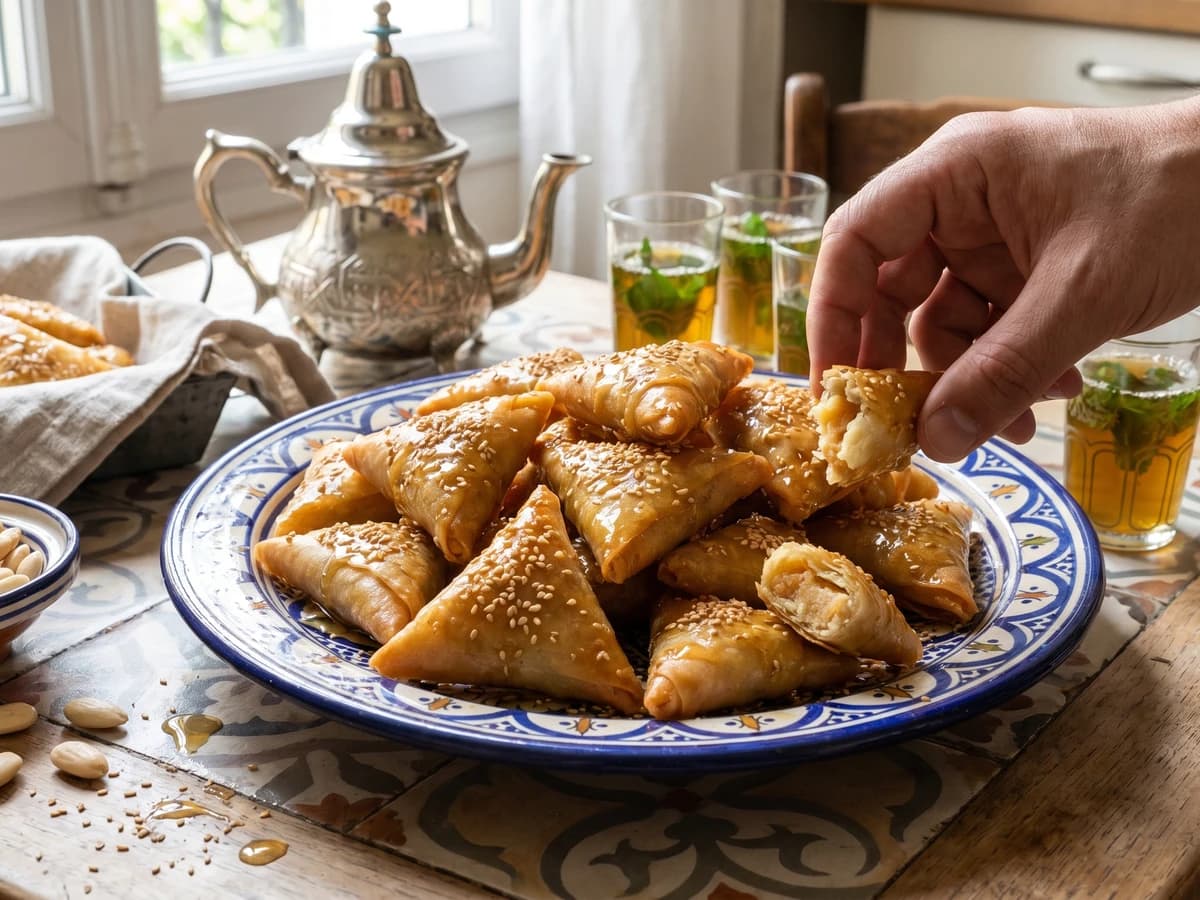
Tissue-thin warqa folded into small triangles around orange-blossom almond paste, fried until gold, then dipped warm into honey. This is the sweet Fassi briouat that makes tea feel like a feast.

Chef Zohra
The flower of the Ramadan table: dough scented with toasted sesame, anise, saffron, and orange blossom water, fried crisp, then soaked in warm honey beside harira.

Chef Zohra
Slim warqa cigars filled with orange-blossom almond paste, fried until crisp under the teeth, then soaked in warm honey for the festive table.