
Chef Zohra
Boushnikha
A Ramadan sweet lighter than chebakia: fine milk dough drawn into threads, fried until crisp, then bathed in orange-blossom honey and shared from a generous plate.
A cooking platform built around craft, culture, and the stories behind what we eat.
Created by
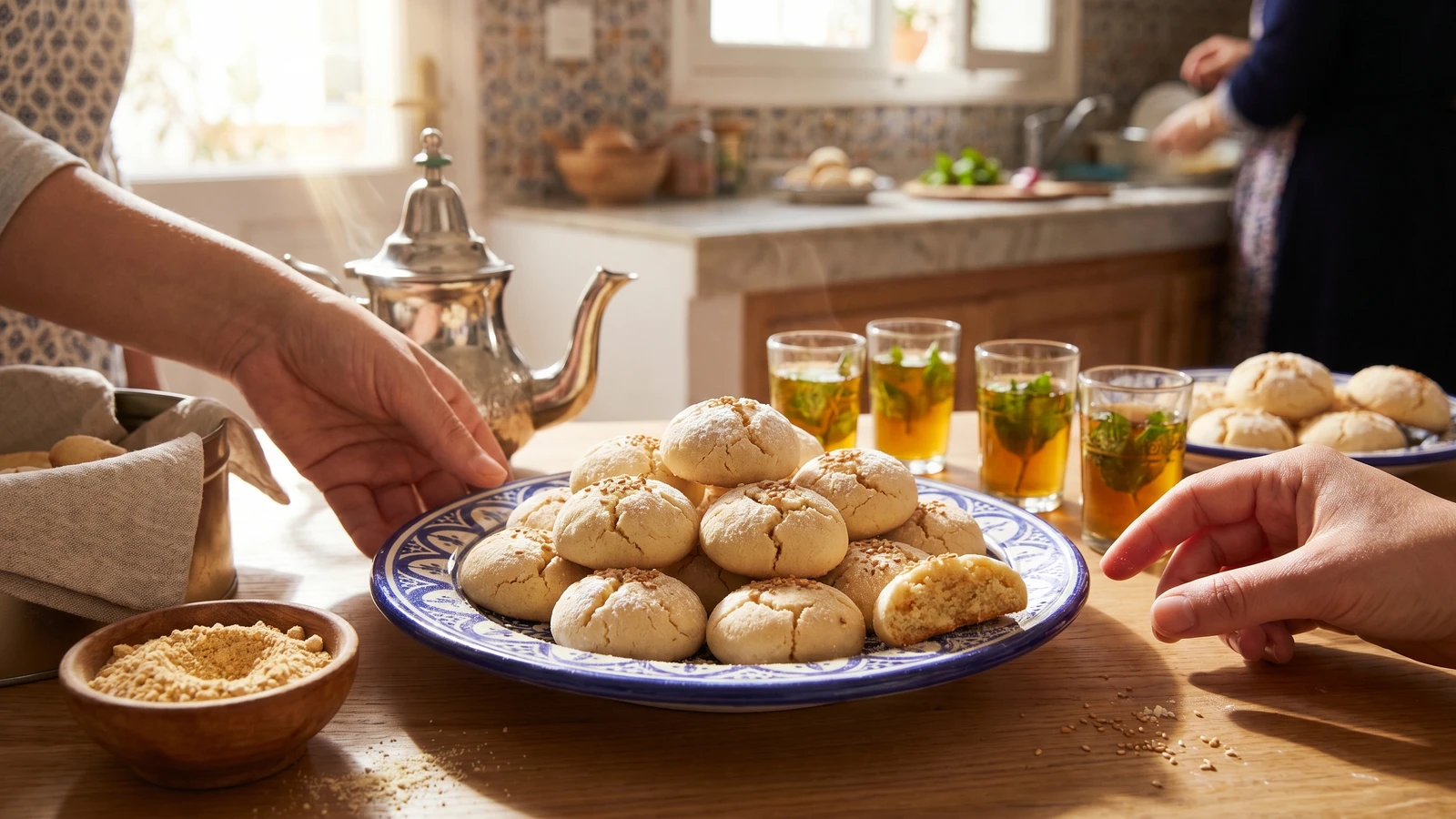
A wheat-free Moroccan ghriba made from toasted chickpea flour, oil, butter, and sugar, pressed into little moons that crumble softly under the teeth.
The chickpea flour tells you when it's ready. At first it smells flat, almost dusty, then the heat wakes it and it turns nutty, warm, and gold. That toasting is not decoration. Raw, the flour tastes chalky in the crumb; toasted, it becomes the whole perfume of the biscuit.
Ghriba d'homs belongs to the plate of small sweets that comes out for Eid, weddings, visits, and afternoons when tea is poured more than once. It needs no wheat, so it has always made room at the table without making a speech about it. The dough is shy at first, sandy under your fingers, then it comes together when the fat has found every grain.
Work it by hand. Press, fold, press again. La balance est dans les yeux, the scale is in the eyes, because the flour may drink more or less depending on how finely it was milled and how long you toasted it. You want a dough that holds when squeezed, not one that spreads like cake batter.
Bake them pale, not brown. Let them cool before you touch them, or they'll break just to teach you patience. Put them beside mint tea, leave one more glass on the tray, and the door is open.
Ghriba belongs to the wider family of Maghrebi short biscuits shaped by Andalusi, Amazigh, and Jewish-Moroccan domestic pastry traditions, especially the sweets served with tea from the 19th century onward. Chickpea flour versions are strongly associated with home baking in Morocco, where legume flours were used long before wheat became the only imagined base for a celebration biscuit. The exact dating of ghriba d'homs is not fixed in written sources, but its technique, toasted flour bound with fat and sugar, sits comfortably in the older North African habit of making feast sweets from what keeps well in the pantry.
Quantity
300g
sifted
Quantity
110g
sifted
Quantity
80g
melted and cooled until warm
Quantity
80ml
Quantity
1 tsp
Quantity
1 tsp
Quantity
1 pinch
Quantity
2 tbsp
lightly toasted
Quantity
as needed
for dusting
| Ingredient | Quantity |
|---|---|
| chickpea floursifted | 300g |
| icing sugarsifted | 110g |
| unsalted buttermelted and cooled until warm | 80g |
| neutral oil | 80ml |
| baking powder | 1 tsp |
| ground cinnamon | 1 tsp |
| fine sea salt | 1 pinch |
| sesame seeds (optional)lightly toasted | 2 tbsp |
| extra icing sugar (optional)for dusting | as needed |
Put the chickpea flour in a wide dry pan over medium-low heat. Stir constantly for 10 to 12 minutes, scraping the corners, until it smells nutty and deepens from pale yellow to warm gold. Do not rush this. The toasting cooks out the raw, chalky taste and gives the ghriba its proper crumb.
Let the toasted flour cool until just warm, then sift it into a large bowl with the icing sugar, baking powder, cinnamon, and salt. Add the sesame seeds if you're using them. Rub the dry mixture between your fingers to break up any tiny lumps.
Pour in the melted butter and oil. Mix with your hand, pressing and folding until the dough changes from loose sand to a soft mass that holds when squeezed. If it crumbles apart, add oil 1 teaspoon at a time. If it feels greasy and slack, let it rest 10 minutes so the flour can drink.
Heat the oven to 160°C. Line a baking sheet with parchment. Pinch off walnut-sized pieces, squeeze each one firmly, then roll gently and flatten into small domes or short crescents. Set them with a little space between them; they should keep their shape more than spread.
Bake for 16 to 20 minutes, until the bottoms are lightly golden and the tops look dry with fine cracks. The ghriba should stay pale. Let them cool on the tray for at least 15 minutes before moving them, because hot chickpea-flour cookies are tender enough to break in your hand.
Dust lightly with icing sugar if you like, then serve with mint tea or black coffee. Store only when fully cool, layered gently in a tin. They soften and deepen by the next day, which is why they belong so well to feast preparation.
1 serving (about 21g)
Culinary guides, cultural storytelling, and the editorial depth that makes cooking meaningful.
Discover Culinary ExplorerChef Zohra
A Ramadan sweet lighter than chebakia: fine milk dough drawn into threads, fried until crisp, then bathed in orange-blossom honey and shared from a generous plate.
Chef Zohra
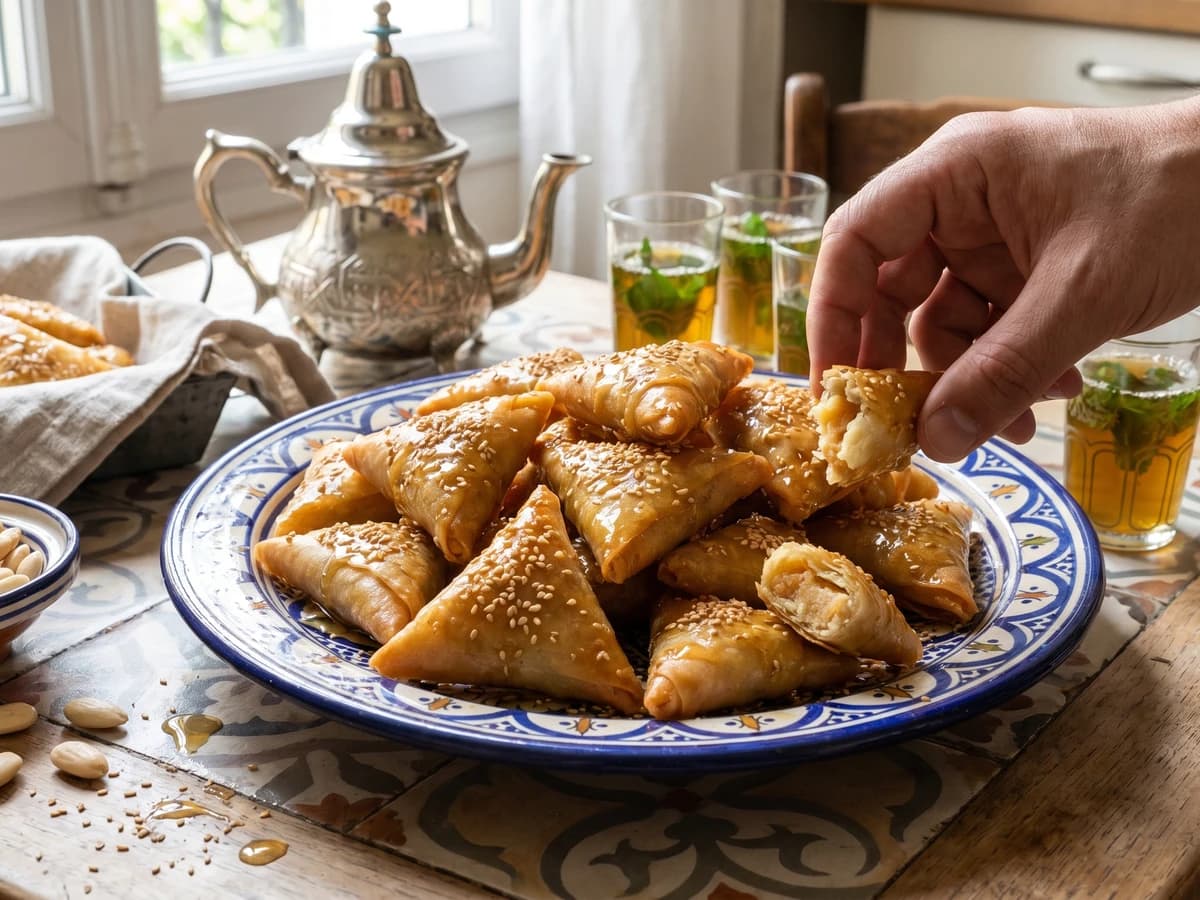
Tissue-thin warqa folded into small triangles around orange-blossom almond paste, fried until gold, then dipped warm into honey. This is the sweet Fassi briouat that makes tea feel like a feast.

Chef Zohra
The flower of the Ramadan table: dough scented with toasted sesame, anise, saffron, and orange blossom water, fried crisp, then soaked in warm honey beside harira.

Chef Zohra
Slim warqa cigars filled with orange-blossom almond paste, fried until crisp under the teeth, then soaked in warm honey for the festive table.