
Chef Dean
Dark Sourdough Rye
A dense, tangy loaf with an almost black crumb and crackling crust, built on centuries of Eastern European tradition and the patient alchemy of wild fermentation.
A cooking platform built around craft, culture, and the stories behind what we eat.

Created by
A magnificent yeasted loaf studded with rum-soaked fruits and hiding a ribbon of marzipan at its heart, bathed in melted butter and blanketed in powdered sugar until it resembles a snow-covered mountain.
This is bread as celebration. For centuries, German bakers have marked the Christmas season with Stollen, a rich yeasted loaf that rewards patience the way few other baked goods can. The original Dresden Stollen dates to the fifteenth century, when the Church still forbade butter during Advent. Saxon bakers petitioned the Pope himself for permission to use it. He relented. The bread we know today exists because of that theological negotiation.
The fruits must macerate. This isn't optional. Two weeks in rum transforms dried raisins and candied citrus from pleasant additions into something approaching jammy, boozy perfection. The alcohol penetrates every wrinkle and fold, carrying flavor deep into the fruit. If you're starting this bread the week before Christmas, you've waited too long. Begin at the start of December or even late November.
What distinguishes a proper Stollen from sweet bread with fruit is the post-baking treatment. You'll brush the hot loaf with an almost obscene amount of melted butter, then dust it repeatedly with powdered sugar until it looks like it tumbled down an Alpine slope. This creates the signature crust that cracks when you slice through. The butter seals the crumb. The sugar insulates and preserves. Wrapped properly, Stollen improves over two to three weeks as the flavors marry and mellow.
I won't pretend this is simple. The dough is rich and sticky, heavy with butter and eggs. The shaping takes practice. But home bakers across Germany have made this bread for generations without culinary school training. Trust the process. Work the dough gently. Let time do what time does best.
Quantity
200g (1½ cups)
Quantity
100g (¾ cup)
Quantity
100g (½ cup)
finely diced
Quantity
100g (½ cup)
finely diced
Quantity
150ml (⅔ cup)
Quantity
500g (4 cups)
Quantity
100g (½ cup)
Quantity
10g (1½ teaspoons)
Quantity
2 teaspoons
Quantity
1 teaspoon
freshly grated
Quantity
½ teaspoon
Quantity
1
zested
Quantity
1
zested
Quantity
7g (2¼ teaspoons)
Quantity
200ml (generous ¾ cup)
warmed to 100°F
Quantity
2
room temperature
Quantity
1 teaspoon
Quantity
½ teaspoon
Quantity
225g (1 cup)
softened
Quantity
100g (¾ cup)
roughly chopped
Quantity
200g (7 oz)
divided into two logs
Quantity
170g (¾ cup)
melted
Quantity
200g (1¾ cups)
| Ingredient | Quantity |
|---|---|
| golden raisins | 200g (1½ cups) |
| dried currants | 100g (¾ cup) |
| candied orange peelfinely diced | 100g (½ cup) |
| candied lemon peelfinely diced | 100g (½ cup) |
| dark rum | 150ml (⅔ cup) |
| bread flour | 500g (4 cups) |
| granulated sugar | 100g (½ cup) |
| fine sea salt | 10g (1½ teaspoons) |
| ground cardamom | 2 teaspoons |
| nutmegfreshly grated | 1 teaspoon |
| ground mace | ½ teaspoon |
| lemonzested | 1 |
| orangezested | 1 |
| instant yeast | 7g (2¼ teaspoons) |
| whole milkwarmed to 100°F | 200ml (generous ¾ cup) |
| large eggsroom temperature | 2 |
| pure vanilla extract | 1 teaspoon |
| almond extract | ½ teaspoon |
| unsalted butter for doughsoftened | 225g (1 cup) |
| blanched almondsroughly chopped | 100g (¾ cup) |
| marzipandivided into two logs | 200g (7 oz) |
| unsalted butter for brushingmelted | 170g (¾ cup) |
| powdered sugar for coating | 200g (1¾ cups) |
Combine the golden raisins, currants, candied orange peel, and candied lemon peel in a glass jar or ceramic bowl. Pour the rum over the fruits and stir to coat everything evenly. Cover tightly with plastic wrap or a lid. Store at room temperature for a minimum of two weeks, stirring every few days. The fruits will absorb the rum and swell, becoming plump and fragrant. By the time you're ready to bake, almost no liquid should remain at the bottom of the container.
When you're ready to make the dough, start with a sponge. In a large mixing bowl, whisk together 100g of the flour with the instant yeast. Add the warm milk and stir until you have a thick, paste-like mixture. Cover with a kitchen towel and let stand for 30 minutes. The sponge should become bubbly and slightly domed, with a pleasant yeasty aroma. This step jumpstarts fermentation and builds flavor.
Add the remaining 400g flour, granulated sugar, salt, cardamom, nutmeg, mace, and both citrus zests to the sponge. Stir to create a shaggy mass. In a small bowl, whisk together the eggs, vanilla extract, and almond extract. Add this to the flour mixture. Using a wooden spoon or the paddle attachment of a stand mixer, work everything together until a rough dough forms. It will look messy and uneven. That's correct.
Begin adding the softened butter in five or six additions, mixing thoroughly after each. This takes patience. The dough will look greasy and broken after each addition before finally accepting the fat. Using a stand mixer with a dough hook makes this considerably easier, but it can be done by hand with persistence. Work the dough for 8 to 10 minutes total until it becomes smooth, supple, and only slightly tacky. It should pull away from the sides of the bowl in a cohesive mass.
Drain the macerated fruits if any liquid remains, though there shouldn't be much. Add the fruits and chopped almonds to the dough. Fold and knead gently by hand until everything distributes evenly. The dough will feel heavy and studded with fruit. Some fruits may poke through the surface. This is fine. Handle the dough with care now; aggressive kneading will crush the fruits.
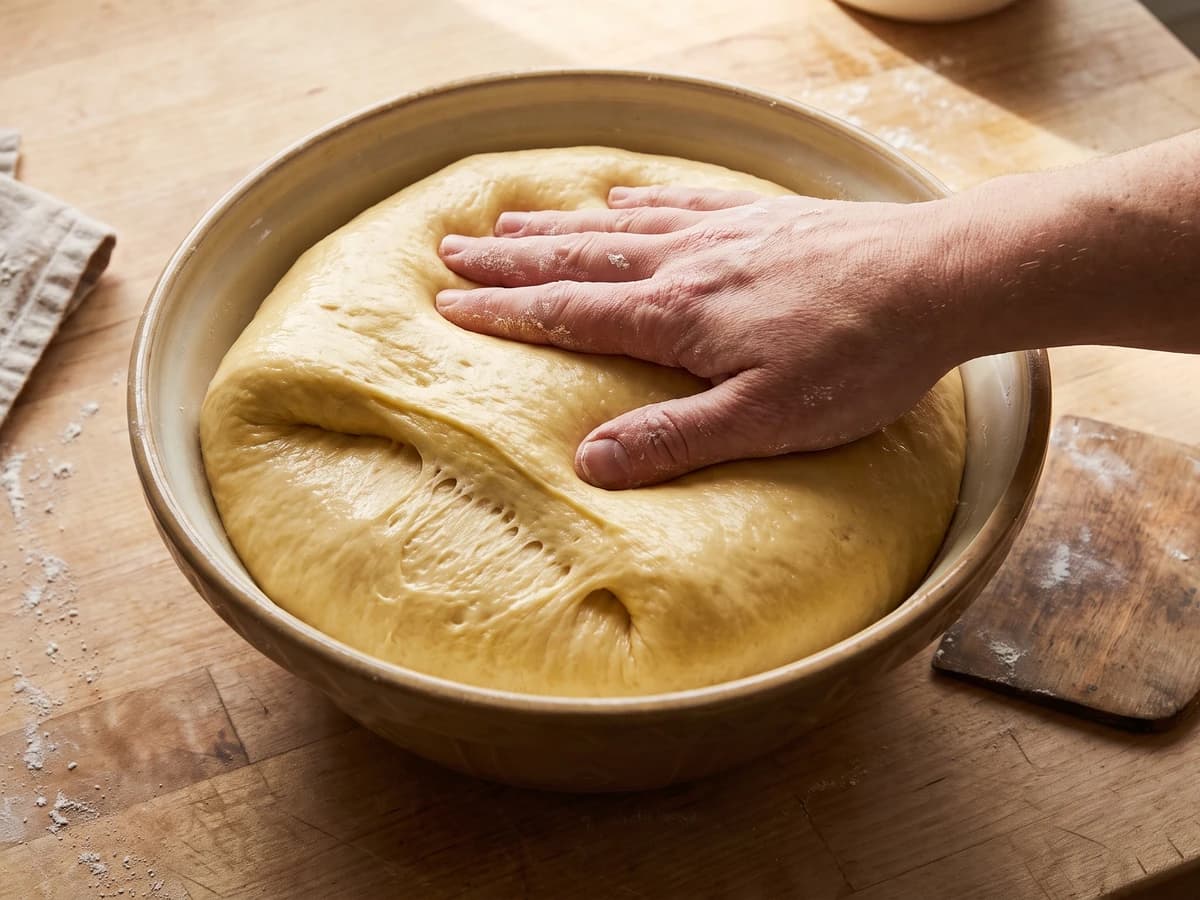
Shape the dough into a ball and place it in a lightly oiled bowl. Cover tightly with plastic wrap. Let rise in a warm spot (75°F to 80°F) until doubled in size, about 2 hours. Enriched doughs rise more slowly than lean ones because butter and sugar inhibit yeast activity. Don't rush this. The dough is ready when a finger pressed into the surface leaves an indent that springs back slowly.
While the dough rises, prepare the marzipan. Divide it into two equal portions of approximately 100g each. Roll each portion into a log about 8 inches long and 1 inch in diameter. If the marzipan cracks, it's too cold. Warm it briefly in your hands until pliable. Set the logs aside on a sheet of parchment.
Turn the risen dough onto a lightly floured surface. Divide it in half using a bench scraper. Work with one half at a time. Pat the dough into a rough oval approximately 12 inches long and 8 inches wide. The thickness should be about 1 inch at the center and slightly thinner at the edges. Place a marzipan log along the center, parallel to the long edge.
Fold the dough in half lengthwise, but not completely. The top edge should stop about 1 inch short of the bottom edge, creating the characteristic Stollen shape that resembles swaddling cloth. This asymmetrical fold is traditional and helps the loaf bake evenly. Press gently along the folded edge to seal. Transfer to a parchment-lined baking sheet. Repeat with the second portion of dough.
Cover the shaped loaves loosely with plastic wrap or a clean kitchen towel. Let rise for 1 hour. They won't double in size because the dough is so heavy with fruit and butter. Look for the loaves to become slightly puffy and relaxed-looking. If you press gently on the surface, the indent should remain rather than spring back.
Preheat your oven to 325°F (165°C). Position a rack in the center. Bake the loaves for 45 to 50 minutes, rotating the pan halfway through for even browning. The Stollen is done when deep golden brown on top and an instant-read thermometer inserted into the thickest part (avoiding the marzipan) registers 190°F. The crust should feel firm when tapped. Remove from the oven and let rest on the pan for 5 minutes.
While the Stollen is still hot, brush it generously with melted butter. Use all of it. The bread should glisten and pool slightly on the parchment beneath. This seems excessive. It isn't. The butter creates a moisture barrier that keeps the interior tender and extends shelf life. Let the butter absorb for 10 minutes, then flip the loaves and brush the bottoms as well.
While the Stollen is still warm and tacky with butter, dust heavily with powdered sugar using a fine-mesh sieve. Coat the top, sides, and bottom. The sugar will partially absorb into the butter and create a thin crust. Let the loaves cool completely on a wire rack, at least 2 hours.
Once completely cool, apply a second generous coating of powdered sugar. The finished Stollen should look like it survived a snowstorm. Wrap each loaf tightly in plastic wrap, then in aluminum foil. Store at cool room temperature (60°F to 65°F) for at least one week before slicing. Two to three weeks is better. The flavors need time to meld and mellow. The bread will keep for up to six weeks properly wrapped.
When ready to serve, unwrap the Stollen and add a final dusting of powdered sugar to refresh the snowy appearance. Slice into ½-inch pieces using a sharp serrated knife. The interior should reveal the golden, fruit-studded crumb with a ribbon of marzipan running through the center. Serve at room temperature alongside strong coffee or mulled wine.
1 serving (about 85g)
Culinary guides, cultural storytelling, and the editorial depth that makes cooking meaningful.
Discover Culinary ExplorerChef Dean
A dense, tangy loaf with an almost black crumb and crackling crust, built on centuries of Eastern European tradition and the patient alchemy of wild fermentation.

Chef Dean
A thick-crusted, caraway-scented farmhouse loaf that marries rye's earthy depth with wheat's reliable structure. This is the bread that sustained German farming families for centuries, and it belongs on your table too.

Chef Dean
Burnished, chewy knots with that unmistakable alkaline tang and deep mahogany color. The same technique Munich bakers have used for centuries, translated for your home oven.
Chef Juliette
Pâte à brioche ordinaire teaches enriched dough properly: wake the leaven, build strength before the last egg, then work in pliable butter by stages and let one long fermentation do its quiet work.