Culinary Explorer
A cooking platform built around craft, culture, and the stories behind what we eat.
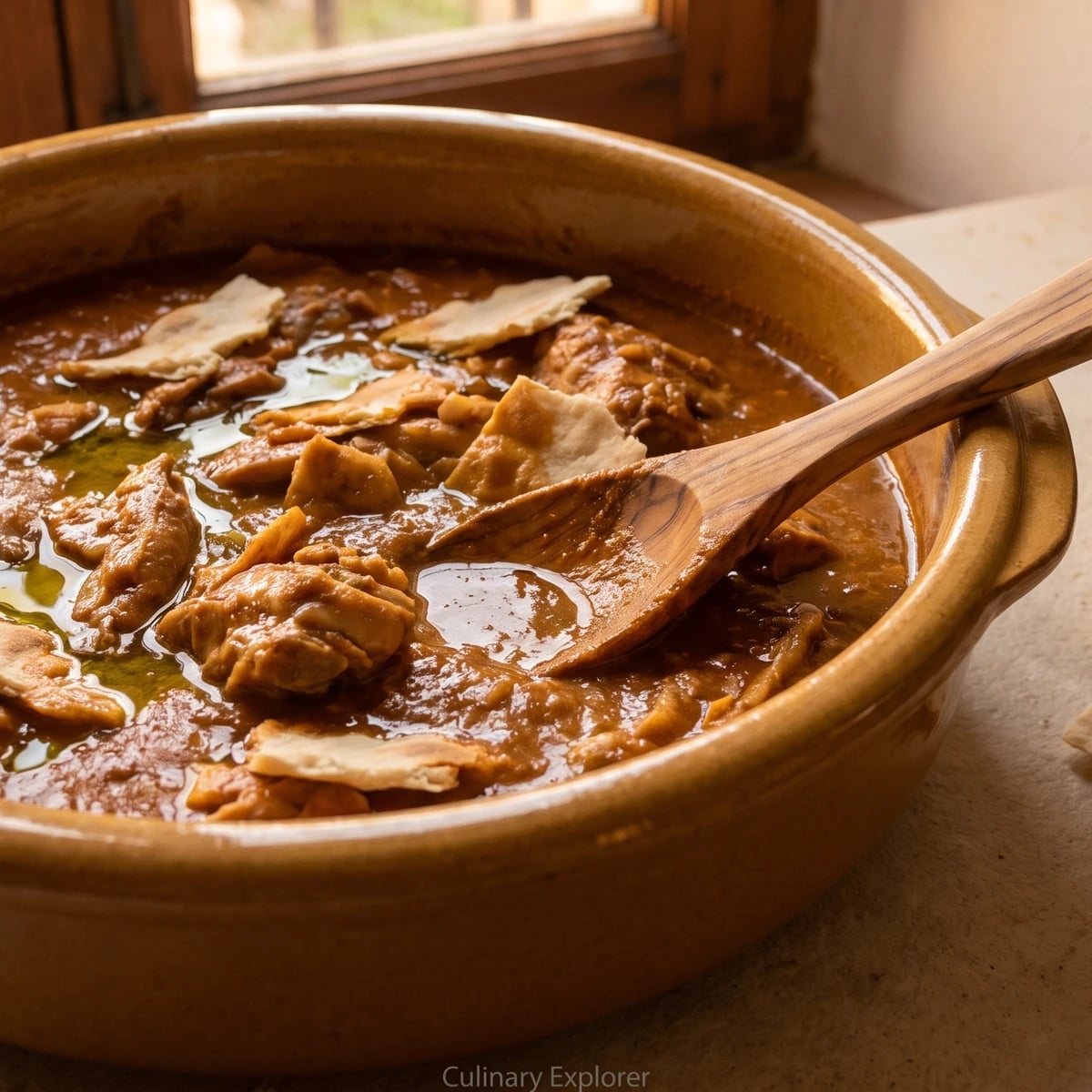
Gazpacho Manchego (Galianos)
Created by Chef Isabel
Gazpachos manchegos are La Mancha's hot galianos: rabbit and partridge cooked tender in their own broth, then thickened with torn torta cenceña until every piece is supple but still distinct.
Gazpachos manchegos, also called galianos, belong to La Mancha: a hot stew of rabbit, hare, or partridge and torn torta cenceña, the hard yeastless flatbread that drinks the game broth without disappearing. The shared name fools people. This is not Andalucía's cold tomato gazpacho. It is inland cocina de cuchara, spoon food, made to carry hunters and shepherds through a hard day and to feed a full table from one pot.
First brown the game well, then cook the onion, green pepper, garlic, and tomato low until the sofrito, the slow vegetable base, is dark, sweet, and nearly dry. But the point that decides the dish is the torta. Restore the broth to 1.4 litres before it goes in, add the torn bread in stages, and stop cooking while the pieces are supple but still distinct. They keep drinking as the pot rests. Cook past that and the galianos become paste, which is filling but isn't the dish.
Far from La Mancha, bake the cenceña yourself from flour, water, and salt until completely dry. If partridge is impossible to find, bone-in chicken thigh is the honest substitute a Manchego home would use. The broth becomes gentler and a little fattier, so skim it well. No hace falta haber pisado España. My margin says, "Measure the broth, then watch the bread." Siempre sale, si lo sigues.
Ingredients
farmed rabbit
Quantity
1 (about 1.2kg)
jointed into 10 to 12 pieces
partridge
Quantity
1 (about 450g)
quartered
fine sea salt
Quantity
18g
divided
| Ingredient | Quantity |
|---|---|
| farmed rabbitjointed into 10 to 12 pieces | 1 (about 1.2kg) |
| partridgequartered | 1 (about 450g) |
| fine sea saltdivided | 18g |
Where cooking meets culture.
Culinary guides, cultural storytelling, and the editorial depth that makes cooking meaningful.
Discover Culinary Explorer