
Chef Dean
Flaky Paratha
Golden, shattering layers of buttery flatbread achieved through a simple folding technique that transforms flour and fat into something extraordinary. This is bread that rewards your hands.
A cooking platform built around craft, culture, and the stories behind what we eat.

Created by
Soft, pillowy flatbread charred in a screaming-hot skillet, brushed with sizzling garlic butter and fresh cilantro. The perfect vehicle for curries, dal, or eaten warm straight from the pan.
Naan traveled the Silk Road before arriving in the kitchens of the Indian subcontinent. Persian bakers shaped the original, cooking it against the walls of clay ovens where temperatures reached 900 degrees. The bread puffed, charred in spots, and emerged soft enough to tear with your hands. That tradition endures. Your home kitchen can honor it.
The tandoor presents an obvious challenge for home cooks. You don't have one. Neither do I. What you do have is a cast iron skillet that can withstand punishing heat and a broiler capable of finishing the job. This combination produces naan with the characteristic leopard-spotted char, the pillowy interior, the slight chew that makes this bread so satisfying to tear and dip.
Yogurt is the secret weapon here. It tenderizes the dough, adds a subtle tang, and contributes to the browning you want on the surface. Use full-fat yogurt. The reduced-fat versions contain stabilizers that interfere with the dough's development. This is not the place to count calories.
I've taught this recipe to students terrified of yeast. By the end of the class, they're rolling dough with confidence and arguing about the proper amount of garlic. The technique is forgiving. The results are immediate. You'll pull the first naan from your skillet in under two hours from when you start mixing.
Quantity
350g (2¾ cups)
plus more for dusting
Quantity
7g (2¼ teaspoons)
Quantity
8g (1½ teaspoons)
Quantity
15g (1 tablespoon)
Quantity
170g (¾ cup)
room temperature
Quantity
60ml (¼ cup)
105-110°F
Quantity
30ml (2 tablespoons)
Quantity
115g (8 tablespoons)
Quantity
6 cloves
minced fine
Quantity
3 tablespoons
chopped
Quantity
for finishing
| Ingredient | Quantity |
|---|---|
| all-purpose flourplus more for dusting | 350g (2¾ cups) |
| instant yeast | 7g (2¼ teaspoons) |
| fine sea salt | 8g (1½ teaspoons) |
| granulated sugar | 15g (1 tablespoon) |
| plain full-fat yogurtroom temperature | 170g (¾ cup) |
| warm water105-110°F | 60ml (¼ cup) |
| neutral oil or melted ghee | 30ml (2 tablespoons) |
| unsalted butter | 115g (8 tablespoons) |
| garlicminced fine | 6 cloves |
| fresh cilantrochopped | 3 tablespoons |
| flaky sea salt (optional) | for finishing |
Whisk together the flour, yeast, salt, and sugar in a large bowl. Create a well in the center. Add the yogurt, warm water, and oil. Stir with a wooden spoon until a shaggy mass forms. The dough will look rough and uneven. This is correct. Don't chase smoothness yet.
Turn the dough onto a lightly floured surface. Knead for 8 to 10 minutes, pushing with the heel of your hand, folding, turning a quarter rotation, and repeating. The dough transforms from sticky and rough to smooth and supple. When ready, it springs back slowly when you poke it with a finger. The surface should feel like a baby's cheek: soft, smooth, slightly tacky but not sticky.
Shape the dough into a ball and place it in a lightly oiled bowl, turning once to coat all sides. Cover with plastic wrap or a damp kitchen towel. Set in a warm spot until doubled in size, about 1 to 1½ hours. The dough is ready when an indentation made with your finger fills in slowly rather than springing back immediately.
While the dough rises, melt the butter in a small saucepan over medium-low heat. Add the minced garlic and cook gently until fragrant and just beginning to turn golden at the edges, about 2 minutes. Remove from heat immediately. Garlic burns quickly and bitter garlic butter ruins everything. Stir in half the cilantro and set aside.
Punch down the risen dough to release the gas. Turn onto a clean surface and divide into 8 equal pieces. A kitchen scale ensures uniformity, but eyeballing works fine. Roll each piece into a ball, cover with a towel, and let rest 10 minutes. This relaxes the gluten and makes rolling easier.
Working with one ball at a time, roll into an oval or teardrop shape about ¼ inch thick and 8 inches long. Traditional naan isn't perfectly round. Embrace the irregularity. If the dough resists and springs back, let it rest another few minutes before continuing. The gluten needs time to relax.
Place a large cast iron skillet over high heat. Let it get screaming hot, at least 5 minutes. You want the surface to register 500°F or higher if you have an infrared thermometer. No thermometer? Flick a drop of water onto the surface. It should vaporize instantly with an aggressive sizzle. This heat is essential for proper charring.
Lay one rolled naan directly onto the dry, hot skillet. No oil. Within 30 seconds, you'll see bubbles forming on the surface. The bottom develops dark char spots. Cook until large bubbles have formed and the underside shows leopard-spot charring, about 1 to 2 minutes. The bread puffs dramatically in places. Don't press it down.
Using tongs, flip the naan and immediately transfer the skillet under a preheated broiler set to high, positioning it 3 to 4 inches from the element. Broil until the top blisters and chars in spots, 30 to 60 seconds. Watch constantly. The difference between perfect char and burnt bread is seconds.
Transfer the finished naan to a plate. Brush generously with warm garlic butter while the bread is still hot. The butter soaks into the surface, glistening and fragrant. Sprinkle with flaky salt and remaining cilantro. Stack finished naan under a clean towel to keep warm while you cook the rest. Serve immediately. Naan waits for no one.
1 serving (about 75g)
Culinary guides, cultural storytelling, and the editorial depth that makes cooking meaningful.
Discover Culinary ExplorerChef Dean
Golden, shattering layers of buttery flatbread achieved through a simple folding technique that transforms flour and fat into something extraordinary. This is bread that rewards your hands.

Chef Ally
Tender, pillowy flatbread charred in a cast iron skillet, brushed with garlic butter while still hot, scattered with fresh herbs. The kind of bread meant to be torn apart and shared at a crowded table.
Chef Juliette
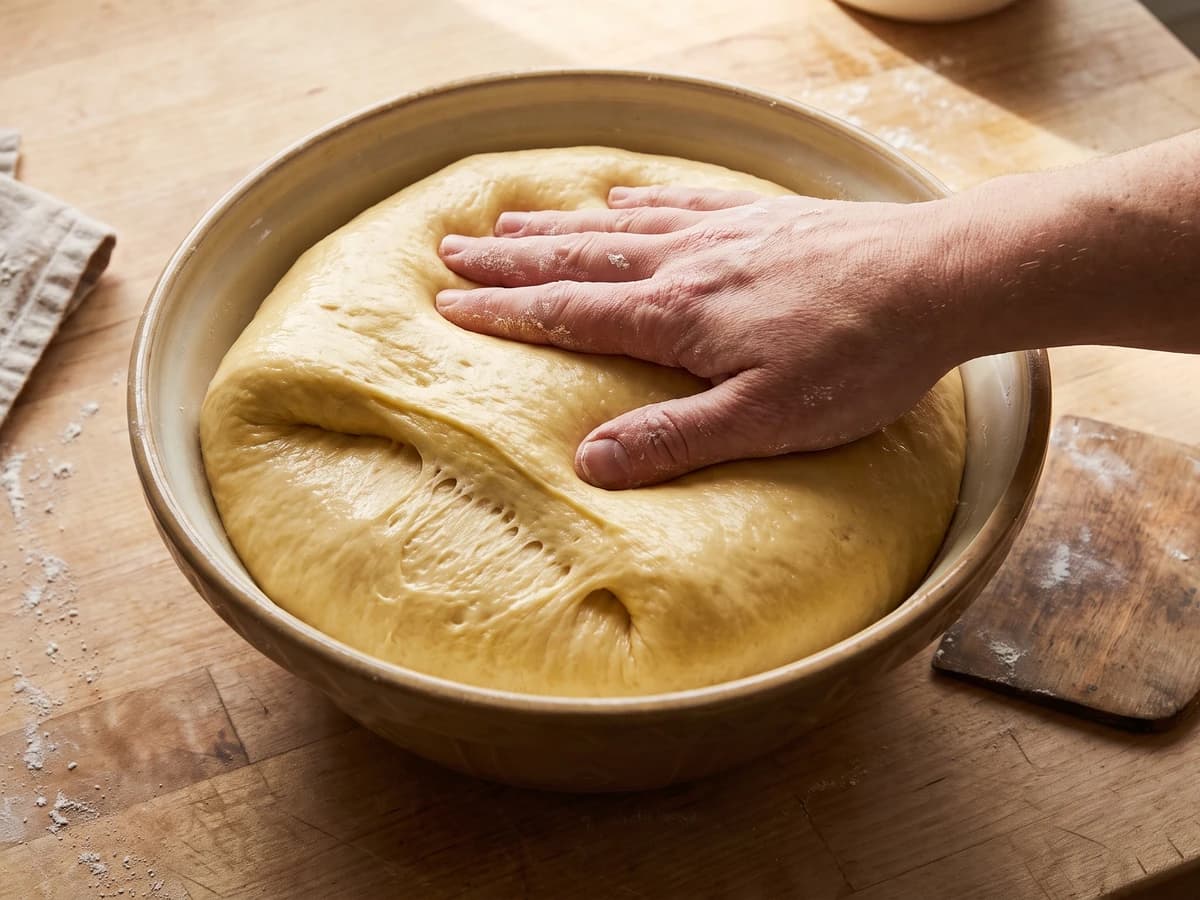
Pâte à brioche ordinaire teaches enriched dough properly: wake the leaven, build strength before the last egg, then work in pliable butter by stages and let one long fermentation do its quiet work.

Chef Juliette
Ordinary brioche takes one exact measure of butter and a patient rise in the mould, becoming so light and silken that it can cradle fruit without losing its tender crumb.