
Chef Jeong-sun
Aehobak-guk (애호박국, Korean Zucchini Soup)
A clean summer soup of Korean zucchini and salted shrimp, built on quick anchovy-kelp broth and finished before the half-moons lose their shape on a weeknight table.
A cooking platform built around craft, culture, and the stories behind what we eat.

Created by
Pork backbone simmered until the meat loosens from the bone, with potatoes, dried radish greens, perilla leaves, and nutty perilla seed powder thickening the bowl.
Gamjatang lives or dies before the seasoning ever touches it. Pork backbone has to be soaked, blanched, rinsed clean, and simmered long enough that the meat gives up without a fight. Skip that work and the broth tastes muddy. Do it properly and the bone comes out clean at the table, which is how you know the pot was respected.
This is not a delicate little soup. It belongs to the late table: friends after a game, workers after a long shift, families who want one large pot and bowls of rice. The potatoes soften at the edges, the siraegi (dried radish greens) drinks in the broth, and the perilla seed powder gives the stew its round, nutty body. Use enough chili to warm it, not so much that every spoon tastes only red.
Notebook 41 says the backbone needs at least 2 hours after blanching, and I trust that note because I wrote it after arguing with a pot that would not soften. A pressure cooker can shorten the simmer, 시대가 바뀌면 음식도 바뀌어야 해요. When times change, food must change too. But the washing of the bones and the final seasoning by taste are not corners to cut.
Gamjatang is a modern working people's stew, strongly tied to inexpensive pork backbone and the rise of 24-hour Korean restaurants in the twentieth century, especially around market and labor districts. Its origin is often argued between regional claims and restaurant lore, including stories linking it to Incheon port workers, but what can be verified is its place as a practical bone stew that turned a cheap cut into a shared meal. The name is also debated: today gamja plainly means potato in the bowl, while the claim that it once named a pork spine section remains more oral explanation than settled record.
Quantity
1.8kg
cut into 2 to 3 inch pieces
Quantity
as needed
for soaking and blanching
Quantity
2 tablespoons
for soaking the bones
Quantity
8 cups
for the first simmer
Quantity
1 medium
halved
Quantity
1 head
halved crosswise
Quantity
25g
sliced
Quantity
2
cut into 3 inch lengths
Quantity
1 teaspoon
Quantity
2 tablespoons
Quantity
450g soaked and squeezed
cut into 3 inch lengths
Quantity
300g
use if siraegi is unavailable
Quantity
700g
peeled and halved if large
Quantity
10
torn in half
Quantity
2
sliced on the diagonal, for finishing
Quantity
4 tablespoons, plus 1 tablespoon more if needed
Quantity
2 tablespoons
Quantity
1 tablespoon
Quantity
3 tablespoons
Quantity
2 tablespoons
Quantity
1 tablespoon
minced
Quantity
1 tablespoon
Quantity
1 teaspoon
Quantity
1/2 teaspoon
freshly ground
Quantity
1 teaspoon
only if the broth tastes sharp
| Ingredient | Quantity |
|---|---|
| pork neck bones or pork backbonecut into 2 to 3 inch pieces | 1.8kg |
| cold waterfor soaking and blanching | as needed |
| coarse saltfor soaking the bones | 2 tablespoons |
| waterfor the first simmer | 8 cups |
| onionhalved | 1 medium |
| garlichalved crosswise | 1 head |
| fresh gingersliced | 25g |
| scallionscut into 3 inch lengths | 2 |
| whole black peppercorns | 1 teaspoon |
| doenjang (Korean fermented soybean paste) | 2 tablespoons |
| dried radish greens (siraegi)cut into 3 inch lengths | 450g soaked and squeezed |
| blanched napa cabbage leaves (optional)use if siraegi is unavailable | 300g |
| waxy potatoespeeled and halved if large | 700g |
| perilla leaves (kkaennip)torn in half | 10 |
| scallionssliced on the diagonal, for finishing | 2 |
| perilla seed powder (deulkkae-garu) | 4 tablespoons, plus 1 tablespoon more if needed |
| gochugaru (Korean chili flakes) | 2 tablespoons |
| gochujang (Korean chili paste) | 1 tablespoon |
| soup soy sauce (guk-ganjang) | 3 tablespoons |
| fish sauce or Korean anchovy sauce | 2 tablespoons |
| garlicminced | 1 tablespoon |
| mirin or rice wine | 1 tablespoon |
| toasted sesame oil | 1 teaspoon |
| black pepperfreshly ground | 1/2 teaspoon |
| sugar (optional)only if the broth tastes sharp | 1 teaspoon |
Put the pork bones in a large bowl, cover with cold water by 2 inches, and stir in the coarse salt. Soak 30 minutes, changing the water once if it turns very red. This pulls out blood and loose bone dust, which is why the finished broth tastes clean instead of heavy.
Drain the bones, put them in a large pot, cover with fresh cold water, and bring to a hard boil for 8 minutes. Drain again. Rinse each bone under running water, rubbing away gray scum and dark clots, and wash the pot before the bones go back in. This is the step lazy recipes hide, and it is the step the stew remembers.
Return the clean bones to the clean pot with 8 cups water, the onion, halved garlic head, ginger, scallion lengths, peppercorns, and doenjang. Bring to a boil, then lower to a steady simmer and cook 1 hour 30 minutes, partly covered. Skim only the first foam that rises; after that, let the bones give their body to the broth.
While the bones simmer, mix the gochugaru, gochujang, soup soy sauce, fish sauce, minced garlic, mirin, sesame oil, black pepper, and 2 tablespoons of the perilla seed powder in a small bowl. The gochujang is only one tablespoon because gamjatang should taste of pork bone, greens, and perilla, not like a chili paste pot.
Lift out and discard the onion, garlic head, ginger, scallions, and peppercorns. If the broth has dropped below 5 cups, add water to bring it back to about 5 cups. Taste the broth before seasoning. It should already be porky and faintly salty from the doenjang, because the sauce will finish the work.
Add the siraegi and potatoes to the pot, then stir in the seasoning paste. Simmer 35 to 45 minutes, partly covered, until a chopstick slides into the potatoes and the greens are soft but not falling apart. Siraegi needs time because dried greens are stubborn; if you use blanched napa cabbage, add it after the potatoes have cooked 20 minutes.
Stir in the remaining 2 tablespoons perilla seed powder and simmer 5 minutes more. The broth should look lightly thickened and cling to the potatoes. Taste now. Add up to 1 tablespoon more perilla seed powder if the broth feels thin, or 1 teaspoon sugar only if the chili and greens taste sharp. Do not sweeten it into softness.
Lay the torn perilla leaves and sliced scallions over the top and turn off the heat. Let them wilt in the pot's own heat so their perfume stays clear. Serve in the pot with rice, kimchi, and bowls for the bones. The meat should pull away easily, and the potatoes should be soft enough to break against a spoon.
1 serving (about 720g)
Culinary guides, cultural storytelling, and the editorial depth that makes cooking meaningful.
Discover Culinary ExplorerChef Jeong-sun
A clean summer soup of Korean zucchini and salted shrimp, built on quick anchovy-kelp broth and finished before the half-moons lose their shape on a weeknight table.

Chef Jeong-sun
A Masan coast monkfish stew with firm white meat, gelatin at the bones, soybean sprouts for crunch, and a red broth seasoned to carry the fish, not bury it.
Chef Jeong-sun
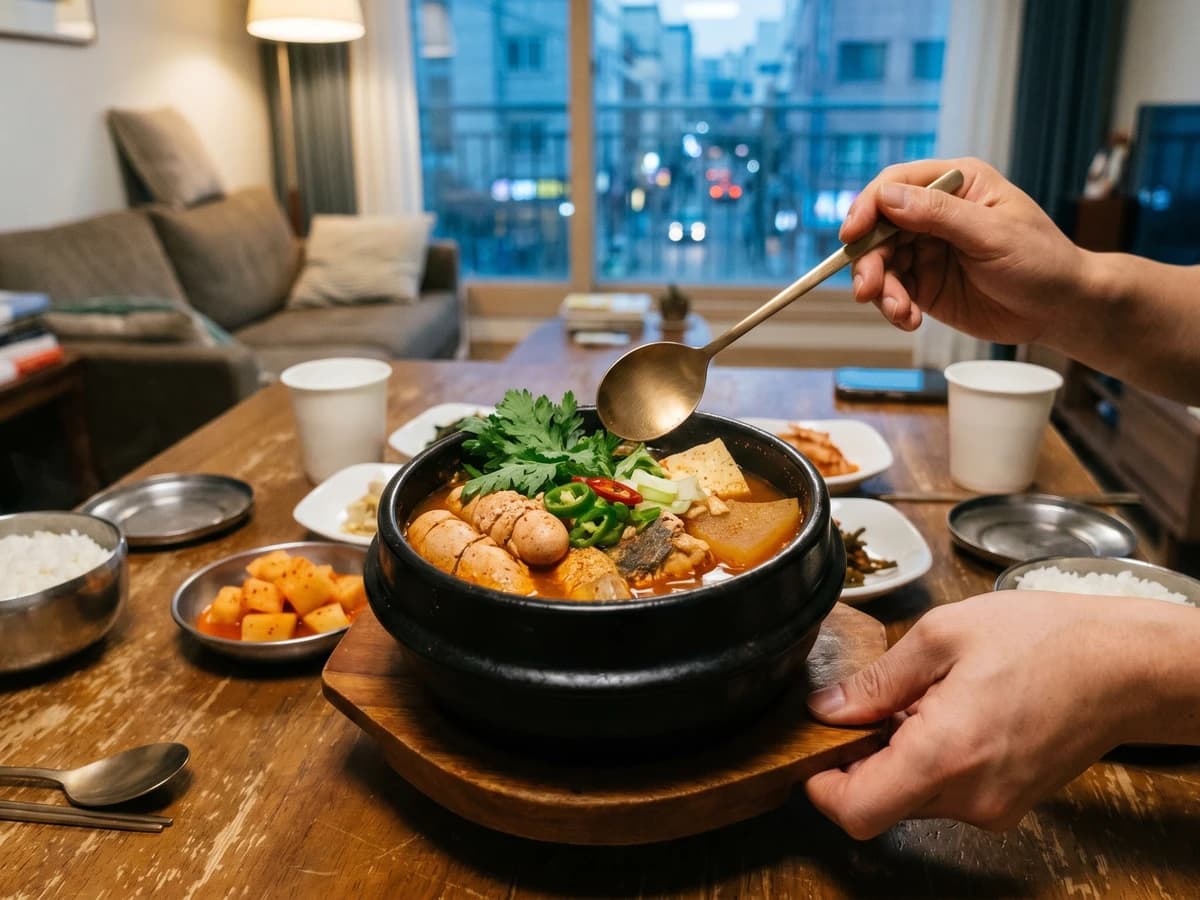
A weeknight fish roe stew with radish and crown daisy in a clean spicy broth, where the whole success depends on adding the roe late enough that it sets tender, not chalky.

Chef Jeong-sun
Late-summer mallow leaves rubbed with salt until the bitter green water runs off, then simmered in a clean doenjang broth with dried shrimp, the quiet soup a Korean weeknight deserves.