
Chef Jeong-sun
Aehobak-bokkeum (Korean Stir-Fried Zucchini)
Tender Korean zucchini half-moons cooked quickly over real heat, seasoned with salted shrimp so the squash tastes deeper than oil and still clean enough for a weeknight table.
A cooking platform built around craft, culture, and the stories behind what we eat.
Created by
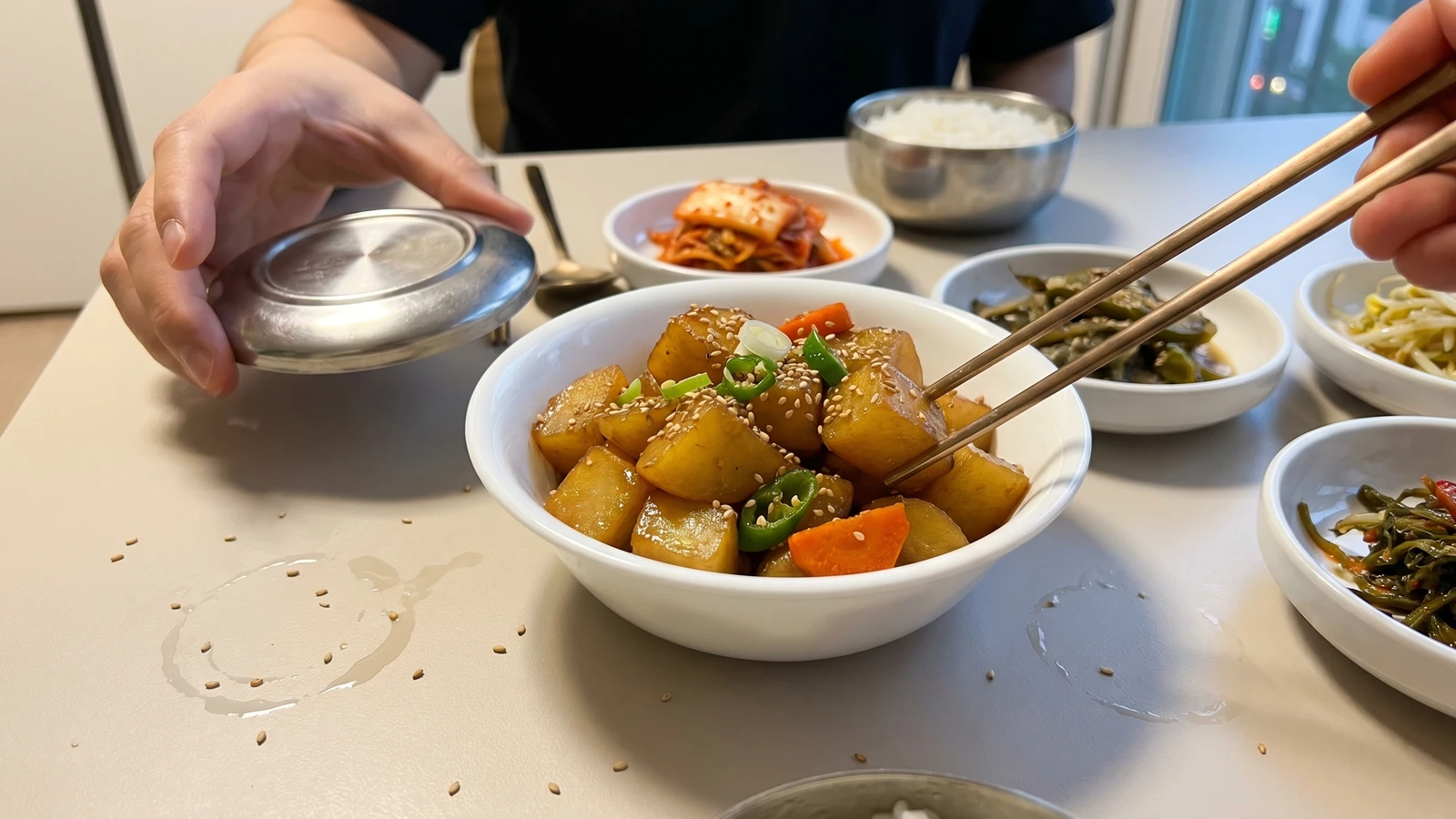
A weeknight banchan of potato cubes braised in soy until glossy and tender, sweet only at the edges, with the starch rinsed away so every piece keeps its shape.
Gamja-jorim lives or dies before the pan gets hot. Cut the potatoes evenly, rinse away the loose starch, and dry them well. Skip that and the cubes rub against each other until the sauce turns cloudy and the edges collapse. This is a small dish, but small dishes show careless hands quickly.
Every Korean child knows this banchan from the table or the lunchbox: a few glossy potato cubes beside rice, kimchi, and egg, sweet enough to please a tired person but not so sweet the potato disappears. The sauce is soy sauce, water, garlic, and just enough syrup at the end to shine. Add it too early and it burns before the potato is tender. Add it late and it clings where it should.
Notebook 42 says 450 grams of potato, cut into 2-centimeter cubes, takes 12 to 14 minutes after the sauce goes in. That sounds fussy until you try to feed people on a Tuesday night and want the dish to come out the same as last time. 손맛 is real. I still measure it, so it can be handed on.
Potatoes entered Korea in the early nineteenth century, first taking hold in colder northern and mountain regions where rice was harder to grow, including areas that later became closely associated with potato cooking such as Gangwon. Gamja-jorim is not a court dish; it belongs to the modern home table and dosirak lunchbox, where soy-braised pantry vegetables became practical, inexpensive banchan that kept well for several days.
Quantity
450g
peeled and cut into 2-centimeter cubes
Quantity
2 cups
for rinsing and soaking
Quantity
1 tablespoon
Quantity
3 tablespoons
Quantity
1 tablespoon
Quantity
1 tablespoon
Quantity
1/2 cup
Quantity
2 cloves
minced
Quantity
1 small
cut into 1.5-centimeter chunks
Quantity
1
sliced on the diagonal
Quantity
1 tablespoon
Quantity
1 teaspoon
Quantity
1 teaspoon
Quantity
1
thinly sliced
| Ingredient | Quantity |
|---|---|
| waxy or all-purpose potatoespeeled and cut into 2-centimeter cubes | 450g |
| cold waterfor rinsing and soaking | 2 cups |
| neutral oil | 1 tablespoon |
| soy sauce | 3 tablespoons |
| mirin or rice wine | 1 tablespoon |
| sugar | 1 tablespoon |
| water | 1/2 cup |
| garlicminced | 2 cloves |
| carrot (optional)cut into 1.5-centimeter chunks | 1 small |
| green chili (optional)sliced on the diagonal | 1 |
| rice syrup, corn syrup, or oligo syrup | 1 tablespoon |
| toasted sesame oil | 1 teaspoon |
| toasted sesame seeds | 1 teaspoon |
| scallion (optional)thinly sliced | 1 |
Cut the potatoes into even 2-centimeter cubes. Rinse them in cold water, then soak 10 minutes and drain well. This removes surface starch so the pieces stay distinct instead of turning the sauce cloudy and pasty.
Heat the oil in a wide skillet or shallow pot over medium heat. Add the drained potatoes and carrot, if using, and cook 4 to 5 minutes, stirring often, until the potato edges turn a little translucent. You are not browning them hard; you are setting the surface before the braise.
Stir in the soy sauce, mirin, sugar, 1/2 cup water, and minced garlic. Bring it to a steady simmer, then lower the heat to medium-low and cover the pan for 8 minutes. The lid gives the potato time to cook through before the sauce reduces.
Uncover and simmer 4 to 6 minutes more, shaking the pan and turning the potatoes gently with a spoon. Stop stirring roughly. The potatoes should be tender when pierced but still squared at the corners, and the liquid should be reduced to a few glossy spoonfuls.
Add the rice syrup and green chili, if using, and cook 1 to 2 minutes, turning the potatoes until the glaze clings. The syrup goes in late because it shines the sauce without burning before the potatoes are done.
Turn off the heat and fold in the sesame oil, sesame seeds, and scallion. Taste one piece. It should be savory first, gently sweet second, with the potato still tasting like potato. Serve warm, room temperature, or cold from the refrigerator with rice.
1 serving (about 160g)
Culinary guides, cultural storytelling, and the editorial depth that makes cooking meaningful.
Discover Culinary ExplorerChef Jeong-sun
Tender Korean zucchini half-moons cooked quickly over real heat, seasoned with salted shrimp so the squash tastes deeper than oil and still clean enough for a weeknight table.

Chef Jeong-sun
Tender Korean summer zucchini softened gently in the pan with saeujeot for salt and depth, finished with sesame so the vegetable stays sweet, green, and plainly itself.
Chef Jeong-sun
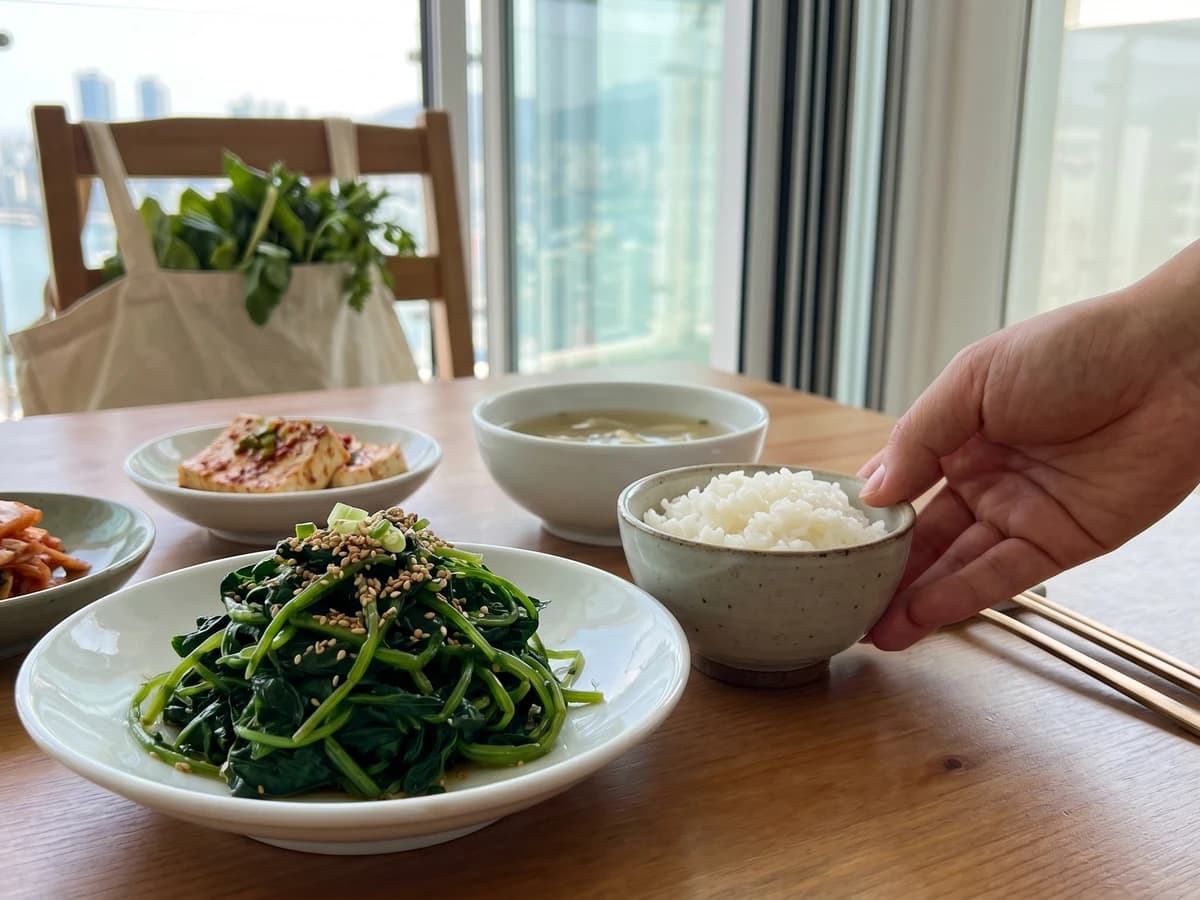
A bittersweet spring green from the southern shore, blanched just until pliant, then seasoned lightly so its clean coastal bitterness stays alive on the rice table.

Chef Jeong-sun
Torn king oyster or shiitake mushrooms, browned until their own water disappears, then finished with soy, garlic, sesame oil, and onion for a quiet banchan that earns its place.