
Chef Jeong-sun
Aehobak-guk (애호박국, Korean Zucchini Soup)
A clean summer soup of Korean zucchini and salted shrimp, built on quick anchovy-kelp broth and finished before the half-moons lose their shape on a weeknight table.
A cooking platform built around craft, culture, and the stories behind what we eat.
Created by
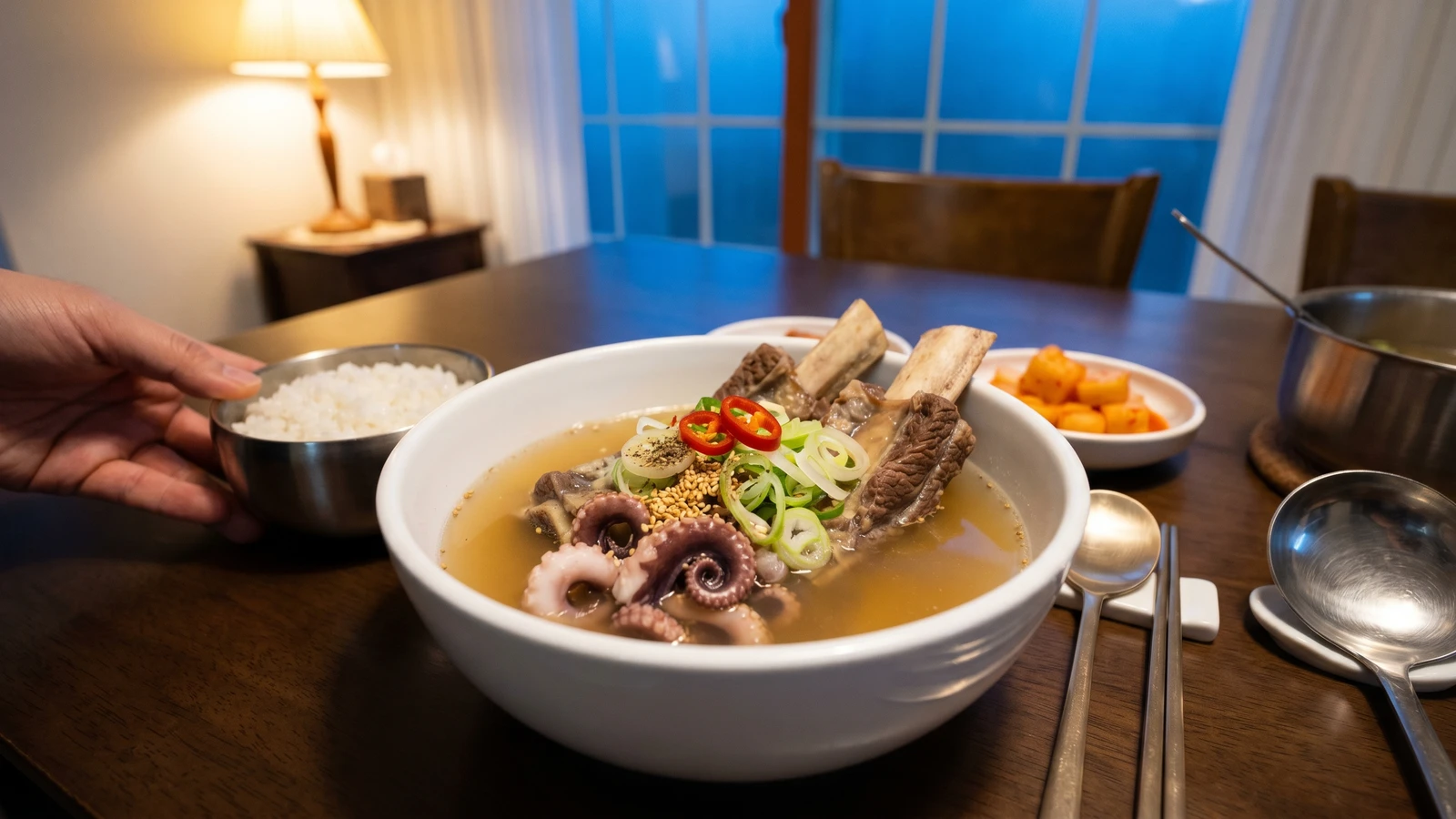
A clear, restorative Jeolla soup that puts beef short ribs and small octopus in one pot, land and sea together, timed carefully so the broth is deep and the octopus stays tender.
Galnaktang lives or dies in the last three minutes. The ribs may simmer for two hours, the broth may be skimmed until clear, the radish may give its sweetness properly, and still you can ruin the bowl by boiling the octopus as if it were another bone. Nakji (small octopus) goes in last. It curls, firms, and comes out tender. Wait too long and it punishes you under the teeth.
Galnaktang is closely tied to South Jeolla's coastal table, especially the Mokpo and Muan area where tidal-flat nakji and beef soups meet in one restorative bowl. It is not an old court dish; it belongs to regional restaurants and special-occasion home cooking, a twentieth-century expression of the Korean habit of pairing nourishing broth with prized local seafood. Muan's sebal-nakji, a thin-legged mudflat octopus, is still one of the ingredients most associated with this style of soup.
Quantity
1.2kg
cut crosswise into 5 to 6cm pieces
Quantity
2.5 liters, plus more
for broth, soaking, and blanching
Quantity
1 medium, about 500g
peeled and cut into 4 large chunks
Quantity
1 medium
halved
Quantity
8 cloves
5 whole and 3 minced
Quantity
4
2 white parts cut large for broth, 2 thinly sliced for serving
Quantity
1 piece, about 10cm square
Quantity
1 teaspoon
Quantity
2 tablespoons
Quantity
1 tablespoon
Quantity
1 teaspoon, plus more as needed
Quantity
4, about 120g each
cleaned
Quantity
2 tablespoons
for scrubbing the octopus
Quantity
1 tablespoon
for scrubbing the octopus
Quantity
1 teaspoon
Quantity
1/4 teaspoon
Quantity
1
thinly sliced
Quantity
to serve
| Ingredient | Quantity |
|---|---|
| beef short ribscut crosswise into 5 to 6cm pieces | 1.2kg |
| cold waterfor broth, soaking, and blanching | 2.5 liters, plus more |
| Korean radish (mu)peeled and cut into 4 large chunks | 1 medium, about 500g |
| onionhalved | 1 medium |
| garlic5 whole and 3 minced | 8 cloves |
| scallions2 white parts cut large for broth, 2 thinly sliced for serving | 4 |
| dried kelp (dasima) | 1 piece, about 10cm square |
| whole black peppercorns | 1 teaspoon |
| soup soy sauce (guk-ganjang) | 2 tablespoons |
| fish sauce or clear anchovy sauce (optional) | 1 tablespoon |
| kosher salt | 1 teaspoon, plus more as needed |
| small octopus (nakji)cleaned | 4, about 120g each |
| coarse saltfor scrubbing the octopus | 2 tablespoons |
| all-purpose flourfor scrubbing the octopus | 1 tablespoon |
| toasted sesame oil | 1 teaspoon |
| freshly ground black pepper | 1/4 teaspoon |
| red chili (optional)thinly sliced | 1 |
| toasted sesame seeds (optional) | to serve |
Put the short ribs in a large bowl and cover with cold water by 5cm. Soak 30 minutes, changing the water once. This pulls out loose blood from the cut bones so the broth tastes clean instead of heavy. Do not soak for hours; you will wash away beef flavor along with the blood.
Cover the drained ribs with fresh water in a large pot and bring to a hard boil. Boil 5 minutes, then drain. Rinse each rib under warm running water, rubbing away dark scum and bone dust. Wash the pot before the ribs go back in. This is not fussiness. Clear soup asks for clean bones.
Return the clean ribs to the clean pot with 2.5 liters cold water, the radish chunks, onion, 5 whole garlic cloves, scallion whites, kelp, and peppercorns. Bring up slowly over medium heat. Pull the kelp out as soon as the water reaches a steady simmer, about 15 minutes, because kelp left too long gives a slippery bitterness.
Lower the heat so the pot moves gently, with small bubbles at the edge. Simmer uncovered for 1 hour 30 minutes to 1 hour 45 minutes, skimming foam and fat from the surface as they rise. The ribs are ready when a chopstick slides into the meat without force, but the meat still holds to the bone. Violent boiling clouds the broth and toughens what you waited for.
Lift out the ribs and radish. Strain the broth through a fine sieve into a clean pot and discard the onion, garlic, scallion, and peppercorns. Slice the cooked radish into 1cm-thick pieces and return it to the pot with the ribs. Season with soup soy sauce, fish sauce if using, and 1 teaspoon kosher salt. Taste now. The broth should be savory and clear, a little under-salted because the octopus will bring its own sea taste.
If your fishmonger has not cleaned the nakji, turn each head inside out, remove the innards, cut out the eyes, and push out the beak from the center of the arms. Rub the octopus with 2 tablespoons coarse salt and 1 tablespoon flour for 2 minutes, then rinse very well under cold water. The salt and flour remove slime so the broth stays clean and the seasoning can touch the flesh.
Bring the seasoned broth with ribs and radish back to a lively simmer. Add the minced garlic and sesame oil, then lay in the cleaned octopus. Cook 2 to 3 minutes for small nakji, turning once, just until the arms curl and the thickest part of the head turns firm. Stop there. 손맛 is real; I measure it anyway, and for octopus the measure is minutes.
Divide ribs, radish, and one octopus into each bowl. Ladle the clear broth over them and finish with sliced scallion, black pepper, red chili if using, and a few sesame seeds if you like. Serve with rice, kkakdugi (cubed radish kimchi), and a small dish of salt and pepper for anyone who wants to season the rib meat at the table.
1 serving (about 800g)
Culinary guides, cultural storytelling, and the editorial depth that makes cooking meaningful.
Discover Culinary ExplorerChef Jeong-sun
A clean summer soup of Korean zucchini and salted shrimp, built on quick anchovy-kelp broth and finished before the half-moons lose their shape on a weeknight table.

Chef Jeong-sun
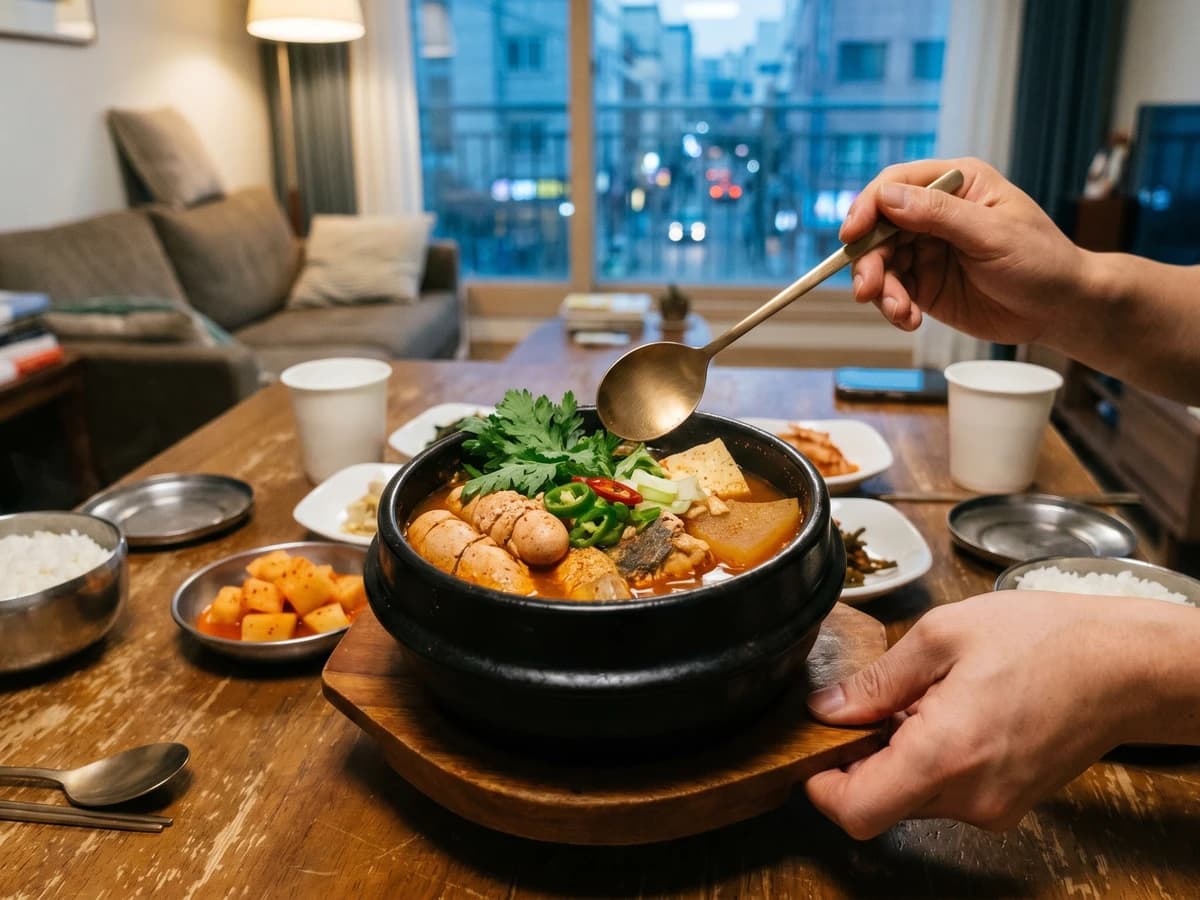
A Masan coast monkfish stew with firm white meat, gelatin at the bones, soybean sprouts for crunch, and a red broth seasoned to carry the fish, not bury it.
Chef Jeong-sun
A weeknight fish roe stew with radish and crown daisy in a clean spicy broth, where the whole success depends on adding the roe late enough that it sets tender, not chalky.

Chef Jeong-sun
Late-summer mallow leaves rubbed with salt until the bitter green water runs off, then simmered in a clean doenjang broth with dried shrimp, the quiet soup a Korean weeknight deserves.