
Chef Lupita
Acitrón de Cidra Conventual
Puebla's convent-style acitrón, made from cidra peel instead of endangered biznaga, built through repeated syrup soakings until the cubes turn firm, translucent, and ready for rosca or chiles en nogada.
A cooking platform built around craft, culture, and the stories behind what we eat.
Created by
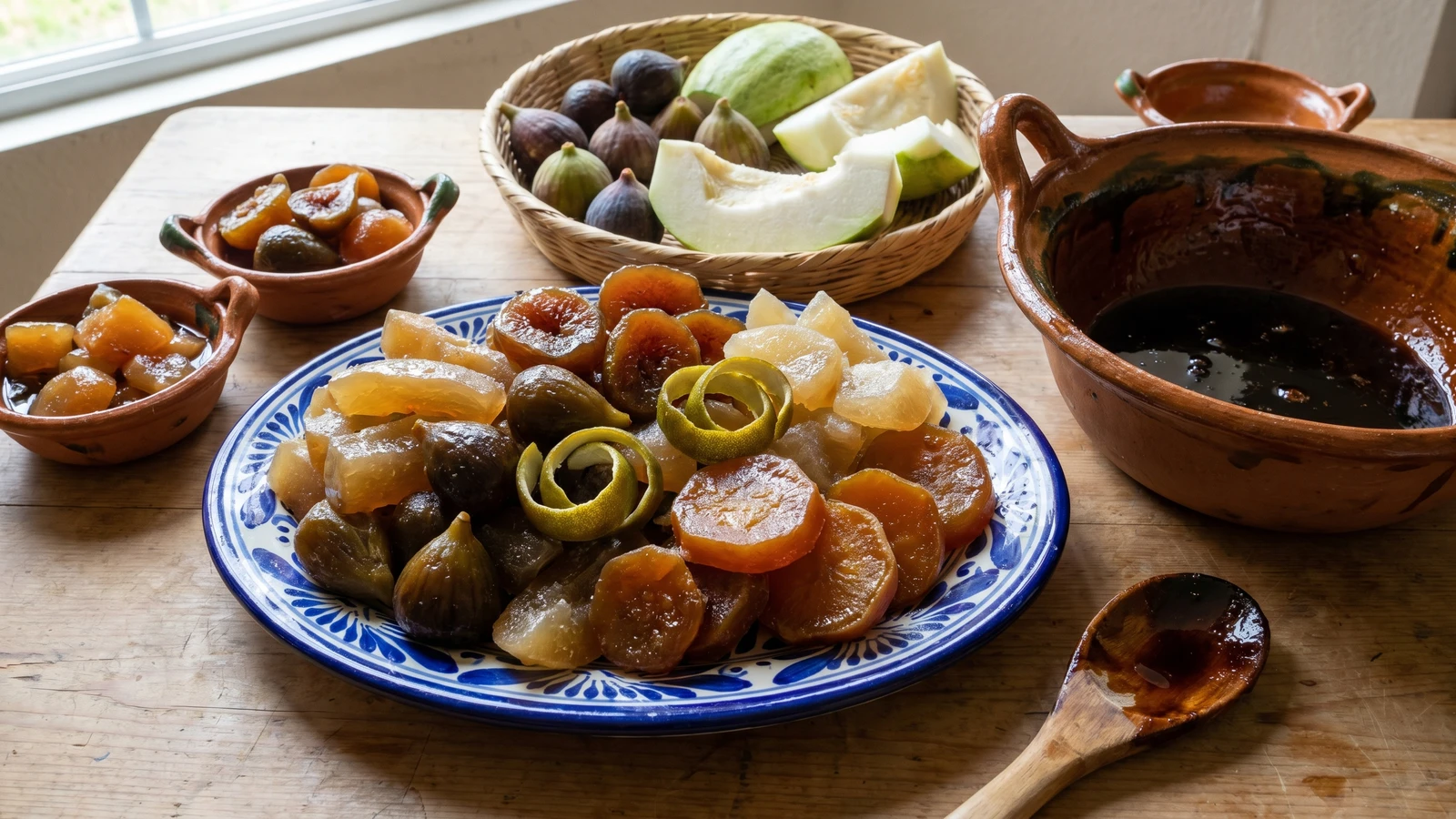
Xochimilco's old candy craft: fruit firmed with cal, simmered in syrup, and rested over days until figs, chilacayote, and camote turn glossy and translucent.
Ciudad de México, Xochimilco, Santa Cruz Acalpixca. That is where this candy lives. Not in a factory bag. In a kitchen where the fruit sits in clay or enamel bowls for days, where the syrup thickens little by little, where the cook knows that sugar has its own patience.
Frutas cristalizadas are not jam. They are not dried fruit. The fruit keeps its shape because it is treated with cal, food-grade calcium hydroxide, then cooked slowly in syrup until the flesh turns firm, glassy, and sweet all the way through. Chilacayote, higo, camote, tejocote, orange peel, lime peel. Each one takes the syrup differently. Pregúntale a las señoras del mercado. They will tell you which fruit is ready today.
Biznaga belongs to the history of this candy, yes, but listen carefully: wild biznaga used for acitrón is protected and overharvested. Do not buy illegal acitrón because a recipe told you to. Use chilacayote if you want that firm, translucent bite. A substitution is a compromise, not an upgrade, but destroying the plant is worse cooking.
This takes four days. No me vengas con atajos. The syrup must enter the fruit slowly or the outside turns hard and the center stays watery. La cocina no es decoración, es trabajo. Saber cocinar es saber vivir.
Santa Cruz Acalpixca in Xochimilco became one of Mexico City's best-known centers for frutas cristalizadas in the 20th century, especially for holiday fairs and Day of the Dead offerings. The technique joins colonial sugar preservation with older Mesoamerican knowledge of firming squash and fruit with alkaline cal, the same mineral logic behind nixtamal. Acitrón from biznaga was once a prestige ingredient in Mexican sweets and chiles en nogada, but several barrel cactus species are now protected in Mexico because overharvesting damaged wild populations.
Quantity
1 pound
peeled, seeded, and cut into 2-inch pieces
Quantity
1 pound
stems trimmed and each fig pricked 4 times with a toothpick
Quantity
1 pound
peeled and cut into thick rounds
Quantity
2
peel only, white pith removed
Quantity
2 tablespoons
for soaking
Quantity
3 quarts
for the cal soak
Quantity
8 cups
divided
Quantity
6 cups
for the syrup
Quantity
1 small piece
Quantity
2
Quantity
1 tablespoon
| Ingredient | Quantity |
|---|---|
| chilacayote squashpeeled, seeded, and cut into 2-inch pieces | 1 pound |
| firm ripe figsstems trimmed and each fig pricked 4 times with a toothpick | 1 pound |
| small orange sweet potatoes or camotepeeled and cut into thick rounds | 1 pound |
| limespeel only, white pith removed | 2 |
| food-grade calcium hydroxide (cal)for soaking | 2 tablespoons |
| cold waterfor the cal soak | 3 quarts |
| granulated cane sugardivided | 8 cups |
| waterfor the syrup | 6 cups |
| Mexican cinnamon (canela) | 1 small piece |
| whole cloves | 2 |
| fresh lime juice | 1 tablespoon |
Dissolve the food-grade cal in 3 quarts cold water in a nonreactive bowl. Let the cloudy mixture settle for 10 minutes, then add the chilacayote, figs, camote, and lime peels. Soak 8 to 12 hours. The cal firms the fruit so it can survive days in syrup without collapsing. Use food-grade cal only. Not construction lime. Así se hace y punto.
Drain the fruit and rinse under cold running water until the water runs clear and the slippery feel is gone. Rinse again. Cal left on the fruit gives a chalky taste and can irritate the mouth. Patience here is not decoration. It is safety and flavor.
Place the rinsed fruit in a wide pot and cover with fresh water. Bring to a gentle simmer and cook 10 minutes for figs and lime peel, 15 minutes for camote, and 20 minutes for chilacayote. Lift each fruit out as it becomes slightly tender but still firm. They should bend a little, not fall apart.
In a wide heavy pot, combine 6 cups water with 4 cups sugar, the canela, cloves, and lime juice. Bring to a simmer, stirring until the sugar dissolves. Add the blanched fruit in one layer if possible. Simmer gently for 25 minutes, then turn off the heat. Cover and let the fruit rest in the syrup overnight.
On the second day, lift the fruit out carefully with a slotted spoon. Add 2 cups sugar to the syrup and simmer until dissolved. Return the fruit and cook 20 minutes at a low simmer. Turn off the heat, cover, and rest overnight. The syrup is entering the fruit now. Rush it and the outside seals before the center is ready.
On the third day, repeat the same process with the remaining 2 cups sugar. Simmer the syrup until glossy and slightly thick, then return the fruit and cook 20 to 30 minutes. The chilacayote should look translucent at the edges, the figs dark and glossy, the camote dense and amber. Rest overnight one more time.
On the fourth day, lift the fruit from the syrup and set it on a wire rack over a tray. Let it dry at room temperature 6 to 12 hours, turning once, until tacky but not wet. If you want a sugared finish, roll the pieces lightly in granulated sugar after the surface has dried. Store in a covered tin or glass jar.
1 serving (about 30g)
Culinary guides, cultural storytelling, and the editorial depth that makes cooking meaningful.
Discover Culinary ExplorerChef Lupita
Puebla's convent-style acitrón, made from cidra peel instead of endangered biznaga, built through repeated syrup soakings until the cubes turn firm, translucent, and ready for rosca or chiles en nogada.

Chef Lupita
Ciudad de México's Tulyehualco alegría is popped huautli folded into piloncillo honey, pressed with peanuts, pepitas, and raisins, then cut into the rectangular bars that built a pueblo's identity.

Chef Lupita
Oaxaca's pre-Columbian amaranth bar, popped on a hot comal and bound with piloncillo, honey, and the sacred Zapotec grain that the Spanish tried, and failed, to outlaw.

Chef Lupita
Querétaro's mercado candy of popped amaranto pressed with dark piloncillo syrup, pepitas, pecans, and cacahuate, a Bajío sweet that respects the seed before it decorates the table.