
Chef Graziella
Crespelle ai Funghi Trifolati
Delicate Italian crepes wrapped around mushrooms sautéed in the trifolati manner, where olive oil, a breath of garlic, and fresh parsley create something far greater than the sum of their parts.
A cooking platform built around craft, culture, and the stories behind what we eat.
Created by
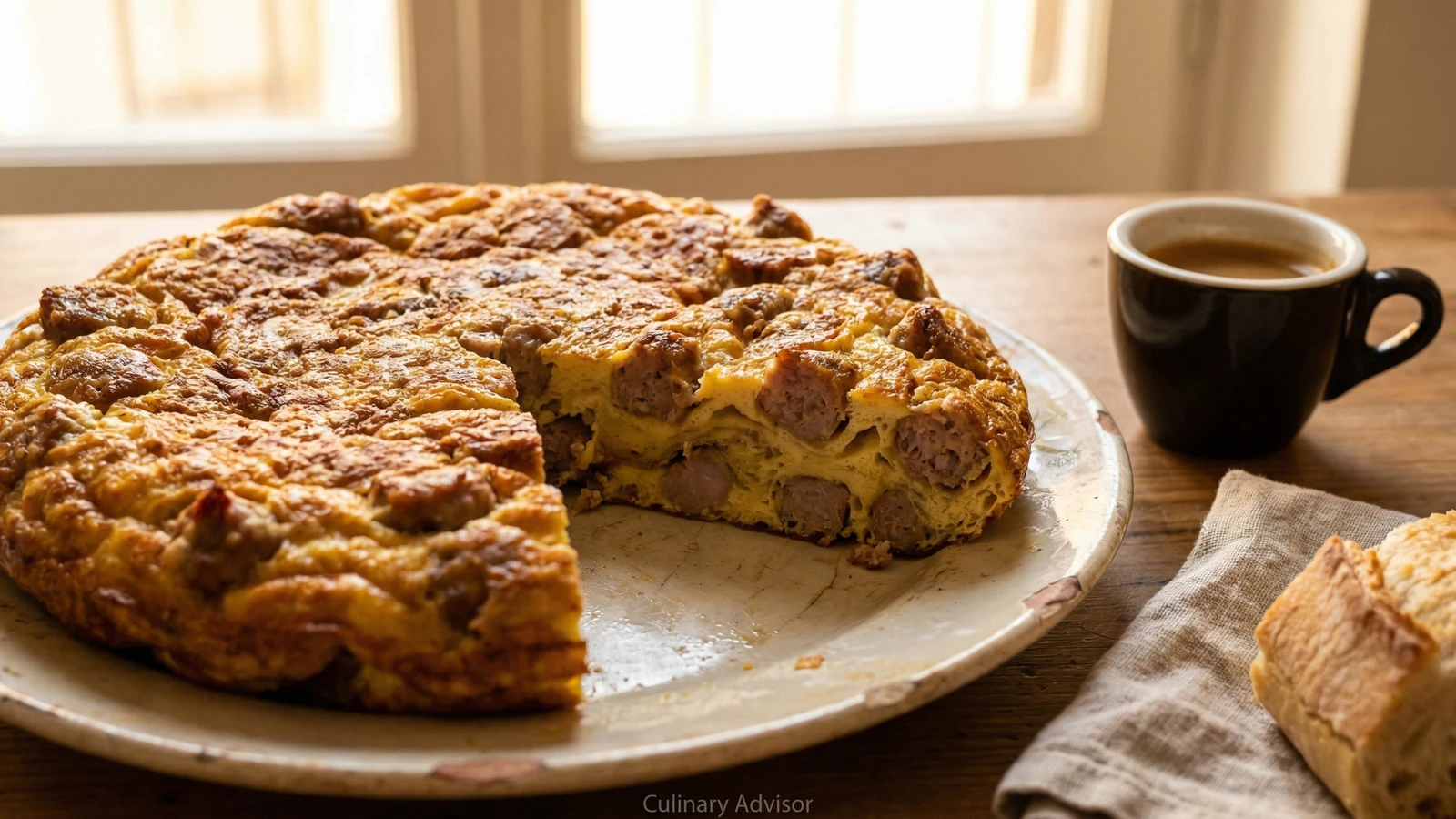
A rustic egg dish from Piedmont where crumbled sausage creates the rough, 'mangy' surface that gives this frittata its unflattering name and its honest character.
Frittata rognosa translates to 'mangy frittata,' and you must understand that this is not an insult. The name describes the rough, pockmarked surface created when sausage meat is broken into pieces and cooked into the eggs. It looks imperfect. It looks like something a farmer's wife made before dawn. This is precisely the point.
In Piedmont, where this dish originates, cooks do not fuss over smooth surfaces or restaurant presentations. They break sausage into the pan, let it render its fat, and pour beaten eggs over the top. The result is uneven, craggy, and deeply satisfying. The sausage fat flavors the eggs. The cheese melts into pockets. The bottom crisps while the top remains just set.
Americans have a tendency to overcomplicate frittatas with seven vegetables, three cheeses, and herbs from every continent. This is not Italian cooking. A proper frittata needs eggs, one substantial ingredient, perhaps some cheese. The sausage here does the work. What you keep out is as significant as what you put in.
Frittata rognosa belongs to the cucina povera tradition of Piedmont, where farm families stretched a few eggs with whatever meat was at hand. The name 'rognosa,' meaning scabby or mangy, dates to at least the 19th century, when rural cooks embraced rather than apologized for the dish's rough appearance. It remains a fixture of Piedmontese home cooking, rarely seen in restaurants precisely because it cannot be made precious.
Quantity
8 ounces
casings removed
Quantity
8
Quantity
3 tablespoons
freshly grated
Quantity
2 tablespoons
Quantity
1/4 teaspoon
Quantity
to taste
freshly ground
Quantity
1 tablespoon
Quantity
2 tablespoons
| Ingredient | Quantity |
|---|---|
| Italian pork sausagecasings removed | 8 ounces |
| large eggs | 8 |
| Parmigiano-Reggianofreshly grated | 3 tablespoons |
| whole milk | 2 tablespoons |
| fine sea salt | 1/4 teaspoon |
| black pepperfreshly ground | to taste |
| unsalted butter | 1 tablespoon |
| extra virgin olive oil | 2 tablespoons |
Place a 10-inch skillet, preferably cast iron or nonstick with an ovenproof handle, over medium heat. Add the sausage meat, breaking it into rough, uneven pieces with a wooden spoon. Do not make the pieces too small. You want chunks the size of your thumbnail, some larger, some smaller. Cook until the fat renders and the meat browns in spots, about 8 minutes. The irregular pieces create the 'rognosa' texture that gives this frittata its name.
While the sausage cooks, crack the eggs into a bowl. Add the Parmigiano-Reggiano, milk, salt, and several grinds of black pepper. Beat with a fork until the yolks and whites are combined but not homogeneous. You should still see streaks. Overbeating makes the eggs tough.
When the sausage has rendered and browned, add the butter and olive oil to the pan. Swirl to coat the bottom and sides as the butter melts. The combination of sausage fat, butter, and olive oil creates the flavor foundation. Let this heat for 30 seconds until the butter foam subsides.
Reduce the heat to medium-low. Pour the beaten eggs over the sausage. Do not stir. Use a spatula to gently lift the edges as the eggs begin to set, tilting the pan to let uncooked egg flow underneath. Do this for the first two minutes only. Then leave the frittata alone. Patience is required.
When the eggs are set around the edges but still wet on top, about 6 minutes, place the skillet under a preheated broiler set to high. Position the rack about 6 inches from the heat. Broil until the top is set and golden in spots, 2 to 3 minutes. Watch carefully. The difference between golden and burnt is 30 seconds.
Remove the skillet from the broiler. Let the frittata rest in the pan for 3 minutes. This allows the eggs to finish cooking from residual heat and makes unmolding easier. Slide onto a cutting board or serve directly from the pan, cut into wedges. It is excellent warm, good at room temperature, and acceptable cold the next morning.
1 serving (about 160g)
Culinary guides, cultural storytelling, and the editorial depth that makes cooking meaningful.
Discover Culinary ExplorerChef Graziella
Delicate Italian crepes wrapped around mushrooms sautéed in the trifolati manner, where olive oil, a breath of garlic, and fresh parsley create something far greater than the sum of their parts.

Chef Graziella
Thin Italian crepes wrapped around fresh ricotta brightened with garden herbs. A dish that proves breakfast can be civilized, that morning can begin with restraint and grace rather than excess.

Chef Graziella
The grain that built Rome, simmered until tender with a pleasant resistance, finished with nothing but good honey and walnuts you have toasted yourself. Three ingredients. No pretense.

Chef Graziella
Day-old panettone reborn in a simple egg custard, griddled in butter until the edges turn golden and the candied citrus begins to caramelize. This is what Milanese grandmothers do with Christmas leftovers.