
Chef Lupita
Arroz a la Oaxaqueña
Oaxaca's red rice, stained with tomato and fried in lard, steamed with carrots, ejotes, black beans, and epazote. The side that anchors a Oaxacan family meal and earns its place beside the main.
A cooking platform built around craft, culture, and the stories behind what we eat.
Created by
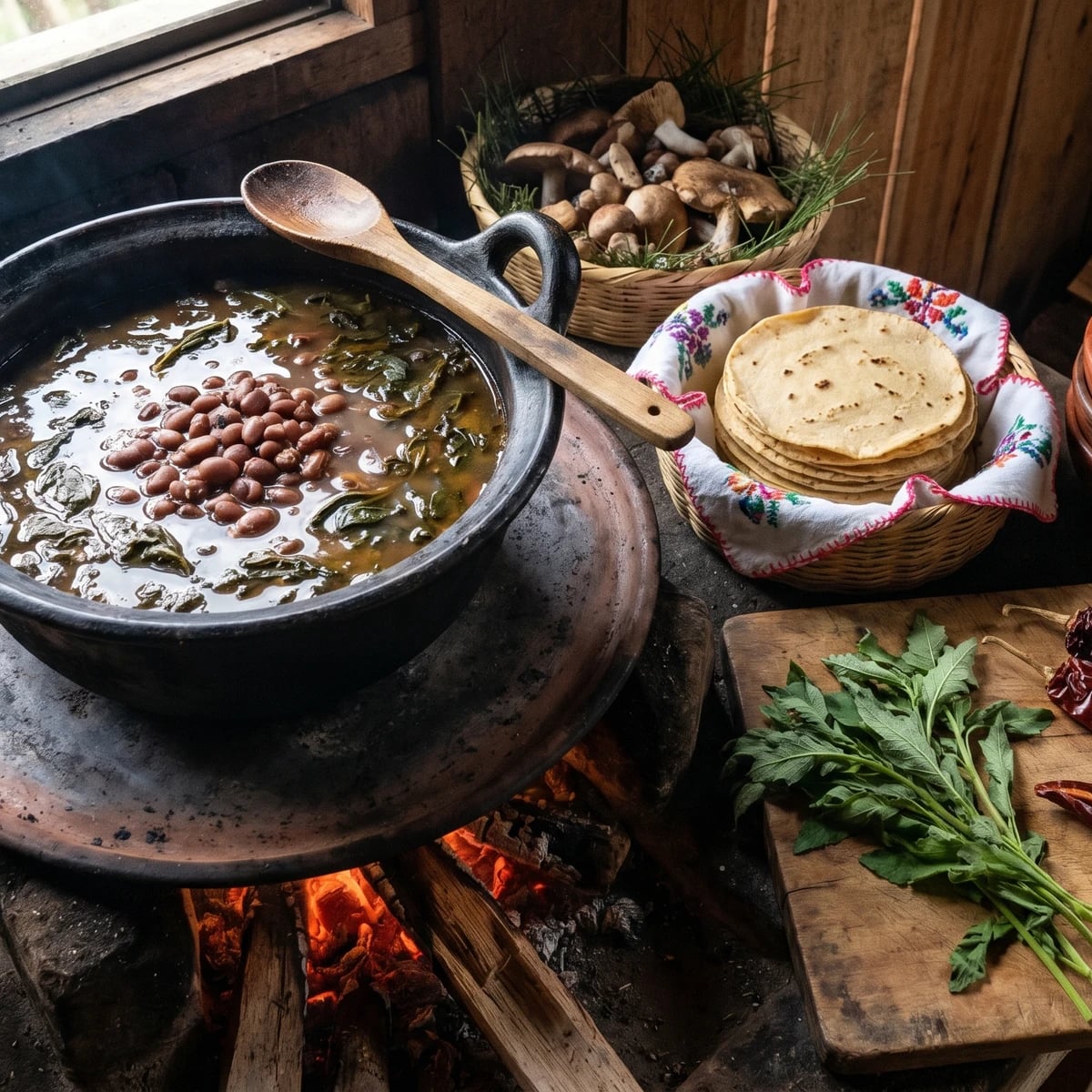
Michoacán's Meseta P'urhépecha bean pot, black or pinto beans cooked low in clay with epazote, onion, salt, and a spoon of manteca until the broth turns dark and clean.
Michoacán, the Meseta P'urhépecha above Lake Pátzcuaro, is where this pot belongs. In Cherán, Nahuatzen, Comachuén, Paracho, and the villages around Tzintzuntzan, beans are not a side thought. They are the olla that sits close to the leña while tortillas puff on the comal de barro. The P'urhépecha name I was given for this everyday bean pot is charámakua, and the attribution matters. This is P'urhépecha indigenous cooking, not a generic western Mexican bean recipe.
The dish is disciplined: frijol negro or pinto, water, onion, epazote, salt, and a spoon of manteca de cerdo. The clay olla from Capula or Tzintzuntzan changes the way the broth settles. The wood fire gives slow, surrounding heat. The epazote goes in late so it perfumes the beans instead of turning bitter. No cumin. No tomato. No powdered seasoning. No me vengas con atajos.
My mother was from Jalisco, and she seasoned beans another way. Her notebook taught me one useful rule: write down whose kitchen the recipe came from, or you will steal its name without knowing it. These beans belong to P'urhépecha kitchens, to the women who kept a pot alive while feeding children, workers, elders, and anyone who arrived hungry. Saber cocinar es saber vivir.
By the early 16th century, the P'urhépecha state centered at Tzintzuntzan controlled much of western Mexico, including the Lake Pátzcuaro basin where clay cooking vessels and maize-bean-squash agriculture were already central to daily food. Beans and epazote are pre-Columbian Mesoamerican ingredients, while manteca de cerdo entered Michoacán kitchens after Spanish pigs arrived in the 1500s and became part of many household preparations. The modern olla de frijoles keeps both histories visible: indigenous bean cookery in clay, and the later household use of pork fat for depth and gloss.
Quantity
1 pound
picked over and rinsed
Quantity
enough to cover by 3 inches
Quantity
10 cups, plus more hot water as needed
Quantity
1/2 medium
peeled and left intact
Quantity
1 tablespoon
Quantity
2 large sprigs
rinsed
Quantity
1 1/2 teaspoons, plus more to taste
Quantity
for serving
warmed on a comal de barro
Quantity
for serving
| Ingredient | Quantity |
|---|---|
| dried frijol negro criollo, pinto, or bayo beanspicked over and rinsed | 1 pound |
| water for soaking | enough to cover by 3 inches |
| water for cooking | 10 cups, plus more hot water as needed |
| white onionpeeled and left intact | 1/2 medium |
| manteca de cerdo | 1 tablespoon |
| fresh epazoterinsed | 2 large sprigs |
| fine sea salt | 1 1/2 teaspoons, plus more to taste |
| hand-pressed corn tortillas (optional)warmed on a comal de barro | for serving |
| chilke rojo de Cherán K'eri (optional) | for serving |
Pick through the beans and remove stones, broken beans, and dust. Rinse them well, then cover with cool water by three inches and soak 8 hours or overnight. In the Meseta P'urhépecha, soaking is not softness theater. It saves leña and helps the beans cook evenly. Drain and rinse once before cooking.
Put the soaked beans in a cured clay olla with 10 cups fresh water, the half onion, and the manteca. Set the olla near a steady wood fire so it warms gradually. Clay does not like shock. The manteca will melt into small glossy circles on the surface. Vegetable oil does not belong here. La manteca es el sabor.
Bring the beans to a gentle simmer, then keep the bubbles slow and steady. Skim the pale foam during the first 15 minutes. Stir with a wooden cuchara every so often and add hot water if the beans start to show above the liquid. Cook 1 1/2 to 2 hours, depending on the age of the beans. Old beans are stubborn. New-crop beans listen.
When the beans are mostly tender but not falling apart, add the epazote sprigs and salt. Cook 30 to 45 minutes more, until the beans are creamy inside and the broth has turned dark, clean, and lightly glossy from the manteca. Add salt at the end because the beans need to soften first. Add epazote late because it should perfume the pot, not bully it.
Pull the olla away from the fire and let the beans rest 20 minutes. This matters. The broth thickens, the salt settles into the skins, and the epazote stops tasting raw. Remove the spent onion and epazote if they have given everything they have. Taste again for salt.
Ladle the beans and broth into rough red clay bowls and put the olla on the table if you can. Serve with hand-pressed corn tortillas from the comal de barro and, if the table wants chile, a small bowl of chilke rojo from Cherán K'eri. The bean pot stays restrained. Onion, epazote, salt, manteca. Así se hace y punto.
1 serving (about 340g)
Culinary guides, cultural storytelling, and the editorial depth that makes cooking meaningful.
Discover Culinary Explorer
Chef Lupita
Oaxaca's red rice, stained with tomato and fried in lard, steamed with carrots, ejotes, black beans, and epazote. The side that anchors a Oaxacan family meal and earns its place beside the main.

Chef Lupita
Sinaloa's home-cook white rice topped with cold cubes of cream cheese that soften into the warm grain, finished with crema and a sprinkle of chiltepin at the table. The trick that makes a side dish feel like a small luxury.

Chef Lupita
Sonora's white rice, toasted in butter and steamed with sweet corn and tender peas. The clean, quiet partner to a plate of carne asada, not the red rice of central Mexico.

Chef Lupita
Yucatán's white rice with sweet corn kernels, toasted in lard with garlic and onion. The quiet base that holds up against the peninsula's bold achiote-stained stews.