Culinary Explorer

A cooking platform built around craft, culture, and the stories behind what we eat.
Discover Culinary Explorer
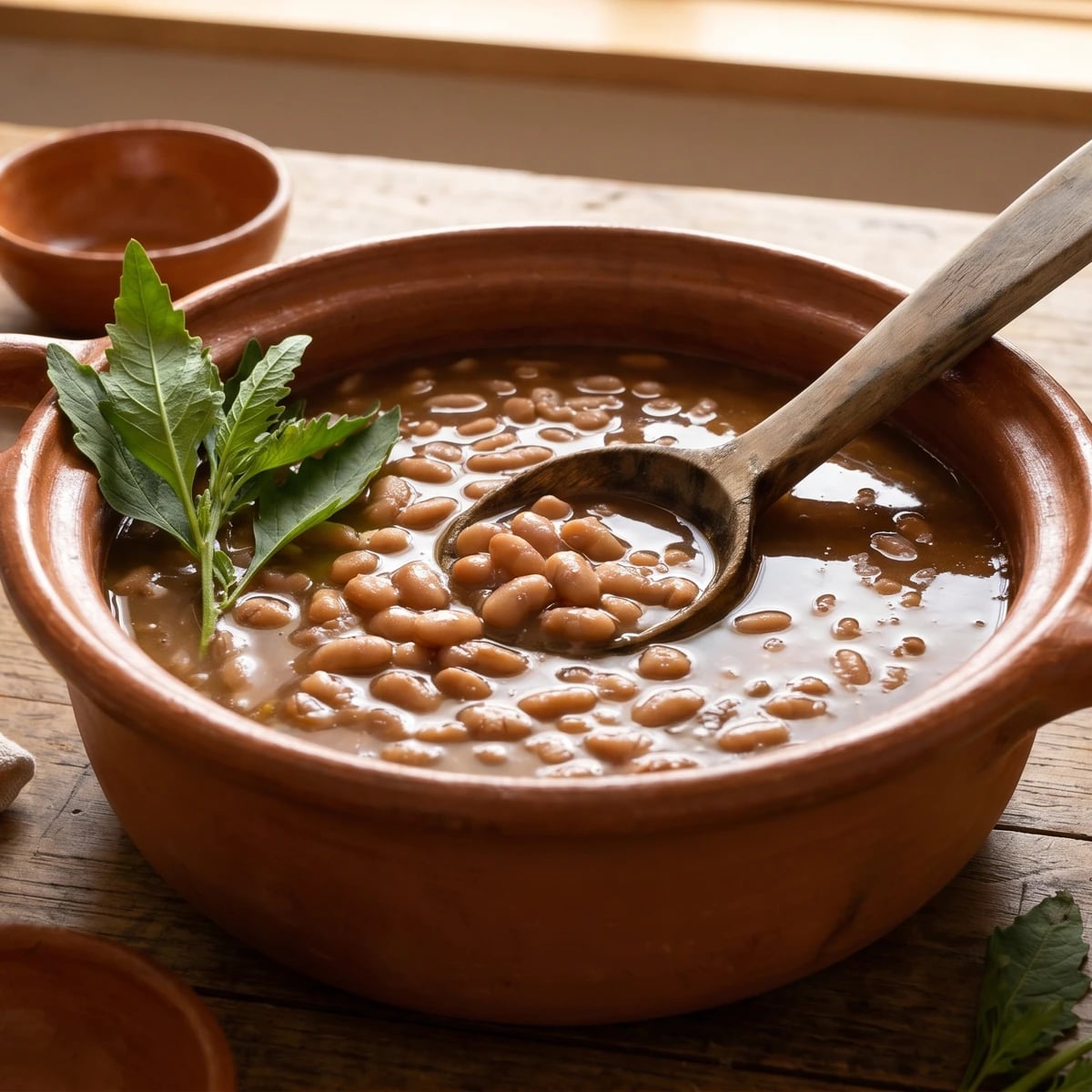
Frijoles de la Olla con Epazote

Frijoles de la Olla con Epazote

Created by

Ciudad de Mexico's everyday bean pot from the Valle de Mexico: frijol bayo simmered in clay with white onion, garlic, epazote, and a small spoon of manteca.

Side Dishes
Mexican
Comfort Food
Budget Friendly
Make Ahead
15 min
Active Time
2 hr 30 min cook2 hr 45 min total
Yield6 to 8 servings

Ciudad de Mexico, Valle de Mexico. This pot belongs to the central highlands, to the markets of La Merced and Jamaica, where the bean sacks sit open and the epazote is tied in rough green bundles. Frijoles de la olla are not a side dish pretending to be important. They are the table's foundation.

Use frijol bayo or flor de mayo for this version. Black beans have their serious place in Veracruz, Oaxaca, Chiapas, and the Yucatan Peninsula, but in many central Mexican homes the bayo bean is the daily bean: thin-skinned, creamy, generous with its broth. The epazote is not decoration. It perfumes the pot and keeps the beans from tasting flat. Add it late so it stays alive.

I learned this pot from my mother in Colonia Roma, but I understood it at La Merced, watching señoras test beans by biting one dry bean between their teeth and telling the vendor, without apology, whether his stock was old. Si no conoces el mercado, no conoces la cocina. A bean pot teaches patience, thrift, and judgment. Saber cocinar es saber vivir.

Beans, corn, and squash formed the agricultural base of Mesoamerican cooking long before the Spanish conquest, and frijoles de la olla preserve one of the oldest household techniques: simmering beans in clay with local aromatics. Epazote, a native herb used across central and southern Mexico, appears in colonial-era descriptions under Nahuatl-derived names and became closely tied to bean cookery because its sharp, resinous flavor cuts the earthiness of legumes. The use of manteca de cerdo entered Mexican kitchens after pigs arrived with the Spanish in the 16th century, and central Mexican cooks folded it into everyday dishes without surrendering the older bean-and-clay method.

The technique, the tradition, and the story behind every dish.

Discover Culinary Explorer

Ingredients

dried frijol bayo or flor de mayo beans

Quantity

1 pound

picked over and rinsed

water

Quantity

8 cups, plus more as needed

white onion

Quantity

1/2 medium

garlic cloves

Quantity

3

peeled and lightly crushed

manteca de cerdo (pork lard)

Quantity

2 tablespoons

fresh epazote

Quantity

1 large sprig

kosher salt

Quantity

2 teaspoons, plus more to taste

warm corn tortillas (optional)

Quantity

for serving

salsa de molcajete (optional)

Quantity

for serving

Equipment Needed

  • 3-quart clay olla, cured before first use
  • Wooden spoon
  • Comal for warming corn tortillas

Instructions

  1. 1

    Sort the beans

    Spread the beans on a tray and pick through them with your hands. Remove stones, broken beans, and any shriveled ones that look older than they should. Rinse under cool water. If your beans came from a mercado with good turnover, they do not need soaking. If they came from a supermarket shelf and nobody knows how long they sat there, soak them overnight and drain them. Ask the women at the market. They know.

  2. 2

    Start the olla

    Put the beans in a clay olla or heavy pot with 8 cups water, the white onion, and the garlic. Bring to a gentle simmer over medium heat, then lower the flame. The water should move quietly, with small bubbles, not a violent boil. A hard boil breaks the skins and leaves you with cloudy broth before the beans are tender.

  3. 3

    Cook until tender

    Cook uncovered or half-covered for 1 hour and 45 minutes to 2 hours, adding hot water whenever the beans are no longer covered by at least one inch. Stir from the bottom now and then, especially in clay. The beans are ready for seasoning when you can press one between your fingers and it gives without turning grainy.

  4. 4

    Season the broth

    Add the salt, manteca de cerdo, and the whole sprig of epazote. Do not add the epazote at the beginning unless you want it tired and bitter. Let the beans simmer 25 to 30 minutes more, until the broth tastes round and the beans are completely tender. La manteca es el sabor, even in a humble pot of beans. It gives the broth body.

  5. 5

    Rest and serve

    Turn off the heat and let the beans rest 15 minutes in the pot. Pull out the onion, garlic, and spent epazote if you want a cleaner bowl. Taste for salt. Serve in small clay bowls with plenty of broth, warm corn tortillas, and salsa de molcajete on the side. No cheese blanket. No sour cream. These are frijoles de la olla, not a plate of confusion.

Chef Tips

  • Buy beans where people buy beans every day. At a good puesto in La Merced, the vendor can tell you when the sack arrived. Old beans take forever and never become creamy. Technique cannot rescue dead stock.
  • Use epazote fresh if you can. Dried epazote is a compromise, not an upgrade. If dried is all you have, use 1 teaspoon and add it in the last 15 minutes.
  • A clay olla gives the broth a softer texture and a mineral taste you will not get from stainless steel. If you do not own one, use a heavy pot and keep the simmer gentle. The principle stays the same.
  • Do not drown these beans in chile. Not all Mexican food is chile-first. Here the flavor is bean, clay, onion, garlic, epazote, and manteca. Así se hace y punto.

Advance Preparation

  • The beans can be cooked up to 4 days ahead and refrigerated in their broth. They taste better on the second day.
  • For enfrijoladas or refried beans, save the broth. That liquid is not waste. It is where the flavor lives.
  • If soaking old beans overnight, drain the soaking water before cooking and start with fresh water, onion, and garlic.

Frequently Asked Questions

Nutrition Information

1 serving (about 320g)

Calories
345 calories
Total Fat
5 g
Saturated Fat
2 g
Trans Fat
0 g
Unsaturated Fat
3 g
Cholesterol
5 mg
Sodium
750 mg
Total Carbohydrates
60 g
Dietary Fiber
12 g
Sugars
3 g
Protein
16 g

Note: Chef personas and recipes are created with AI assistance. Cook with care: follow safe food-handling practices, check doneness with a thermometer when needed, and adapt for allergies and your kitchen.

Where cooking meets culture.

Culinary guides, cultural storytelling, and the editorial depth that makes cooking meaningful.

Discover Culinary Explorer

More from Central Mexican Side Dishes

Browse the full collection