
Chef Juliana
Açaí com Camarão do Pará
You think açaí belongs with banana and granola because that's the version that traveled. In Pará, thick unsweetened açaí sits beside shrimp, rice, and farinha. Anota aí: same fruit, different meal.
A cooking platform built around craft, culture, and the stories behind what we eat.
Created by
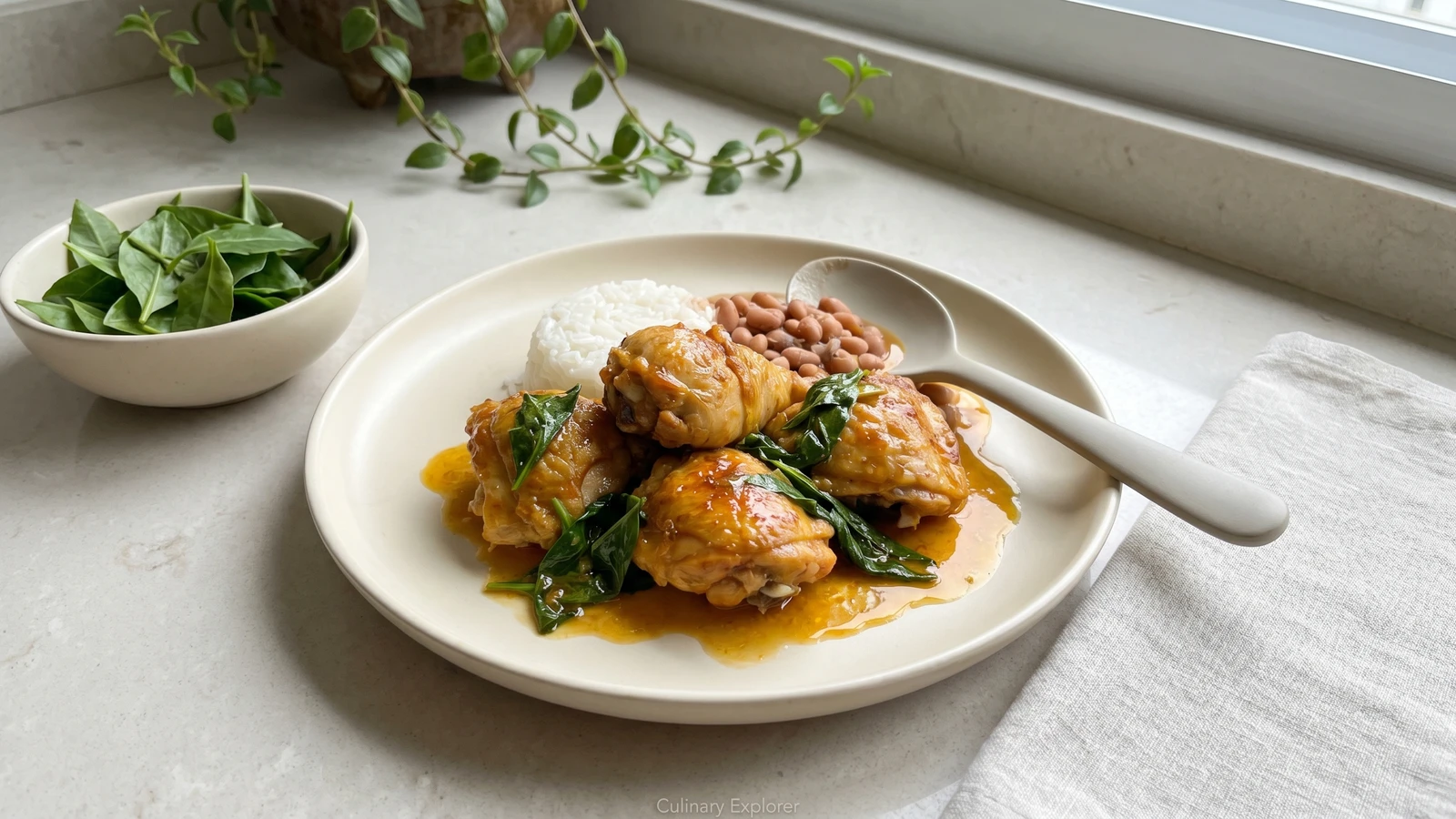
You don't need a special hand for this pot. Brown the chicken, build the refogado, add ora-pro-nóbis at the end, and dinner suddenly looks like it knew what it was doing.
You might look at a bunch of ora-pro-nóbis and think, quietly, isso não é pra mim. A thorny leaf from Minas, a name in Latin, people calling it PANC like dinner needs a badge. No. It's a leaf. A good one, yes, but still a leaf. A gente can cook a leaf.
I like this kind of food because it takes the pê-efe seriously: rice, beans, a piece of chicken, and something green, all on the same honest plate. That isn't filler. That's the formula that has kept Brazilian homes fed with intelligence, thrift, and flavor. Comida de verdade doesn't need a packet whispering fake seasoning into the pot.
The method is simple, and anota aí because this is where recipes que funcionam earn their name. Dry the chicken so it browns instead of boils. Give the onion time to murchar, soft and sweet, before the garlic goes in. Simmer the chicken until it loosens from the bone, then add the ora-pro-nóbis last so it stays green and slightly silky instead of disappearing into the sauce.
Cozinhar não é dom, é um aprendizado. I learned that the embarrassing way, with burned onions and undercooked chicken and a cheap notebook full of corrections. This pot is kinder than that. It teaches you while it feeds you.
Ora-pro-nóbis, Pereskia aculeata, is a leaf from a climbing cactus long used in Minas Gerais, often grown as a thorny living fence before it lands in the pot. Sabará, especially the district of Pompéu, helped turn the leaf into a regional emblem with its Festival do Ora-pro-nóbis, held since the late 1990s. The name means "pray for us" in Latin, and one common story ties it to leaves picked from church hedges while prayers were being said.
Quantity
1 1/2 pounds
Quantity
1 teaspoon, plus more to taste
Quantity
1/2 teaspoon
Quantity
1 tablespoon
Quantity
2 tablespoons
Quantity
1 medium
finely chopped
Quantity
4 cloves
minced
Quantity
1 small
chopped
Quantity
1 teaspoon
Quantity
1
Quantity
1 cup, plus more as needed
Quantity
3 packed cups
washed and roughly torn
Quantity
2 tablespoons
chopped
| Ingredient | Quantity |
|---|---|
| bone-in chicken thighs and drumsticks | 1 1/2 pounds |
| salt | 1 teaspoon, plus more to taste |
| freshly ground black pepper | 1/2 teaspoon |
| lime juice | 1 tablespoon |
| oil or lard | 2 tablespoons |
| onionfinely chopped | 1 medium |
| garlicminced | 4 cloves |
| ripe tomatochopped | 1 small |
| sweet paprika or colorau | 1 teaspoon |
| bay leaf | 1 |
| hot water | 1 cup, plus more as needed |
| fresh ora-pro-nóbis leaveswashed and roughly torn | 3 packed cups |
| parsley or scallions (optional)chopped | 2 tablespoons |
Pat the chicken dry with paper towels, then season it with the salt, pepper, and lime juice. Let it sit while you chop the onion, garlic, and tomato. Dry skin and dry surface matter because wet chicken hits the pot and steams before it can dourar, and then you get pale meat sitting in its own liquid wondering where dinner went.
Warm the oil or lard in a heavy pot over medium-high heat. Add the chicken in one layer, skin side down if using skin-on pieces, and brown until deep golden on both sides, about 4 to 5 minutes per side. Work in batches if needed. Crowd the pot and the temperature drops, the chicken releases water, and you boil it grey instead of building flavor.
Move the browned chicken to a plate and lower the heat to medium. Add the onion to the same pot and cook, stirring and scraping the brown bits from the bottom, until it goes soft, shiny, and see-through, about 5 minutes. Add the garlic and cook for 1 minute, just until you can smell it. The onion sweetens the sauce, the garlic perfumes it, and burnt garlic is bitter enough to boss the whole pot around.
Add the tomato, colorau, and bay leaf. Cook until the tomato collapses and the oil looks reddish at the edges, about 3 minutes. This little pause matters because raw tomato tastes sharp and watery; cooked into the refogado, it becomes sauce.
Return the chicken and any juices to the pot. Pour in 1 cup hot water, stir once, and scrape the bottom again. Cover with the lid slightly ajar and simmer gently until the chicken is tender and cooked through, about 25 to 30 minutes. The liquid should bubble calmly, not thrash. Too hard a boil tightens the meat and dries it before the sauce has a chance to get good.
Taste the sauce and adjust the salt. Add the ora-pro-nóbis leaves and fold them through the chicken. Cook uncovered for 3 to 5 minutes, just until the leaves murchar, turn a deeper green, and lightly thicken the sauce with their natural silkiness. Add them too early and they lose their color and courage. Last is the whole point.
Turn off the heat, sprinkle parsley or scallions if using, and let the pot rest for 5 minutes before serving. The sauce settles, the chicken drinks a little back in, and the plate behaves better. Serve with arroz soltinho, feijão from scratch, and a spoonful of the green sauce over the rice. That's dinner solved.
1 serving (about 240g)
Culinary guides, cultural storytelling, and the editorial depth that makes cooking meaningful.
Discover Culinary ExplorerChef Juliana
You think açaí belongs with banana and granola because that's the version that traveled. In Pará, thick unsweetened açaí sits beside shrimp, rice, and farinha. Anota aí: same fruit, different meal.

Chef Juliana
You think savory açaí is not for you. I understand. Then you taste the cold, dark bowl beside hot fried fish, rice, greens, and farinha, and dinner gets very quiet.

Chef Juliana
You think salted beef and rice sound like trouble. Anota aí: soak the charque, brown it properly, build the refogado, and this one pot resolves dinner.

Chef Juliana
You think a Maranhão green rice belongs to somebody else's clever hands. It doesn't. Wilt the vinagreira, build the refogado, fold it through arroz soltinho, and dinner gets bright, coastal, and yours.