Culinary Explorer
A cooking platform built around craft, culture, and the stories behind what we eat.
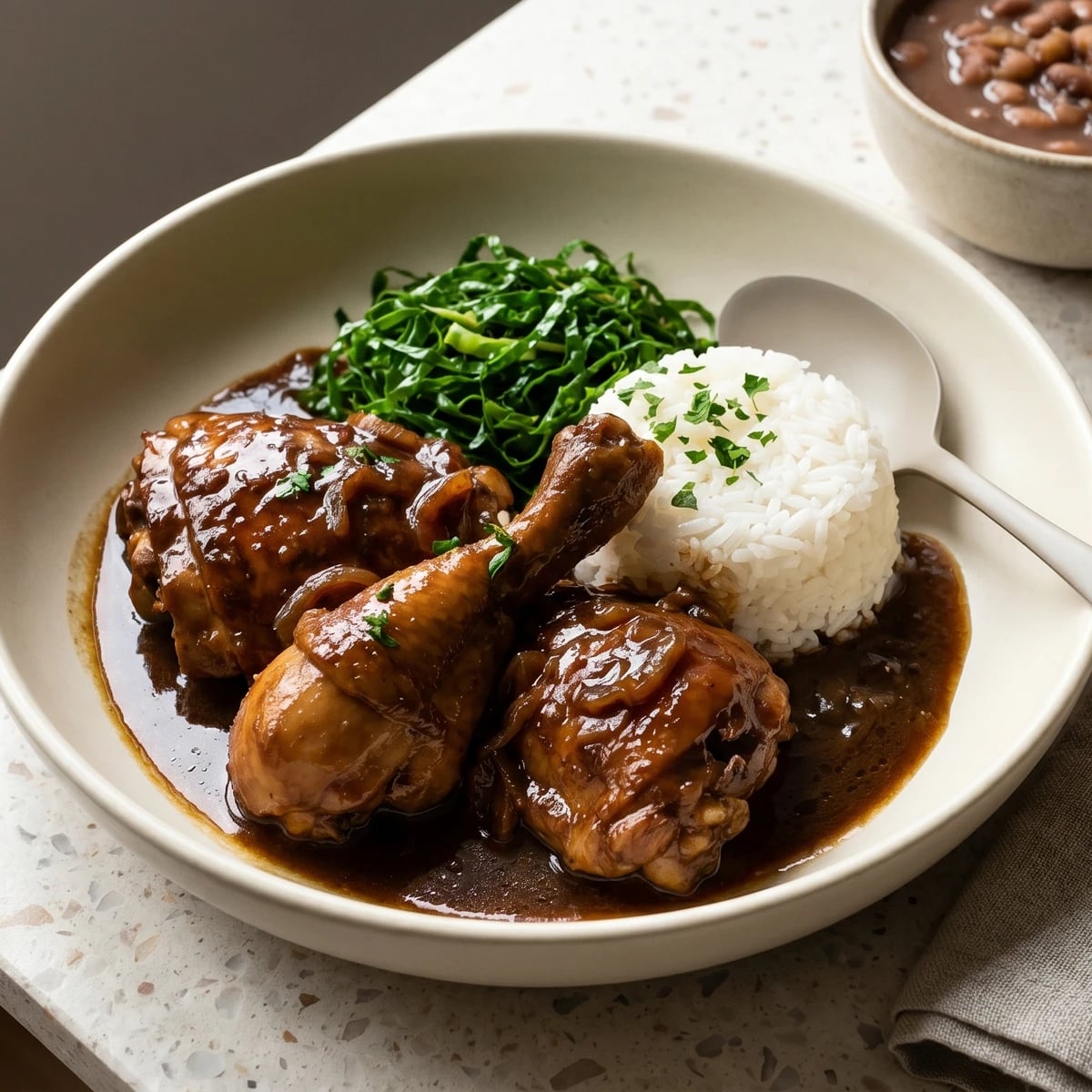
Frango Caipira ao Molho Pardo
Created by Chef Juliana
You think blood sauce is the line where cooking stops being for you. It isn't. Anota aí: vinegar, patience, a real refogado, and the nerve to keep stirring.
You saw the word blood and heard that little voice: isso não é pra mim. I know. I had the same voice when I was learning from my caderno, ruining onions with the confidence of a person who owned exactly one pan and too much pride. But cooking isn't a gift, it's something you learn. Even this.
This is comida de verdade with no costume on. A chicken, onion, garlic, vinegar, and the part of the animal people got squeamish about only after food started arriving wrapped, boneless, and pretending it never had a body. The sauce isn't a trick. The vinegar keeps the blood from clumping, the slow braise gives the caipira chicken time to soften, and the refogado gives the pot its backbone.
Put it on the everyday plate and it makes perfect sense: arroz soltinho to catch the dark sauce, feijão from scratch beside it, and couve quickly refogada so something green cuts through the richness. That's the pê-efe doing what it does best, feeding a country without making a speech.
The only hard rule is sourcing. Use fresh, food-grade chicken blood from a trusted butcher or farmer, already mixed with vinegar or collected into vinegar right away. If you can't get that, we cook frango caipira ensopado and call it dinner. We don't fake molho pardo with powder, packet, or nonsense.
Ingredients
whole caipira chicken
Quantity
1, 1.8 to 2 kg
cut into serving pieces
fresh food-grade chicken blood
Quantity
1/2 cup
kept cold
white vinegar
Quantity
3 tablespoons, plus 1 tablespoon
divided
| Ingredient | Quantity |
|---|---|
| whole caipira chickencut into serving pieces | 1, 1.8 to 2 kg |
| fresh food-grade chicken bloodkept cold | 1/2 cup |
| white vinegardivided | 3 tablespoons, plus 1 tablespoon |
Where cooking meets culture.
Culinary guides, cultural storytelling, and the editorial depth that makes cooking meaningful.
Discover Culinary Explorer