
Chef Lesia
Baklazhanna Ikra (баклажанна ікра, eggplant caviar)
Eggplants collapse into silk, tomatoes give up their summer, and the pan turns sweet and smoky enough that a spoon dragged through leaves a clean path.
A cooking platform built around craft, culture, and the stories behind what we eat.
Created by
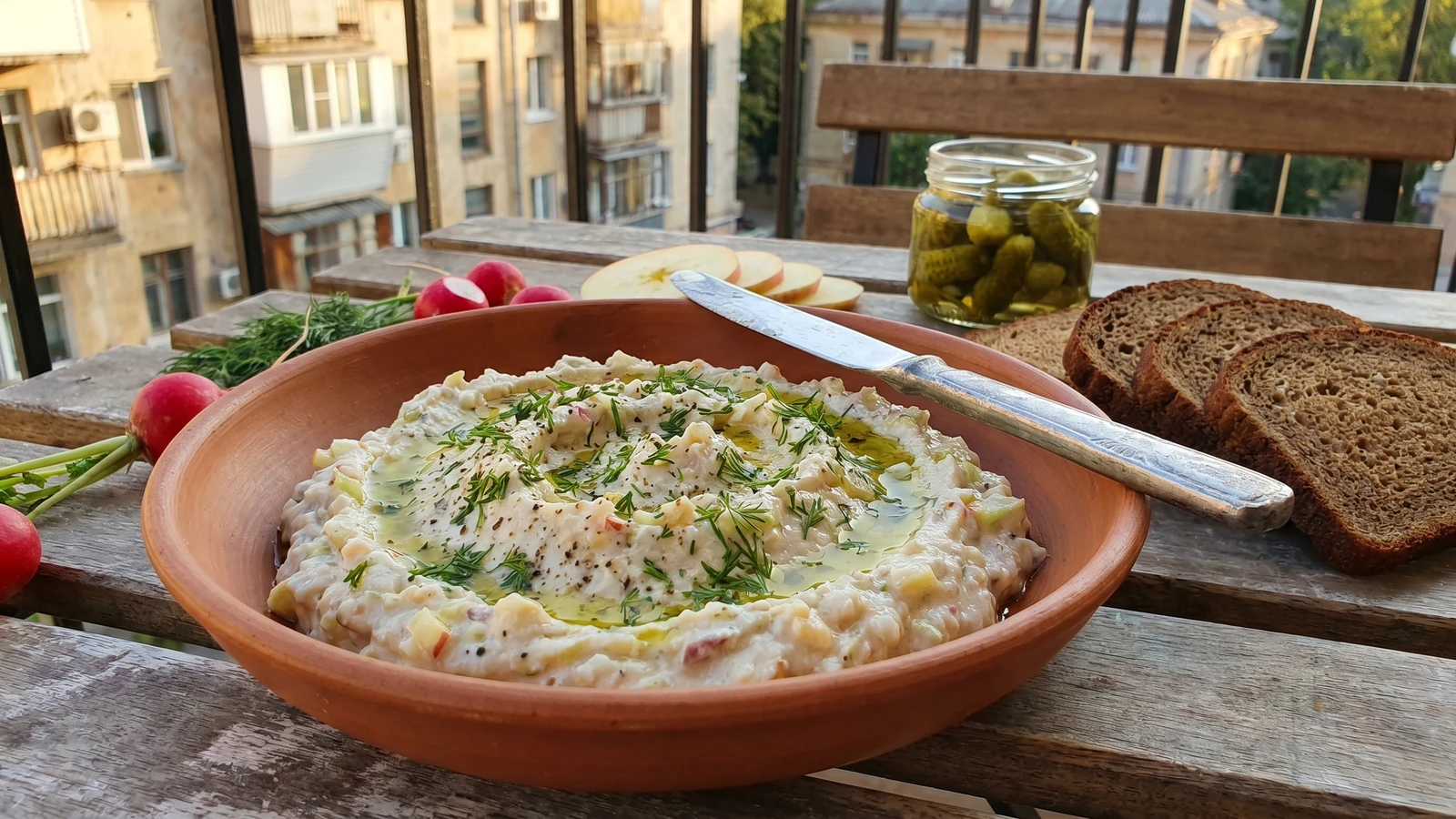
Salt herring walks into the kitchen sharp as the Black Sea wind, then butter, sour apple, and onion soften it into something pale, creamy, and impossible to leave alone.
Salt herring is rude before it becomes generous. It hits your tongue first with brine and iron, then the butter rounds the edges, the sour apple cuts through, the onion wakes everything up, and suddenly you have the whole Black Sea port on a slice of brown bread. This is Odesa food: quick-witted, practical, a little theatrical, and much more elegant than it pretends to be.
The one thing that decides the dish is texture. Forshmak should be minced fine enough to spread, but not beaten into baby food. You want tiny flashes of fish, apple, onion, and egg, held together by soft butter, so every bite changes as you chew. Aunt Nadia wrote "rub it until it listens" in one of her letters, which was no measurement at all and somehow perfectly clear once the bowl started looking pale and lively.
Serve it cold, but not fridge-hard. Give it a little time on the table so the butter loosens and the herring begins to smell cleanly of the sea again. Put out rye bread, cucumber, radishes, maybe a jar of something sour from the loud shelf, and watch people pretend they are taking only one more slice.
Forshmak came into Odesa through the city's large Jewish communities, with roots in Ashkenazi chopped herring traditions and a name borrowed from German Vorschmack, meaning a foretaste or appetizer. In the Black Sea port it became its own Ukrainian city dish: salt herring stretched with apple, onion, egg, bread, or butter, depending on the cook and the decade. Soviet canteens made it grey and anonymous, but the Odesa table kept the sharper, brighter version alive.
Quantity
300g
skinless and boneless
Quantity
120ml
for soaking very salty herring
Quantity
2 large
hard-boiled
Quantity
1 small
peeled and cored
Quantity
1/2 small
roughly chopped
Quantity
80g
very soft
Quantity
1 thick slice
crust removed
Quantity
2 tablespoons
for soaking the bread
Quantity
1 tablespoon
Quantity
1 teaspoon, plus more to taste
Quantity
1/2 teaspoon
Quantity
to taste
Quantity
small handful
finely chopped
Quantity
to serve
| Ingredient | Quantity |
|---|---|
| salted herring filletsskinless and boneless | 300g |
| milk or cold water (optional)for soaking very salty herring | 120ml |
| eggshard-boiled | 2 large |
| sour applepeeled and cored | 1 small |
| white onionroughly chopped | 1/2 small |
| unsalted buttervery soft | 80g |
| day-old rye or white breadcrust removed | 1 thick slice |
| milkfor soaking the bread | 2 tablespoons |
| unrefined sunflower oil | 1 tablespoon |
| apple cider vinegar or lemon juice | 1 teaspoon, plus more to taste |
| sugar (optional) | 1/2 teaspoon |
| black pepper | to taste |
| fresh dill (optional)finely chopped | small handful |
| rye bread, cucumber, radishes, or pickles | to serve |
Taste a small piece of herring before you do anything clever. If it is pleasantly salty, leave it alone. If it makes your tongue flinch, soak the fillets in cold milk or water until the salt calms but the fish still tastes of the sea, then pat them dry.
Cook the eggs until the yolks are firm but still golden, then cool them under cold water and peel. If the yolk has gone chalky at the edges, don't panic. Butter forgives this one.
Tear the bread into a small bowl and splash over the milk. Let it soften, then squeeze it gently so it is damp, not dripping. The bread is not there to bulk things out like a canteen trick; it catches the herring juices and helps the spread hold together.
Chop the herring, apple, onion, eggs, and squeezed bread by hand until very fine, or pulse them carefully in a food processor. Stop while you can still see tiny flecks. Forshmak should spread under a knife, but it should still have a little conversation under your teeth.
Work the soft butter into the minced mixture with the sunflower oil, vinegar or lemon juice, sugar if using, and black pepper. Stir until the color lightens and the bowl looks creamy but lively, like everything has agreed to sit together without disappearing.
Pack the forshmak into a shallow bowl, cover, and chill until it settles. Before serving, let it stand until the butter softens enough for a knife to slide through easily. Taste once more for brightness, add a few drops of vinegar or lemon if it needs lifting, then scatter with dill and bring out the rye bread.
1 serving (about 110g)
Culinary guides, cultural storytelling, and the editorial depth that makes cooking meaningful.
Discover Culinary ExplorerChef Lesia
Eggplants collapse into silk, tomatoes give up their summer, and the pan turns sweet and smoky enough that a spoon dragged through leaves a clean path.

Chef Lesia
The salt hits first, then the pasture: sheep's milk turned into a white, crumbly cheese that tastes of grass, weather, and the mountain air that made it.

Chef Lesia
The first cheese from the mountain vat is barely cheese yet: sweet milk caught into a warm springy round, unsalted, alive with whey, waiting to become brynza if you let it.

Chef Lesia
Roasted beets turn almost black at the edges, then grind with garlic and walnuts into a crimson spread so dense the spoon leaves a path through it.