Chef Elsa
Bröselnudeln
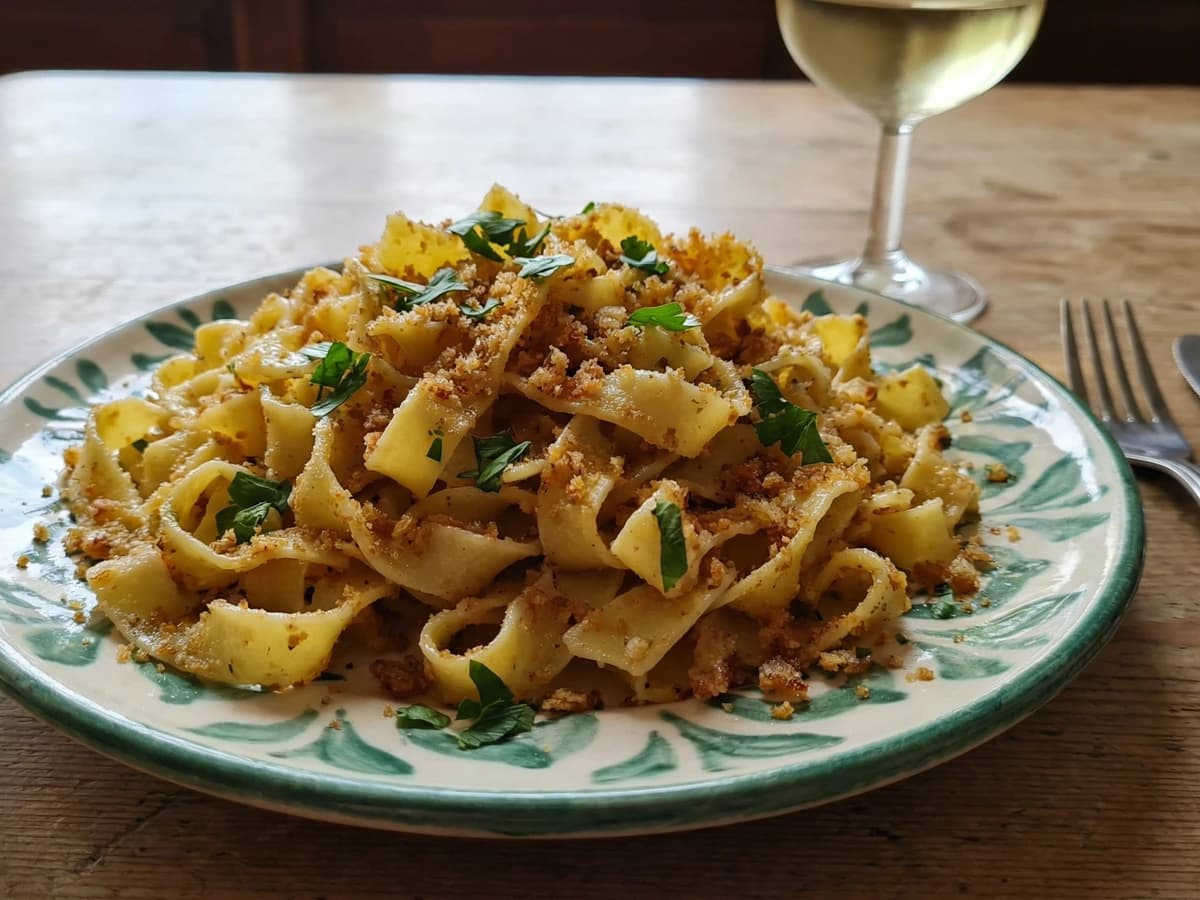
Broad egg noodles tossed in golden butter-toasted breadcrumbs until every strand is coated and crackling. Four ingredients, fifteen minutes, and a dish that has kept Austrian families fed and happy for centuries.
A cooking platform built around craft, culture, and the stories behind what we eat.
Created by
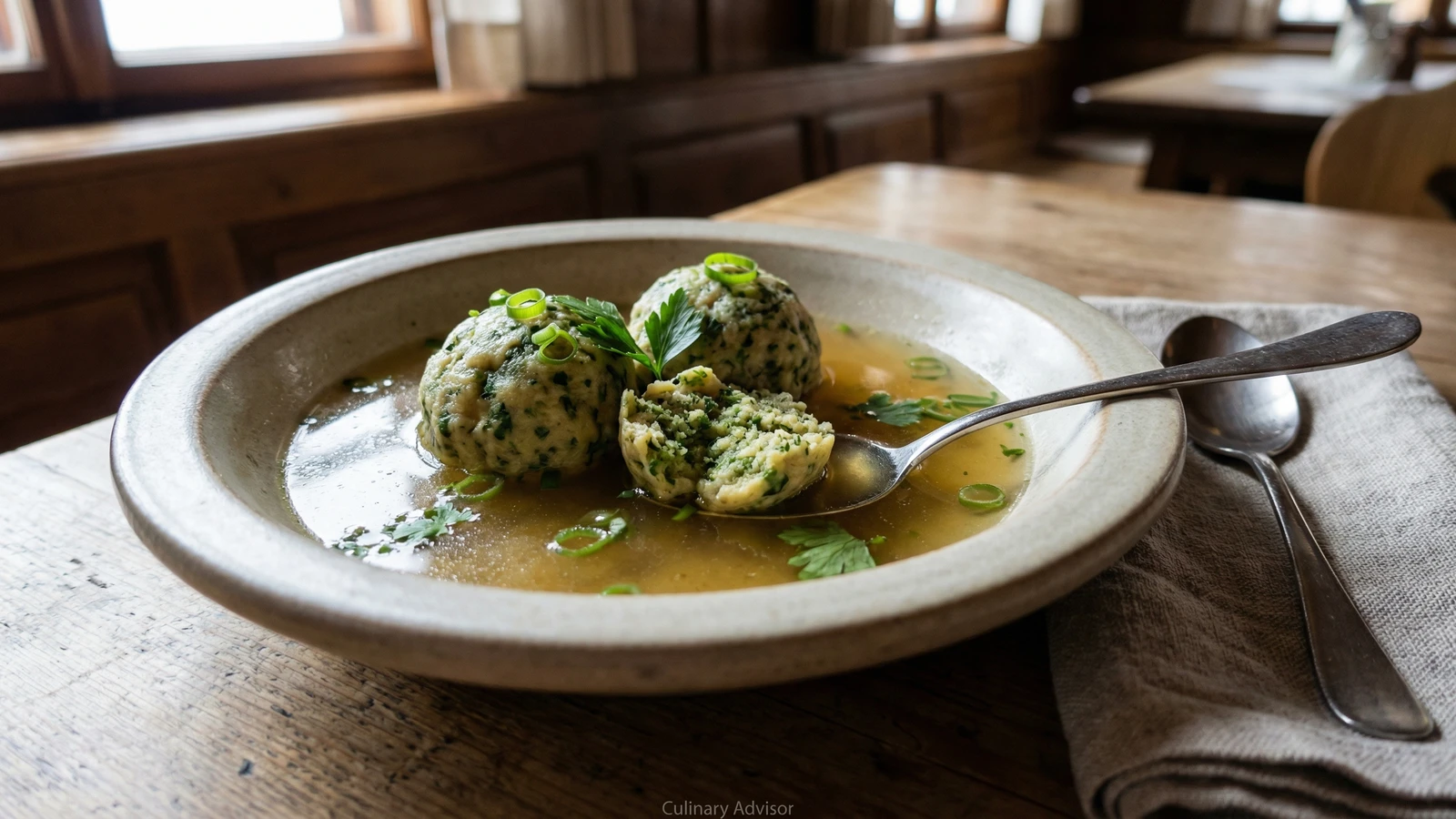
Tyrolean meatless bread dumplings stuffed with handfuls of fresh herbs and soft onions, poached until they float, and served in broth or with brown butter and a sharp green salad.
Ifirst ate Fastenknödel at a Gasthaus outside Innsbruck on one of those childhood trips with Gretel and my grandmother Eva. It was March, still cold in the mountains, and the kitchen smelled like butter and parsley and warm bread. The dumplings came in a clear broth, three of them sitting in a wide bowl, flecked green throughout and giving off that quiet herbal perfume that only a handful of fresh-cut chives and parsley can produce. I remember thinking they looked too simple to taste as good as they did.
Fastenknödel are Lenten dumplings, born from the Catholic tradition of meatless days that shaped so much of Tyrolean cooking. No meat, no stock from bones if you're strict about it, just stale bread, eggs, milk, onions, and as many fresh herbs as you can get your hands on. The restriction forced cooks to make something from almost nothing, and what they made turned out to be so satisfying that nobody stopped cooking it when Lent was over. That's the mark of a truly good dish: it outlives the reason it was invented.
The technique is pure Knödel logic. Stale bread soaks up the milk and eggs, the flour and egg bind everything just enough to hold, and a gentle poach in barely simmering water cooks them through without tearing them apart. If you've never made bread dumplings before, this is a beautiful place to start. The ingredients are cheap, the method is forgiving, and the result tastes like someone who loves you made you dinner.
Fastenknödel belong to the wider tradition of Fastenküche, the meatless cooking that sustained Catholic Austria through the forty days of Lent and the many additional fast days the Church prescribed throughout the year. In Tyrol, where dairy and bread were plentiful but meat was a luxury even outside Lent, bread Knödel in every variation became the foundation of the daily diet. The emphasis on fresh herbs reflects the Alpine tradition of Kräuterküche, gathering wild herbs from mountain meadows as soon as the snow retreated, a practice that connected Tyrolean cooks to their landscape in a way that still shapes the region's food identity today.
Quantity
300g
cut into small cubes
Quantity
200ml
lukewarm
Quantity
1 medium
finely diced
Quantity
30g
Quantity
3 large
Quantity
3 tablespoons
Quantity
large handful
finely chopped
Quantity
large handful
finely cut
Quantity
small handful
finely chopped
Quantity
to taste
Quantity
to taste
Quantity
pinch
Quantity
1 tablespoon
for serving with salad
Quantity
for serving
hot, for soup version
| Ingredient | Quantity |
|---|---|
| stale white bread or Knödelbrotcut into small cubes | 300g |
| whole milklukewarm | 200ml |
| onionfinely diced | 1 medium |
| unsalted butter (for onions) | 30g |
| eggs | 3 large |
| plain flour | 3 tablespoons |
| fresh flat-leaf parsleyfinely chopped | large handful |
| fresh chivesfinely cut | large handful |
| fresh lovage leaves (optional)finely chopped | small handful |
| salt | to taste |
| freshly ground black pepper | to taste |
| freshly grated nutmeg | pinch |
| unsalted butter (for finishing) (optional)for serving with salad | 1 tablespoon |
| beef or vegetable broth (optional)hot, for soup version | for serving |
Place the bread cubes in a large mixing bowl and pour the lukewarm milk over them. Toss gently so the milk reaches every piece, then leave them alone for fifteen minutes. The bread needs to absorb the milk slowly, not drown in it. You want the cubes softened through but still holding their shape. If you squeeze a piece and liquid pours out, you've used too much milk. Stale bread is not a suggestion here. Fresh bread turns to paste. A two-day-old Semmel or a proper Knödelbrot from the bakery is what you're after.
Melt the butter in a small pan over medium-low heat. Add the diced onion and cook slowly, stirring now and then, until the pieces are soft and translucent, about five minutes. You don't want color here. Golden-brown onions would push a different, sweeter flavor into the Knödel that doesn't belong. The onions should melt into the background, not announce themselves. Take the pan off the heat and let the onions cool for a few minutes before they go near the eggs.
Beat the eggs lightly and pour them over the soaked bread. Add the cooled onions with their butter, the flour, all of your chopped herbs, a good pinch of salt, pepper, and that small grating of nutmeg. Now mix everything together with your hands. This is not a job for a spoon. You need to feel the mixture come together. Squeeze and fold it until the bread, eggs, herbs, and onion become one mass. It should be moist and hold together when you press it, but not sticky-wet. If it feels too loose, add another spoonful of flour. If it's too dry and crumbly, a splash more milk.
Let the mixture rest for ten minutes. The flour and egg need that time to bind with the bread. Wet your hands with cold water and shape the mixture into round dumplings, about the size of a tennis ball. You should get roughly twelve from this batch. Don't pack them tight. A gentle, confident press is all they need. If you squeeze too hard, the cooked Knödel will be dense and heavy instead of light and giving. Set them on a floured board or plate while you bring your water to temperature.
Bring a large, wide pot of salted water to a gentle simmer. Not a rolling boil. A rolling boil will batter the dumplings and tear them apart. You want lazy bubbles, the surface barely trembling. Lower the Knödel in carefully, a few at a time so they aren't crowded. They'll sink to the bottom and then, after a few minutes, rise to the surface. Once they float, cook them for another twelve to fifteen minutes. They're done when a skewer pushed into the center meets soft, even resistance all the way through, with no raw doughy core.
You have two good choices. For the soup version, ladle hot broth into warm bowls and set two or three Knödel in each. The broth should come halfway up the dumplings, not submerge them. Scatter fresh chives on top. For the salad version, which is how the Tyrolean farmhouses traditionally served them, lift the Knödel out with a slotted spoon, let them drain briefly, then place them on a plate. Melt a tablespoon of butter and pour it over. Serve with a simple green salad dressed with pumpkin seed oil and cider vinegar. Both versions are right. Both are good Austrian home cooking. Mahlzeit!
1 serving (about 230g)
Culinary guides, cultural storytelling, and the editorial depth that makes cooking meaningful.
Discover Culinary ExplorerChef Elsa
Broad egg noodles tossed in golden butter-toasted breadcrumbs until every strand is coated and crackling. Four ingredients, fifteen minutes, and a dish that has kept Austrian families fed and happy for centuries.
Chef Elsa
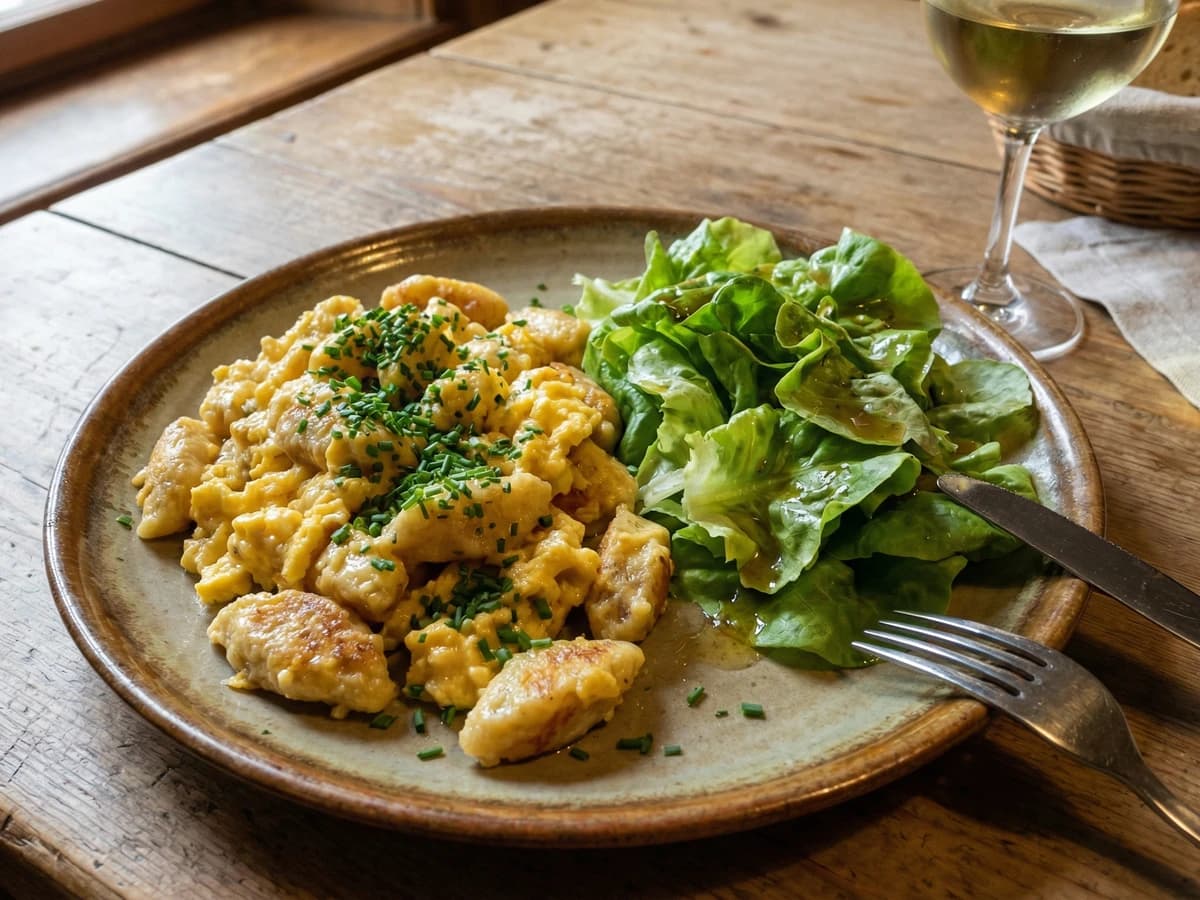
Vienna's weeknight answer to everything: soft flour Nockerl fried golden in butter, scrambled through with eggs and buried under fresh chives. A sharp green salad on the side because the Viennese know that richness needs a counterpoint.
Chef Elsa
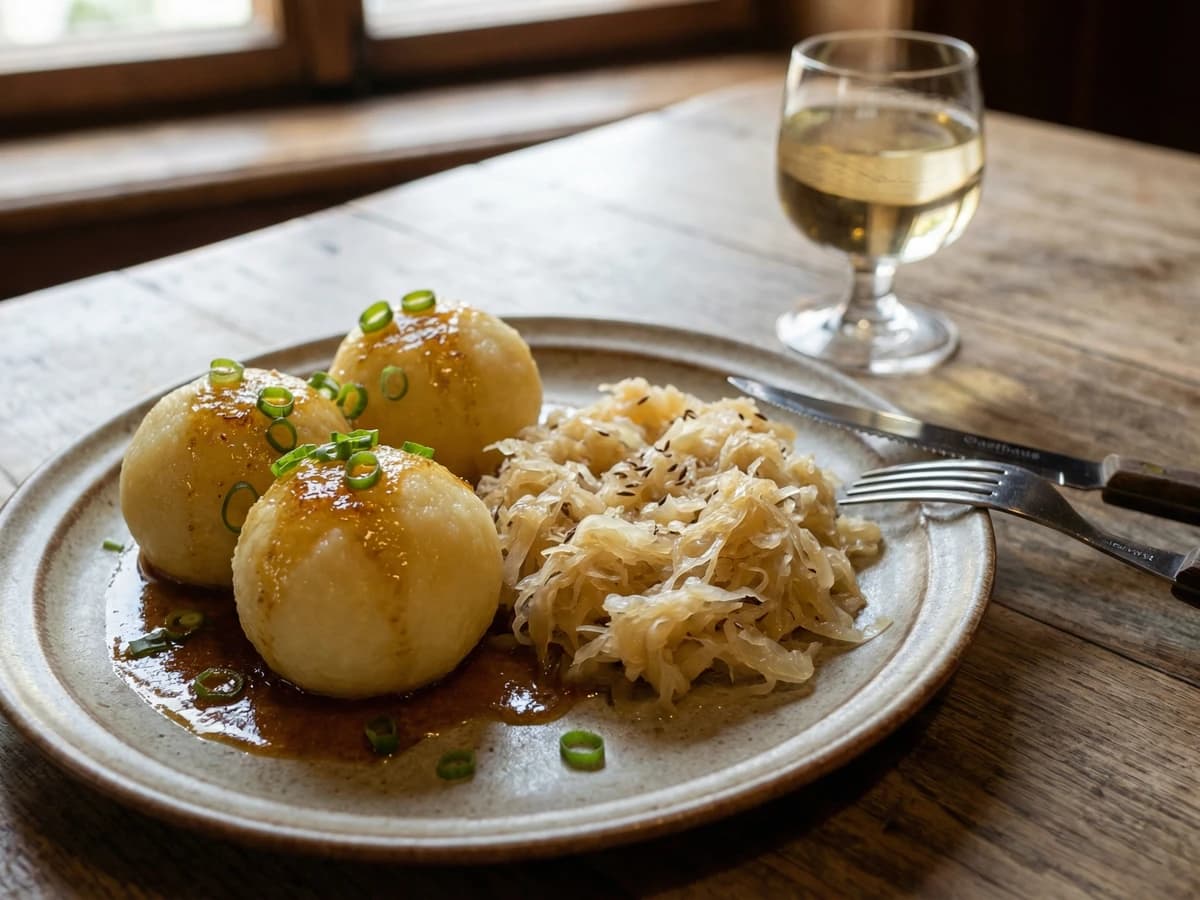
Soft Austrian potato dumplings in browned butter with warm, caraway-scented sauerkraut. A meatless Gasthaus meal that's been filling up Alpine kitchens for centuries.
Chef Elsa
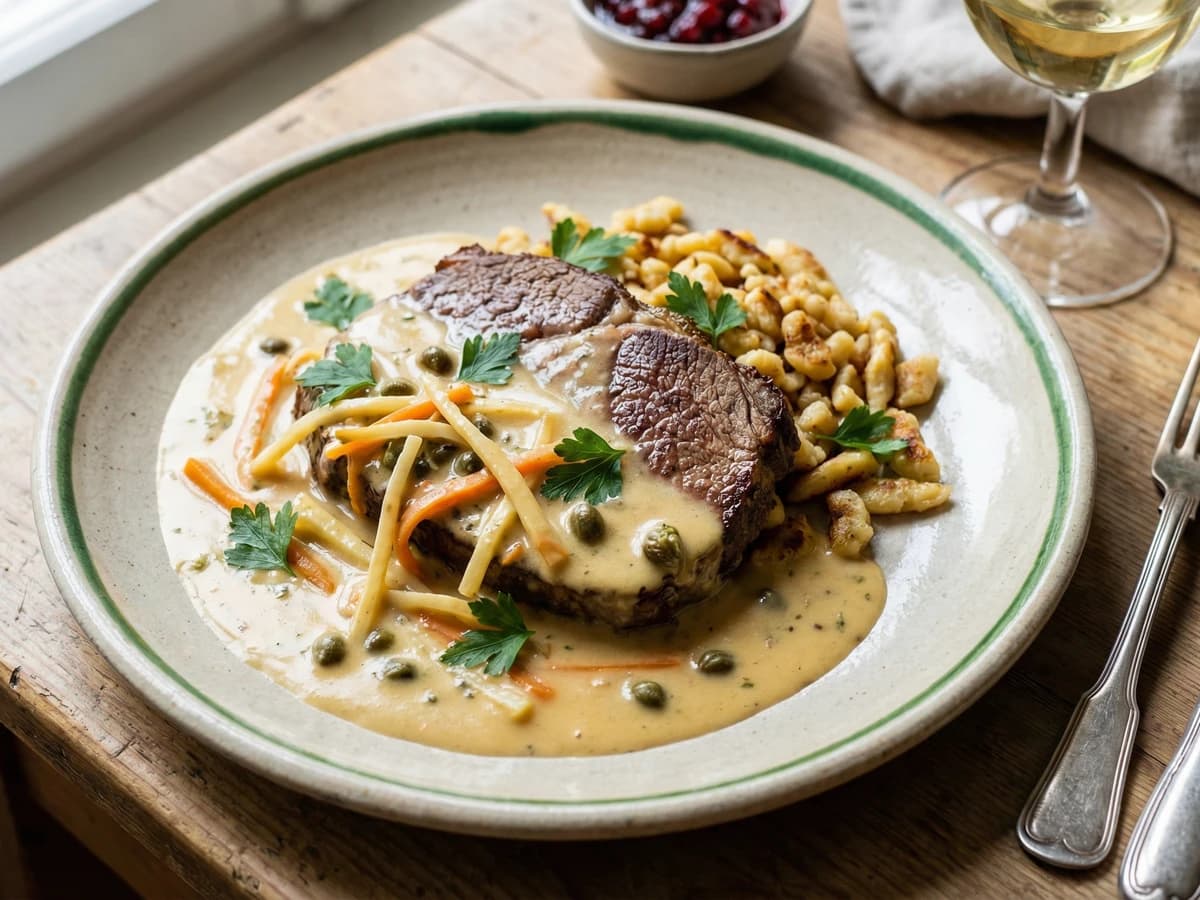
Braised beef steaks in a velvety sauce of julienned root vegetables, capers, mustard, and sour cream, the kind of dish that made the Esterházy name famous in kitchens long after it faded from politics.