Chef Juliette
Ordinary Brioche Paste
Pâte à brioche ordinaire teaches enriched dough properly: wake the leaven, build strength before the last egg, then work in pliable butter by stages and let one long fermentation do its quiet work.
A cooking platform built around craft, culture, and the stories behind what we eat.

Created by
Soft Cook Islands faraoa, bread enriched with coconut cream and grated niu (coconut), baked as a loaf or rolls, tender enough for the potluck table and plain enough for breakfast tomorrow.
The canoe carried niu, the coconut, long before any sack of flour came over the horizon, and the people carried the old habit too: feed one more person than you counted. In the Cook Islands, faraoa means bread, and coconut faraoa belongs to Cook Islands hands, the kind of loaf an auntie on Rarotonga can set down warm without making a speech. Everybody understands. Tear, pass, eat.
This is not the old deep starch of taro, mei (breadfruit), or the umukai, the Cook Islands earth oven. Flour came later, with mission ships and trade, and the Cooks did what island people do: they took what arrived and folded it into what was already theirs. Coconut cream softens the dough, grated coconut gives it chew, and time gives the bread its quiet lift. No rush the rise. The dough tells you when it's ready.
The cousins sit close around it. Sāmoa has pani popo, sweet buns baked in coconut sauce. Tahiti has its own faraoa coco. In Aotearoa, Māori parāoa holds that bread word in another tongue. Same niu, different loaf, one ocean, one canoe, one root, even when the flour came later.
Fresh coconut cream is beautiful if you can press it, but a good thick can and frozen grated coconut will still feed the house on a Tuesday. That's the table I trust. We keep the deep foods close, and we make room for the everyday ones, because a table that only lives in ceremony can't feed the week.
After London Missionary Society teachers reached Aitutaki in 1821 and Rarotonga in 1823, imported flour became part of the Cook Islands table alongside older canoe crops like niu, taro, and mei (breadfruit). Faraoa, Cook Islands Māori for bread, shows that contact table clearly: not pre-contact deep food like the old umukai starches, but everyday food made local by grated coconut and coconut cream. Its cousins sit nearby, Sāmoan pani popo, Tahitian faraoa coco, and Māori parāoa, each island taking wheat bread and speaking it in its own kitchen.
Quantity
1/2 cup
105F to 110F
Quantity
2 1/4 teaspoons
Quantity
1/3 cup
Quantity
1 cup plus 1 tablespoon
room temperature, divided
Quantity
3 tablespoons
melted and cooled
Quantity
4 cups
plus more only as needed
Quantity
1 1/2 teaspoons
Quantity
1 cup
finely grated, or frozen unsweetened grated coconut thawed and squeezed dry
Quantity
1 tablespoon
for the bowl and pan
Quantity
2 tablespoons
for topping
| Ingredient | Quantity |
|---|---|
| warm water105F to 110F | 1/2 cup |
| active dry yeast or instant yeast | 2 1/4 teaspoons |
| sugar | 1/3 cup |
| thick coconut creamroom temperature, divided | 1 cup plus 1 tablespoon |
| coconut oil or unsalted buttermelted and cooled | 3 tablespoons |
| all-purpose flourplus more only as needed | 4 cups |
| fine sea salt | 1 1/2 teaspoons |
| fresh mature coconutfinely grated, or frozen unsweetened grated coconut thawed and squeezed dry | 1 cup |
| coconut oil or neutral oilfor the bowl and pan | 1 tablespoon |
| unsweetened grated coconut (optional)for topping | 2 tablespoons |
Stir the warm water, yeast, and 1 tablespoon of the sugar together in a large working bowl. Let it stand 5 to 10 minutes, until the surface looks creamy and alive. If it stays flat, the yeast is tired. No blame the bread later; start again now.
Add the coconut cream, melted coconut oil or butter, flour, salt, remaining sugar, and grated coconut. Stir until a shaggy dough comes together. It should feel soft and tacky, like it wants to cling to your fingers but not pour across the bowl.
Knead by hand for 8 to 10 minutes, or with a dough hook for 5 to 6 minutes, until the dough turns elastic and smooth with coconut flecks running through it. Add flour one spoonful at a time only if it is truly wet. A tender faraoa starts with a dough that stays a little soft.
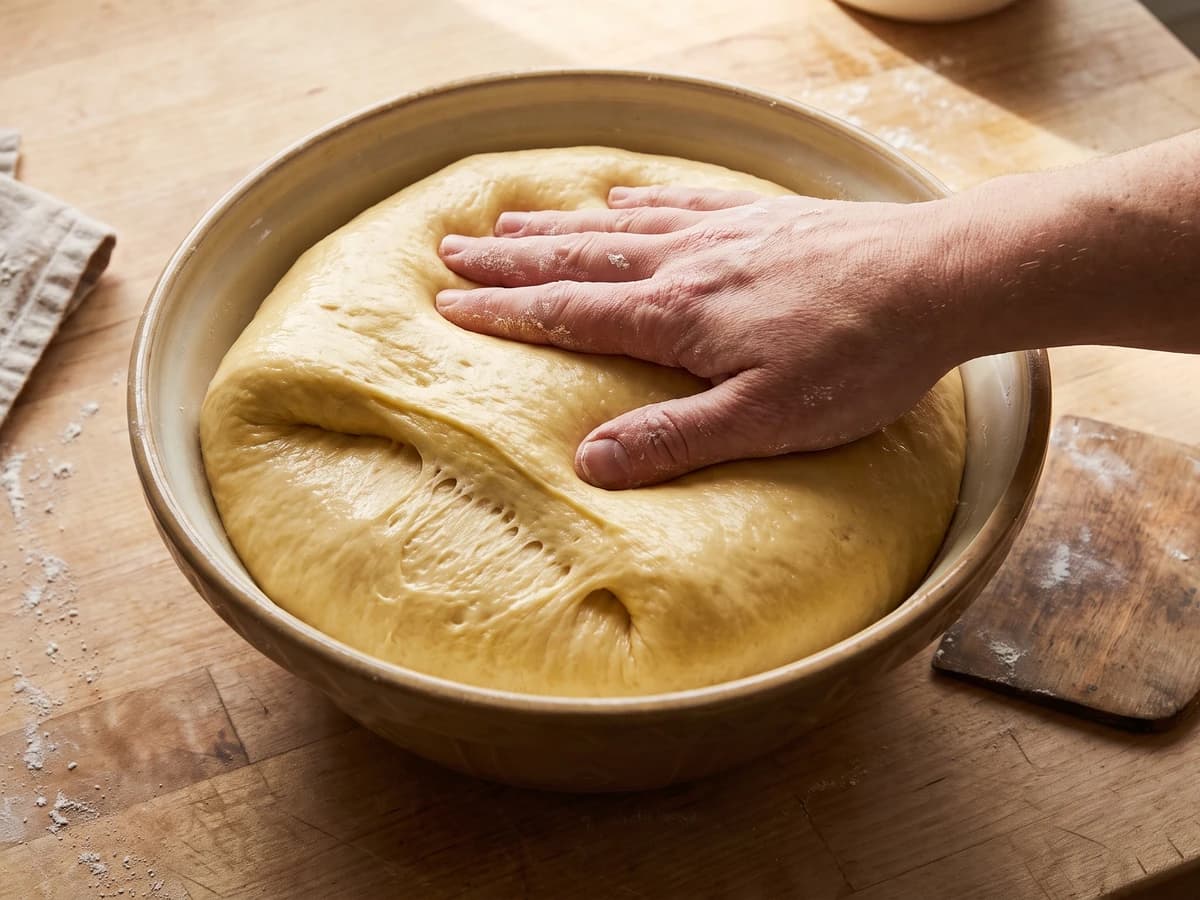
Oil the bowl, turn the dough so it shines lightly all over, cover it, and let it rise in a warm place for 75 to 90 minutes, until doubled. Press it with one finger. If the mark slowly fills back in, it's ready. If it springs back hard, give it more time.
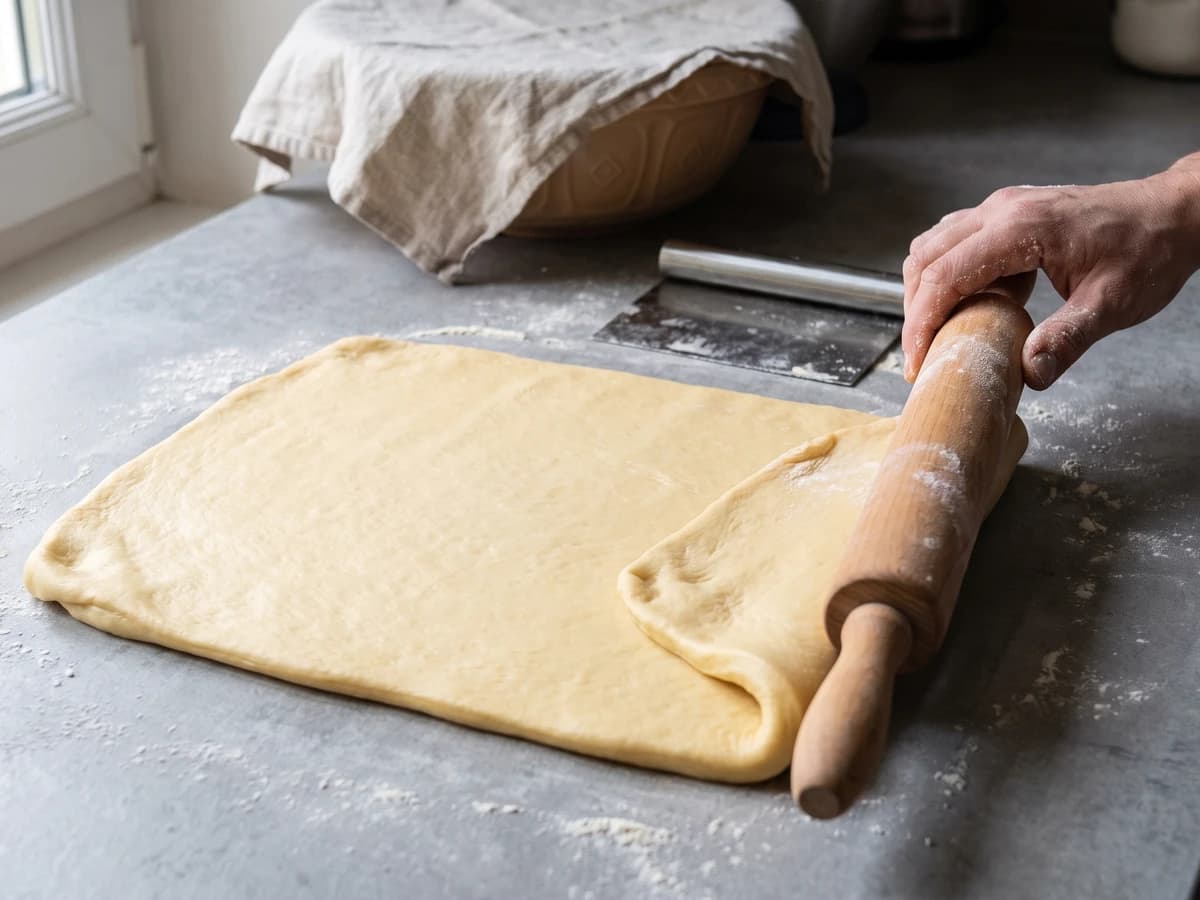
Oil a 9x5-inch loaf pan, or a 9x13-inch pan for rolls. Line with banana leaf if you have it, or parchment if you don't. For a loaf, pat the dough into a rectangle, roll it up snug, and set it seam-side down. For rolls, divide into 12 pieces, cup each one under your palm, and roll until the top is smooth.
Cover the shaped dough and let it rise 45 to 60 minutes, until puffy. A loaf should lift near the rim of the pan; rolls should swell and just begin touching each other. Heat the oven to 350F while the dough finishes rising.
Brush the top with 1 tablespoon coconut cream and scatter with the optional grated coconut if you're using it. Bake rolls for 22 to 26 minutes, or a loaf for 35 to 40 minutes, until the top is golden brown and the center reaches about 190F. If the top colors too fast, lay foil loosely over it for the last few minutes.
Brush the hot top with a little more coconut cream or coconut oil if you want a softer shine. Rest rolls for 10 minutes, or a loaf for at least 20 minutes before slicing, so the crumb settles instead of turning gummy under the knife. Serve warm, tear it open, and pass it around.
1 serving (about 85g)
Culinary guides, cultural storytelling, and the editorial depth that makes cooking meaningful.
Discover Culinary ExplorerChef Juliette
Pâte à brioche ordinaire teaches enriched dough properly: wake the leaven, build strength before the last egg, then work in pliable butter by stages and let one long fermentation do its quiet work.

Chef Juliette
Ordinary brioche takes one exact measure of butter and a patient rise in the mould, becoming so light and silken that it can cradle fruit without losing its tender crumb.
Chef Juliette
Pâte à brioche ordinaire, butter-rich yet firm, teaches the useful side of brioche: slow fermentation, disciplined mixing, and a dough that rolls cleanly for lining, wrapping, and every sturdy pastry job.

Chef Thomas
A proper British bloomer, slashed deep and baked until the cuts open wide and the crust turns deep, glossy gold. The kind of loaf that makes the rest of the day feel deliberate.