Culinary Explorer
A cooking platform built around craft, culture, and the stories behind what we eat.
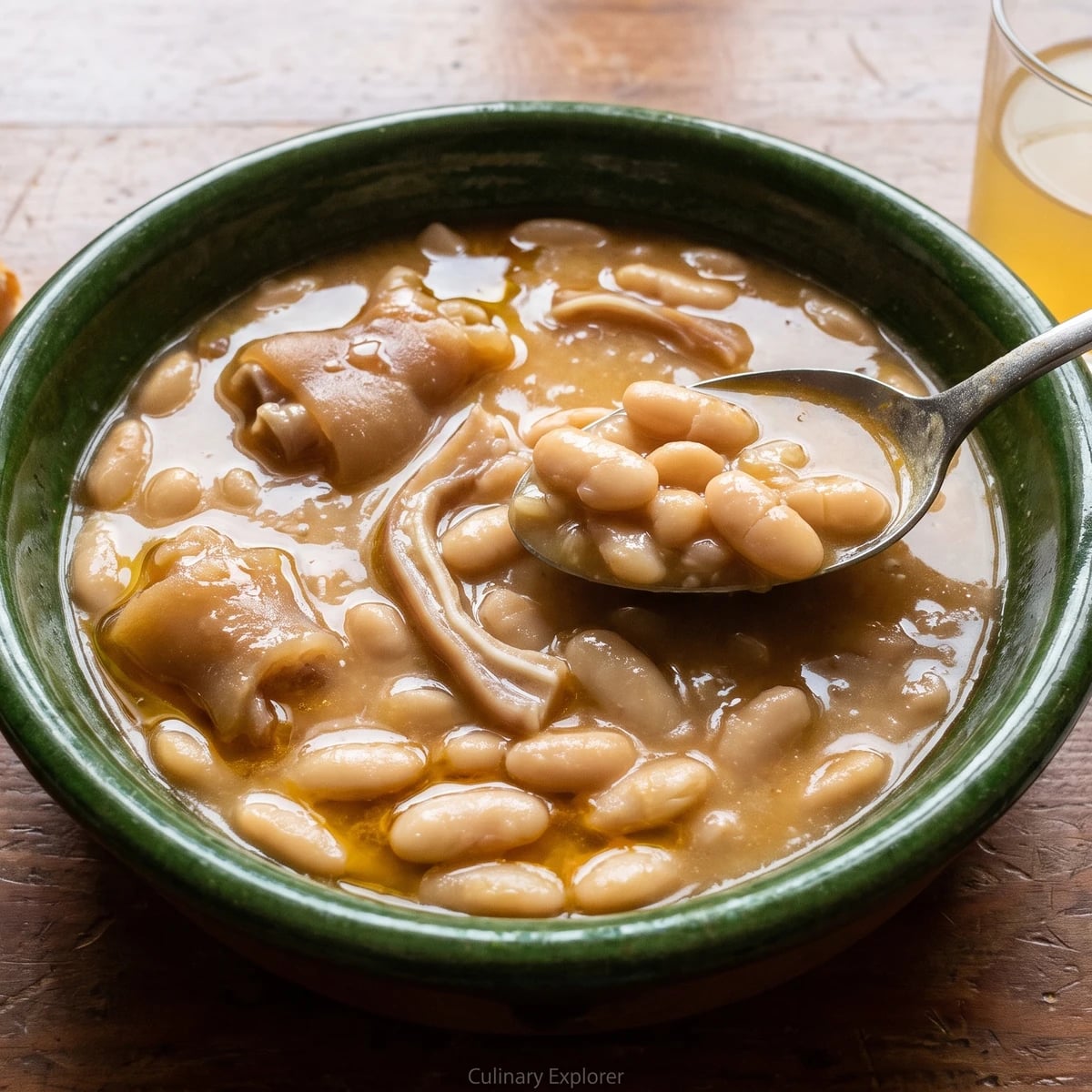
Fabes con Uñes de Gochu
Created by Chef Isabel
Asturias keeps this stew plain and deep: fabes de la granja, pig's trotters, salted ear, and a low tremble until the pork gives its gelatin and the broth turns silky.
Fabes con uñes de gochu is Asturian, not just a bean stew with pork dropped in. It is fabes de la granja cooked with pig's trotters and ear, the cheap cuts from the matanza that give the broth its body. A fabada leans on compango. This one leans on gelatin, pimentón, and a pot kept quiet.
The method that decides it is the simmer. Start the soaked fabes and the pork in cold water, bring them up slowly, then keep the surface at the barest tremble. A boil breaks the beans and shakes the gelatin into a cloudy broth; a low tremble lets the skins stay whole while the broth turns glossy and thick enough to coat a spoon. Don't stir. Shake the pot by the handles if you must.
If you can't find fabes where you are, use judión or a good large cannellini, and know the texture will be a little less buttery. If salted ear is hard to find, use fresh pig's ear with a small piece of salt pork, and salt late. No hace falta haber pisado España. You do need the trotters split, the beans soaked, and patience enough not to rush the pot.
In my Margin beside this dish I wrote one thing: taste before salting. The salted ear can carry more than you think. Do that, keep the simmer low, and siempre sale, si lo sigues.
Ingredients
dried fabes de la granja
Quantity
500g
soaked overnight; use judión or large cannellini if needed
pig's trotters
Quantity
2 (about 900g)
split lengthwise, fresh or salted
salted pig's ear
Quantity
250g
soaked to desalt
| Ingredient | Quantity |
|---|---|
| dried fabes de la granjasoaked overnight; use judión or large cannellini if needed | 500g |
| pig's trotterssplit lengthwise, fresh or salted | 2 (about 900g) |
| salted pig's earsoaked to desalt | 250g |
Where cooking meets culture.
Culinary guides, cultural storytelling, and the editorial depth that makes cooking meaningful.
Discover Culinary Explorer