
Chef Isabel
Aguaillo de la Sierra de Cadiz
Aguaillo is from the Sierra de Cadiz: cold water, stale bread, garlic, oil and vinegar, closer to a field drink than a bowl of soup, and sharp enough to wake you in the heat.
A cooking platform built around craft, culture, and the stories behind what we eat.
Created by
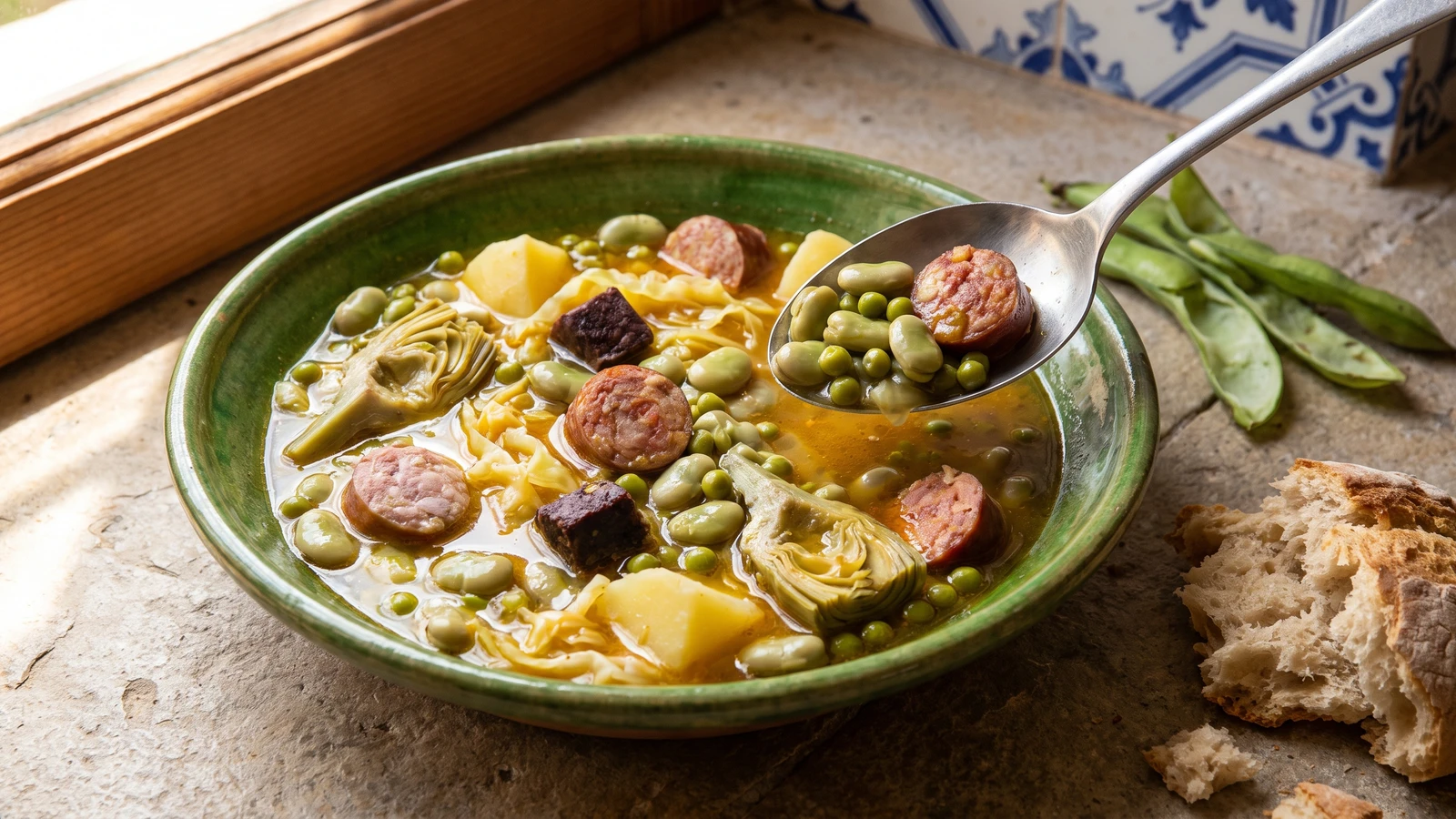
Escudella fresca is Mallorca's spring cocido: fresh broad beans and peas, artichokes, potato, and the island's cured pork larder simmered into a green, light spoon dish.
Escudella fresca Mallorquina belongs to Mallorca in spring, when the broad beans and peas are still sweet enough to bother shelling. It is a cocido, yes, but not a heavy Castilian one. This one is island spoon food, cocina de cuchara, made green and fresh with pods, artichokes, potato, cabbage, and the quiet strength of butifarro, blanquet, and camaiot.
The method that decides it is the order. Build a slow sofrito, the onion base, until it turns dark gold and sweet, then let the pork and broth give the pot its floor before the tender spring vegetables go in. Broad beans and peas are not firewood. Boil them hard and long and you lose the very thing the dish is named for: freshness.
If you are far from Mallorca, no hace falta haber pisado Espana. Use fresh fava beans if you can, frozen broad beans and peas if the market gives you no better, and find mild Spanish morcilla or Catalan botifarra negra in place of butifarro. A good cooked pork sausage can stand in for blanquet, and a small piece of cured pork shoulder can do the work of camaiot. It changes the accent, not the shape of the dish.
Make it when the pods look alive. Not tired, not leathery, not because a calendar said spring. In my Margin for this one I wrote only this: add the peas late. A small note, but it saves the pot. Siempre sale, si lo sigues.
Escudella fresca is the Mallorcan spring member of the wider Catalan-speaking escudella family, shaped by the island's market gardens and its matanza larder. Its name points to the season: fresh broad beans, peas, artichokes, and young vegetables lightening a pot that still carries preserved pork from the household slaughter. The Mallorcan character comes from local embutits such as butifarro, blanquet, camaiot, and sometimes sobrassada, which season the broth without turning it into a winter stew.
Quantity
300g
Quantity
250g
Quantity
250g
cut into small pieces
Quantity
150g
cut into thick cubes
Quantity
2, about 160g total
Quantity
1, about 120g
Quantity
80g
Quantity
1 large
finely chopped
Quantity
2
grated
Quantity
3 cloves
minced
Quantity
3 tablespoons
Quantity
2 medium
trimmed and quartered
Quantity
250g
peeled and cut into large chunks
Quantity
200g
thickly sliced
Quantity
150g
cut into short lengths
Quantity
1 small
sliced
Quantity
1 teaspoon
Quantity
1
Quantity
1.5 litres
Quantity
80g
Quantity
to taste
Quantity
to taste
| Ingredient | Quantity |
|---|---|
| fresh shelled broad beans | 300g |
| fresh shelled peas | 250g |
| pork ribscut into small pieces | 250g |
| camaiotcut into thick cubes | 150g |
| butifarro mallorquin | 2, about 160g total |
| blanquet | 1, about 120g |
| sobrassada (optional) | 80g |
| onionfinely chopped | 1 large |
| ripe tomatoesgrated | 2 |
| garlicminced | 3 cloves |
| olive oil | 3 tablespoons |
| artichokestrimmed and quartered | 2 medium |
| potatoespeeled and cut into large chunks | 250g |
| green cabbagethickly sliced | 200g |
| green beanscut into short lengths | 150g |
| carrotsliced | 1 small |
| sweet pimenton | 1 teaspoon |
| bay leaf | 1 |
| water or light unsalted pork stock | 1.5 litres |
| small soup pasta or short fideos (optional) | 80g |
| salt | to taste |
| black pepper | to taste |
Shell the broad beans and peas, keeping them separate. Trim the artichokes down to the pale hearts, quarter them, and drop them into water with a squeeze of lemon if you are not using them at once. Cut the potatoes, cabbage, green beans, and carrot before the pot starts; this stew moves calmly, but it does not wait while you chase vegetables around the counter.
Warm the olive oil in a wide heavy pot over medium heat. Salt the pork ribs lightly and brown them for 8 to 10 minutes, turning until the edges take colour. Add the camaiot and let it gloss the oil for 2 minutes, but do not fry the butifarro or blanquet yet; they are softer sausages and will split if bullied.
Lower the heat and add the onion with a pinch of salt. Cook it slowly for 15 minutes, stirring often, until it is dark gold and soft. Add the garlic for 1 minute, then the grated tomato, and cook until the tomato loses its water and the oil shows at the edges. This slow sofrito is what gives sweetness to a light spring pot; rush it and the broth tastes thin.
Stir in the pimenton off the heat for a few seconds so it smells warm but does not scorch. Add the bay leaf and 1.5 litres water or light unsalted pork stock, scraping the bottom of the pot. Bring to a gentle simmer, then cover partly and cook for 30 minutes, until the pork ribs are nearly tender and the broth has taken the colour of the sofrito.
Add the potatoes, carrot, green beans, cabbage, and artichokes. Prick the butifarro and blanquet once with the tip of a knife and settle them into the pot. Simmer gently for 18 to 22 minutes, until the potato is almost tender. The pot should move with small bubbles, not a hard boil.
Add the broad beans and simmer for 6 minutes. Add the peas and the optional pasta or short fideos, if using, and cook 6 to 8 minutes more, just until the pasta is done and the peas are tender but still green. If using sobrassada, pinch it into small pieces and stir it in during the last 5 minutes so it melts into the broth without taking over.
Taste for salt and black pepper. Lift out the butifarro and blanquet, slice them thickly, and return them to the pot. Let the escudella rest off the heat for 10 minutes so the broth settles and the vegetables finish gently. Serve in deep bowls with a little of every meat and vegetable in each one. Tal como se hace alli: generous, green, and not overcooked.
1 serving (about 600g)
Culinary guides, cultural storytelling, and the editorial depth that makes cooking meaningful.
Discover Culinary ExplorerChef Isabel
Aguaillo is from the Sierra de Cadiz: cold water, stale bread, garlic, oil and vinegar, closer to a field drink than a bowl of soup, and sharp enough to wake you in the heat.

Chef Isabel
Ajilimojili is Jaen's tomato-free cold soup: potato, roasted red pepper, garlic, olive oil, and vinegar pounded into a cool, silky spoonful.

Chef Isabel
Ajo carretero is Soriano, from the pine country of Soria: lamb cooked in a plain garlicky broth, then served the old way, meat first and bread-soaked soup after.

Chef Isabel
Ajoblanco Extremeño is the poor-kitchen cold soup of Extremadura: bread, garlic, oil, egg yolk, vinegar, and icy water, with no almonds. Whisk it slowly and serve it bien fresquito.