
Chef Klaus
Allgäuer Kaspressknödel
Pressed bread dumplings from the Alpine south, fried until the cheese catches at the edges and the middle stays soft enough for broth, kraut, or a weekday plate.
A cooking platform built around craft, culture, and the stories behind what we eat.
Created by
The Erzgebirge potato bake that makes a meal from stored roots, sour buttermilk, bacon fat, and patience, with the crust doing the talking.
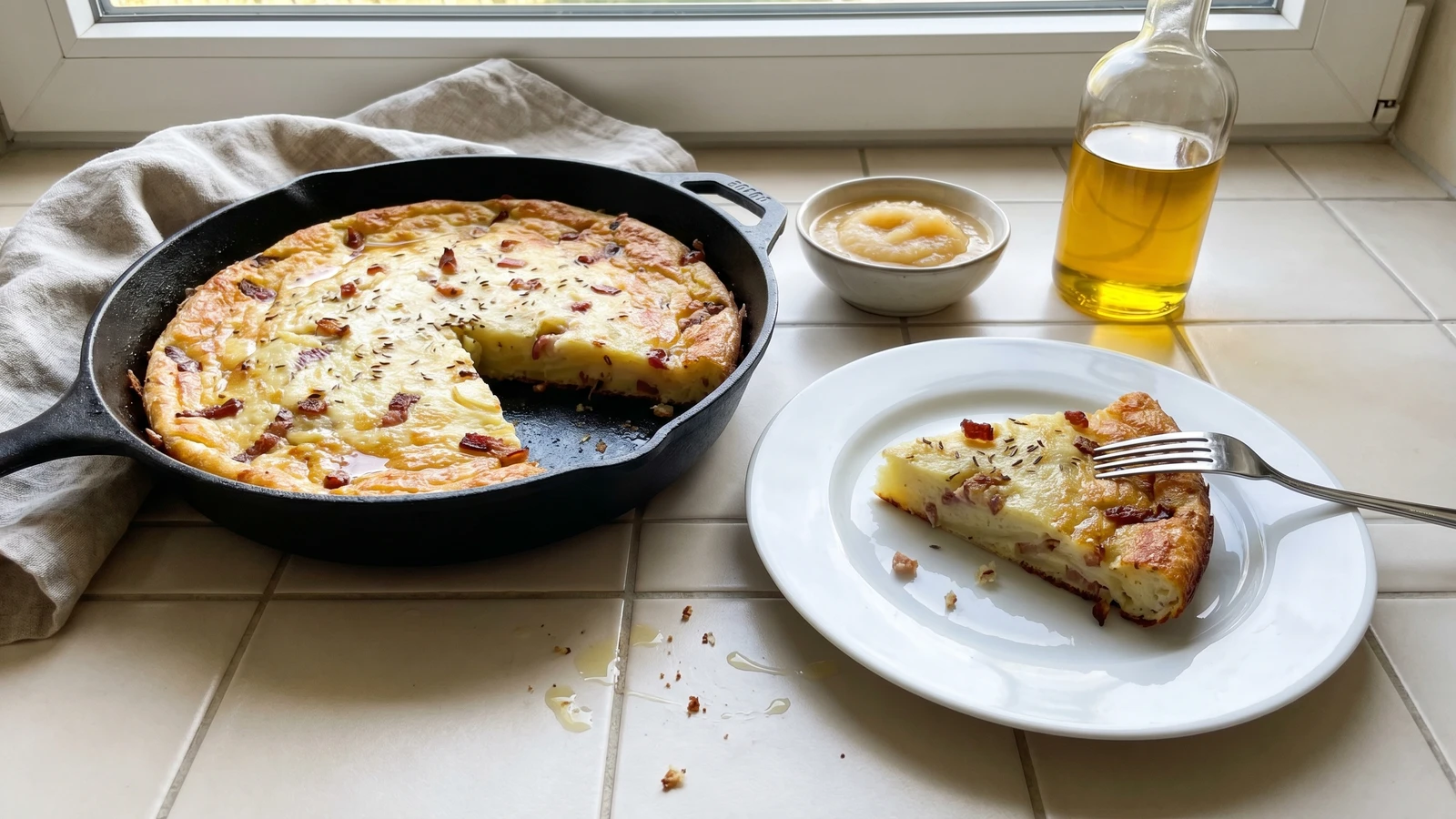
Buttermilchgetzen belongs to the Erzgebirge, the Saxon mountain kitchen where potatoes carried whole winters and nobody pretended thrift was a flaw. This is lean food: raw and cooked potato bound with Buttermilch, buttermilk, a little bacon, caraway, and linseed oil, baked flat until the underside takes colour and the middle stays tender.
The regions split even on a potato cake. In the Rhineland you meet Reibekuchen from raw grated potato, fried crisp in the pan. In Swabia the potato is more likely to become Schupfnudeln or Knödel, dumplings. Up here in the Erzgebirge, the Getzen goes into a hot, oiled pan and finishes in the oven. Im Norden anders, im Süden anders.
The technique is simple and unforgiving: squeeze the raw grated potato hard, then bring moisture back with buttermilk. Leave the raw potato wet and the bake stews instead of crusting; squeeze it dry and season it properly, and the linseed oil can fry the bottom while the cooked potato keeps the body soft. Erst verstehen, dann kochen.
Use floury potatoes, the kind that fall apart when boiled. They bind without turning rubbery. Save the bacon fat, too. Weggeworfen wird nichts. A spoon of that fat in the pan helps the crust, and the crust is why everyone reaches for the edge piece first.
The Erzgebirge, the Ore Mountains of Saxony, built much of its everyday cooking around the potato after its spread through German lands in the eighteenth century, helped by Frederick the Great's Prussian potato orders of the 1750s. Buttermilchgetzen is part of that mountain thrift tradition: stored potatoes, sour dairy, bacon scraps, and linseed oil from local flax turned into a filling bake. The regional name Getzen is strongly tied to Saxony and the Erzgebirge, while related grated-potato dishes elsewhere in Germany are fried thinner, shaped smaller, or bound differently.
Quantity
1kg
500g boiled and mashed, 500g peeled and grated raw
Quantity
250ml
Quantity
2
Quantity
120g
finely diced
Quantity
1 medium
finely diced
Quantity
2 tablespoons
plus more for the pan if needed
Quantity
1 tablespoon
Quantity
1 teaspoon
plus more to taste
Quantity
1/2 teaspoon
lightly crushed
Quantity
1/4 teaspoon
Quantity
1 tablespoon
| Ingredient | Quantity |
|---|---|
| floury potatoes500g boiled and mashed, 500g peeled and grated raw | 1kg |
| buttermilk | 250ml |
| eggs | 2 |
| smoked baconfinely diced | 120g |
| onionfinely diced | 1 medium |
| linseed oilplus more for the pan if needed | 2 tablespoons |
| bacon fat or lard | 1 tablespoon |
| fine saltplus more to taste | 1 teaspoon |
| caraway seedslightly crushed | 1/2 teaspoon |
| freshly ground black pepper | 1/4 teaspoon |
| plain flour (optional) | 1 tablespoon |
Peel 500g of the potatoes, cut them up, and boil them in salted water until they fall apart at the press of a fork. Drain them well and mash them dry in the hot pot, because watery cooked potato makes a loose batter and steals the crust from the pan.
Put the bacon in a cold ovenproof skillet, then bring it up over medium heat so the fat renders before the lean meat browns. Add the onion and cook until it softens, not dark, because burnt onion turns bitter under the long bake. Lift out a spoonful of bacon and onion for the top if you want the surface marked.
Peel and finely grate the remaining 500g raw potatoes into a clean cloth, then twist hard over the sink until the potato feels almost dry. This is the step that decides the dish. Wet raw potato stews in the oven; squeezed potato takes the buttermilk on your terms and lets the bottom crust in the hot fat.
Stir the mashed potato, squeezed raw potato, buttermilk, eggs, salt, caraway, pepper, bacon, and onion together until the batter is thick and spoonable. If it slumps like soup, add one tablespoon of flour and stop there. Too much flour makes it dull and bready, and this is a potato dish.
Heat the oven to 200C. Add the linseed oil and bacon fat to the skillet and warm it until the fat runs freely across the base. The batter must hit hot fat, not a cold pan, because the first contact sets the underside and starts the crust.
Spread the batter into the hot skillet in an even layer, about 3cm thick, and scatter the reserved bacon and onion over the top. Bake for 35 to 45 minutes, until the edges are brown, the top is set, and a spatula lifted at the side shows a firm golden underside. Let it stand 10 minutes before cutting, because the potato starch needs that pause to settle.
Cut into wedges or rough squares and serve with apple sauce, a sharp cucumber salad, or beside a roast with gravy. Spoon any bacon fat left in the pan over the cut pieces. Nicht aus dem Glas if you're making sauce with it; a clean pan gravy beats a packet every time.
1 serving (about 350g)
Culinary guides, cultural storytelling, and the editorial depth that makes cooking meaningful.
Discover Culinary ExplorerChef Klaus
Pressed bread dumplings from the Alpine south, fried until the cheese catches at the edges and the middle stays soft enough for broth, kraut, or a weekday plate.

Chef Klaus
The Bavarian potato salad that works because warm waxy slices drink hot broth first, then oil last, until the bowl turns glossy without mayonnaise.

Chef Klaus
White cabbage shaved thin, wilted with hot caraway vinegar, and finished with crisp Speck fat: the Bavarian salad that belongs beside bread, sausages, and roast pork.

Chef Klaus
The south's sweet-sour white cabbage, cooked from fresh Kraut rather than sauerkraut, soft enough for roast pork and sharp enough to wake the plate.