
Chef Lupita
Aporreadillo Michoacano con Huevo
Michoacán's Tierra Caliente almuerzo, where salted beef is softened, pounded, fried in lard, folded with egg and chile perón salsa, then served beside morisqueta like a proper working table.
A cooking platform built around craft, culture, and the stories behind what we eat.
Created by
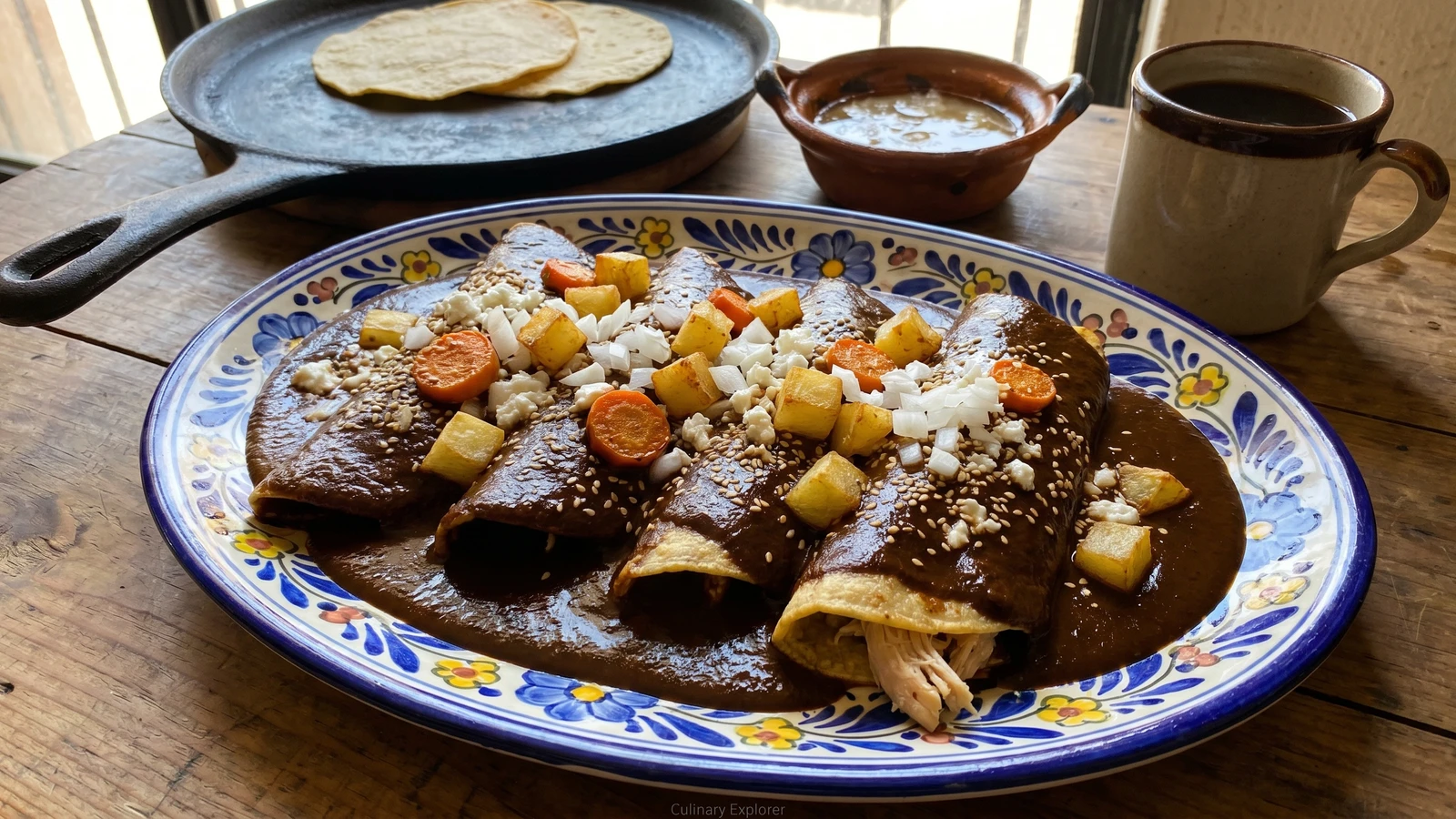
Guanajuato's mining-town enmoladas, corn tortillas glossed with ancho, mulato, and pasilla mole, folded around chicken, then finished with onion, queso fresco, and potatoes fried in manteca.
Guanajuato, the old silver country of the Bajío, is where these enmoladas live. Start in Guanajuato capital, climb toward Valenciana and Mellado, then walk back down to Mercado Hidalgo. That is the map. This is the Sunday cousin of enchiladas mineras, not a random plate with mole poured on top.
The weekday miner enchilada wears a red bath of chile guajillo. This festive version wears a darker mole: chile ancho for dried fruit sweetness, chile mulato for round bitterness, chile pasilla mexicano for raisin depth, and a little chile guajillo so the sauce keeps its red pulse. Mole is not chocolate sauce. The chocolate rounds the chiles. It does not lead them.
I learned the logic of this plate from women who fed working families, not from restaurants: corn tortillas, shredded chicken, raw white onion, queso fresco, potatoes and carrots fried in manteca de cerdo. The fried vegetables on top are not decoration. They are the Guanajuato signature. La manteca es el sabor, and in this dish it carries the mole into the tortilla and puts a crisp edge on the potato.
Serve them on a Dolores Hidalgo majolica platter, with café de olla and bolillos if you are feeding people after mass or before a long day. Flour tortillas do not enter this conversation. This is the Bajío, and Cada estado, su propia cocina.
Enchiladas mineras are tied to Guanajuato City's silver mining economy, especially the late colonial boom around La Valenciana mine, which made the city one of New Spain's richest silver districts in the late 18th century. The miner style kept the plate sturdy: corn tortillas dipped in chile sauce, cheese or meat inside, and potatoes and carrots on top for extra substance. Enmoladas mineras are a later home and fonda variation, exchanging the usual guajillo bath for a darker mole while keeping the Bajío structure intact.
Quantity
1 1/2 pounds
Quantity
6 cups
Quantity
1/2 medium
Quantity
3
peeled
Quantity
1
Quantity
2 teaspoons, plus more to taste
Quantity
4
stemmed and seeded
Quantity
2
stemmed and seeded
Quantity
2
stemmed and seeded
Quantity
2
stemmed and seeded
Quantity
2
Quantity
2 medium
husked and rinsed
Quantity
1/2 medium
cut into thick slices
Quantity
4
unpeeled
Quantity
3 tablespoons, plus more for serving
Quantity
1/4 cup
Quantity
2 tablespoons
Quantity
2 tablespoons
Quantity
1/2
peeled and sliced
Quantity
1
torn into pieces
Quantity
1/2 bolillo or 1 thick slice
torn
Quantity
1-inch piece
Quantity
2
Quantity
4
Quantity
1/2 teaspoon
Quantity
1 ounce
chopped
Quantity
3/4 cup
divided
Quantity
18
preferably day-old
Quantity
2 medium
peeled and cut into 1/2-inch cubes
Quantity
2 medium
cut into 1/4-inch coins
Quantity
1/2 cup
finely diced
Quantity
3/4 cup
crumbled
| Ingredient | Quantity |
|---|---|
| bone-in chicken thighs | 1 1/2 pounds |
| water | 6 cups |
| white onion for broth | 1/2 medium |
| garlic cloves for brothpeeled | 3 |
| bay leaf | 1 |
| kosher salt | 2 teaspoons, plus more to taste |
| dried chile anchostemmed and seeded | 4 |
| dried chile mulatostemmed and seeded | 2 |
| dried chile pasilla mexicanostemmed and seeded | 2 |
| dried chile guajillostemmed and seeded | 2 |
| Roma tomatoes | 2 |
| tomatilloshusked and rinsed | 2 medium |
| white onion for molecut into thick slices | 1/2 medium |
| garlic cloves for moleunpeeled | 4 |
| sesame seeds | 3 tablespoons, plus more for serving |
| raw unsalted peanuts | 1/4 cup |
| blanched almonds | 2 tablespoons |
| raisins | 2 tablespoons |
| ripe plantainpeeled and sliced | 1/2 |
| stale corn tortillatorn into pieces | 1 |
| bolillo or day-old Mexican breadtorn | 1/2 bolillo or 1 thick slice |
| Mexican cinnamon stick | 1-inch piece |
| whole cloves | 2 |
| black peppercorns | 4 |
| dried Mexican oregano | 1/2 teaspoon |
| Mexican table chocolatechopped | 1 ounce |
| manteca de cerdo (pork lard)divided | 3/4 cup |
| corn tortillaspreferably day-old | 18 |
| waxy potatoespeeled and cut into 1/2-inch cubes | 2 medium |
| carrotscut into 1/4-inch coins | 2 medium |
| white onionfinely diced | 1/2 cup |
| queso frescocrumbled | 3/4 cup |
Put the chicken thighs, water, broth onion, peeled garlic, bay leaf, and 2 teaspoons salt in a pot. Bring to a gentle simmer over medium heat, then lower the flame and cook for 25 to 30 minutes, until the meat pulls from the bone. Skim the foam in the first ten minutes. Remove the chicken, strain the broth, and save at least 5 cups. When the chicken is cool enough to handle, shred it by hand. The broth is part of the mole, so do not throw it away.
Heat a dry comal over medium. Toast the chile ancho, chile mulato, chile pasilla mexicano, and chile guajillo separately, about 20 to 30 seconds per side. They should soften, puff in places, and smell deep and fruity. They should not blacken. Put the toasted chiles in a bowl, cover with hot water, and soak for 20 minutes.
On the same comal, roast the tomatoes, tomatillos, onion slices, and unpeeled garlic until they have dark spots and soften at the edges, 8 to 10 minutes for the tomatoes and tomatillos, a little less for the garlic. Peel the garlic. The roast gives the mole its cooked depth before it ever reaches the cazuela.
Melt 3 tablespoons of the manteca de cerdo in a skillet over medium heat. Fry the sesame seeds, peanuts, almonds, raisins, plantain slices, torn tortilla, and bolillo pieces in batches until golden and fragrant. The raisins will puff. The sesame will turn the color of old gold. Move each batch to the blender as it finishes. Toast the cinnamon, cloves, peppercorns, and Mexican oregano on the comal for 30 seconds, then add them to the blender too. La manteca es el sabor.
Drain the soaked chiles and add them to the blender with the roasted tomatoes, tomatillos, onion, garlic, and 2 cups of the chicken broth. Blend until completely smooth, working in batches if your blender is small. Strain through a fine-mesh sieve into a bowl, pressing hard on the solids. A proper mole should feel smooth on the tongue, not gritty.
Melt 2 tablespoons manteca de cerdo in a wide cazuela or Dutch oven over medium heat. Add the strained mole paste carefully. It will sputter. Stir for 8 to 10 minutes, until the color darkens and the fat begins to shine at the edges. Add 2 1/2 cups chicken broth and the chopped Mexican chocolate. Simmer 25 minutes, stirring often, until the sauce coats a spoon but still runs slowly. Taste for salt. Mole is not chocolate sauce. The chocolate rounds the chiles, it does not lead them.
Bring a small pot of salted water to a boil. Add the potato cubes and carrot coins and cook 6 to 8 minutes, until barely tender. Drain well and let them dry on a towel. Melt 3 tablespoons manteca de cerdo in a skillet and fry the potatoes and carrots until the potato edges turn golden and the carrots take on color. Season with salt. This topping is what keeps the miner structure of the dish. Do not skip it.
Warm the tortillas on a comal until flexible. In another skillet, melt 2 to 3 tablespoons manteca de cerdo and pass each tortilla through the hot fat for a few seconds per side. This keeps them from cracking when they meet the mole. Flour tortillas do not belong here. This is Guanajuato, not the northern border.
Keep the mole hot over low heat. Dip one softened tortilla into the mole, coating both sides. Lay it on a plate, add a small line of shredded chicken, and fold it in half. Repeat with the remaining tortillas, arranging three enmoladas per plate or overlapping them on a family platter. Work steadily. Cold tortillas crack, cold mole clumps, and both are the cook's fault.
Spoon more mole over the folded tortillas. Scatter with diced white onion, queso fresco, toasted sesame seeds, and the fried potatoes and carrots. Serve at once on a Dolores Hidalgo majolica platter if you have one, with café de olla and bolillos at the table. Recetas probadas y garantizadas.
1 serving (about 300g)
Culinary guides, cultural storytelling, and the editorial depth that makes cooking meaningful.
Discover Culinary ExplorerChef Lupita
Michoacán's Tierra Caliente almuerzo, where salted beef is softened, pounded, fried in lard, folded with egg and chile perón salsa, then served beside morisqueta like a proper working table.

Chef Lupita
Guerrero's Costa Grande aporreado is salted cecina pounded soft, scrambled with egg, and finished in a red guajillo and chile de árbol salsa loud with garlic and cilantro.

Chef Lupita
Los Altos de Chiapas turns two-night fermented white corn into a tart-sweet atole, cooked with canela and piloncillo, then poured hot into jícaras for desayuno.

Chef Lupita
Oaxaca's Mixteca region ferments nixtamalized masa for days until it turns tart and alive, then simmers it with piloncillo and canela into a thick, warm atole served at first light in clay.