
Chef Lupita
Aporreadillo Michoacano con Huevo
Michoacán's Tierra Caliente almuerzo, where salted beef is softened, pounded, fried in lard, folded with egg and chile perón salsa, then served beside morisqueta like a proper working table.
A cooking platform built around craft, culture, and the stories behind what we eat.
Created by
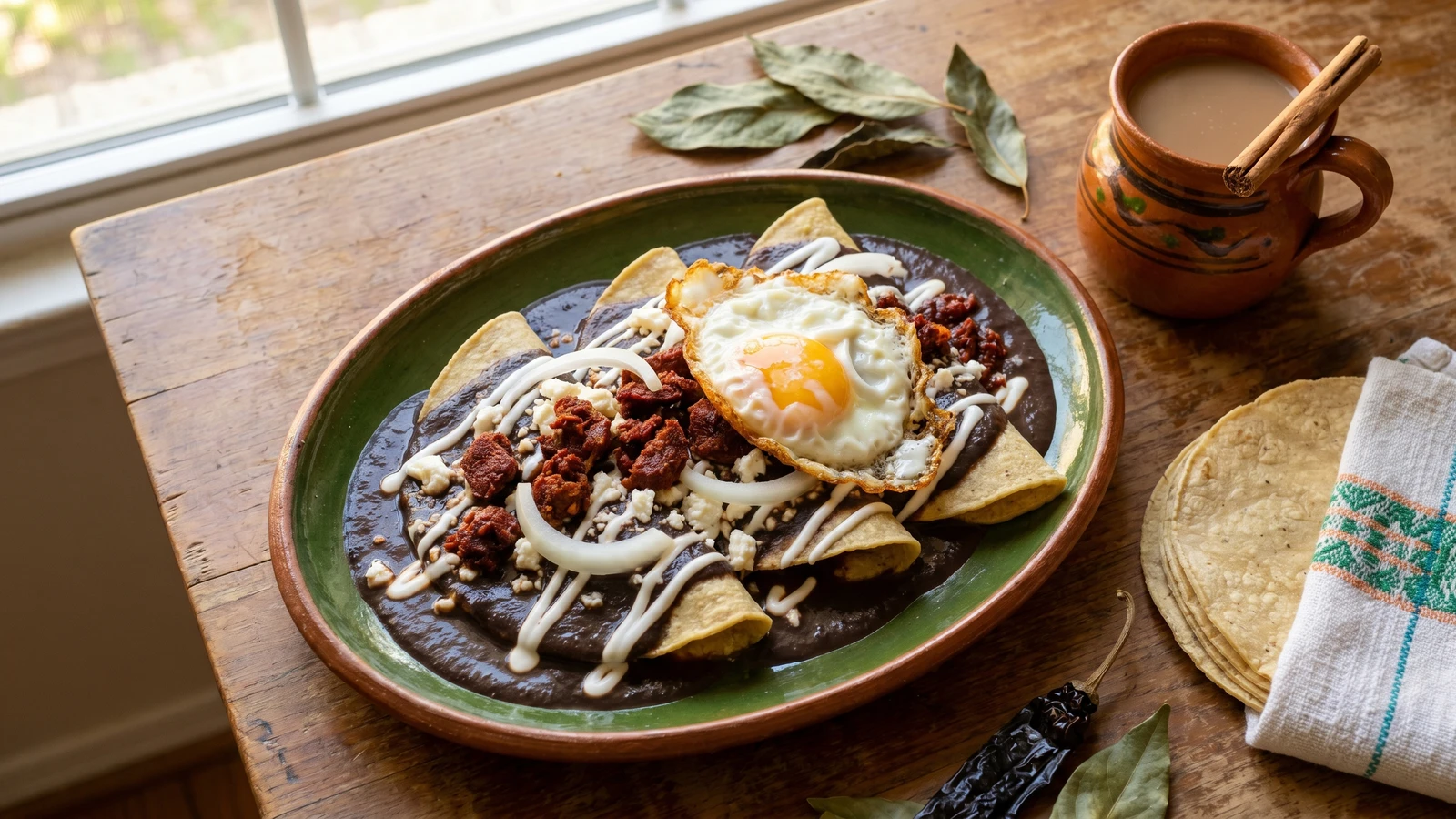
Oaxacan enfrijoladas built on a black bean sauce perfumed with toasted hoja de aguacate and fried in asiento, folded and smothered, then crowned with crumbled Oaxacan chorizo, a fried egg, crema, and queso fresco.
This is Oaxacan breakfast food. Not brunch, not a weekend project. This is what gets put on the table at eight in the morning in a kitchen in the Valles Centrales, alongside a clay mug of café de olla and a stack of tortillas pressed twenty minutes ago. Enfrijoladas are tortillas bathed in bean sauce. Simple to describe. Not simple to make well.
The sauce is where Oaxaca announces itself. Black beans cooked with hoja de aguacate, the toasted avocado leaf that gives Oaxacan cooking a warm, anise-like flavor no other state replicates. You blend the beans smooth with their broth and fry the puree in asiento, that dark, caramelized sediment left at the bottom of the lard-rendering pot that Oaxacan cooks prize more than the lard itself. Asiento does what plain manteca cannot: it brings a smokiness and depth that anchors the bean sauce to its place of origin. If you use butter or vegetable oil, you have made a different dish from a different state.
The chorizo on top is Oaxacan chorizo. Not the bright red, vinegar-soaked variety from Toluca that most of Mexico knows. Oaxacan chorizo is seasoned with chile pasilla oaxaqueño and local spices, darker in color, smokier, drier when cooked. It crumbles into rough, crisp pieces that sit on top of the dark bean sauce like a second layer of Oaxaca on the plate. A fried egg goes over everything. That is how it is served for breakfast across the Central Valleys, and that is how you will serve it here.
My mother was Jalisciense. Her enfrijoladas used pinto beans and no avocado leaf, a completely different animal. The first time I ate them done right was at a fonda near Oaxaca's Mercado 20 de Noviembre, early morning, the señora behind the comal moving fast with a line of regulars waiting. She didn't ask what I wanted on top. Chorizo, crema, queso fresco, onion, egg. She knew. Asi se hace y punto.
Enfrijoladas belong to the pre-Columbian family of antojitos bañados, 'bathed snacks,' a category of tortilla-in-sauce dishes that includes entomatadas, enmoladas, and enchiladas, all rooted in the Mesoamerican practice of wrapping nixtamalized corn in bean, chile, or seed-based pastes. The use of hoja de aguacate as a bean seasoning is specific to Oaxaca's Zapotec and Mixtec culinary traditions, where the native criollo avocado tree provided aromatic leaves long before the Spanish arrival. Oaxacan chorizo, distinct from the nationally dominant Toluca style, developed during the colonial period when Spanish pork-curing methods merged with Oaxaca's endemic chile pasilla oaxaqueño and regional spice blends, producing a drier, smokier sausage that remains a Central Valleys specialty to this day.
Quantity
2 cups
Quantity
1 cup, plus more as needed
Quantity
2
Quantity
1
stemmed and seeded
Quantity
1
peeled
Quantity
1/4 cup, divided
Quantity
to taste
Quantity
8 ounces
casing removed
Quantity
12
Quantity
4
Quantity
1/3 cup
Quantity
1/2 cup
crumbled
Quantity
1/4 medium
sliced into thin half-moons
| Ingredient | Quantity |
|---|---|
| cooked black beans (frijol negro) | 2 cups |
| black bean cooking broth | 1 cup, plus more as needed |
| dried avocado leaves (hojas de aguacate) | 2 |
| dried chile pasilla oaxaqueñostemmed and seeded | 1 |
| garlic clovepeeled | 1 |
| asiento (Oaxacan unrefined lard sediment) | 1/4 cup, divided |
| kosher salt | to taste |
| Oaxacan chorizocasing removed | 8 ounces |
| corn tortillas | 12 |
| large eggs | 4 |
| Mexican crema (optional) | 1/3 cup |
| queso fresco (optional)crumbled | 1/2 cup |
| white onion (optional)sliced into thin half-moons | 1/4 medium |
Heat a dry comal or heavy skillet over medium heat. Press each avocado leaf flat against the hot surface for about ten seconds per side until it darkens slightly, curls at the edges, and releases a warm anise-like fragrance that will fill the kitchen. That fragrance is the backbone of Oaxacan bean cooking. No other herb does this. Set the leaves aside. On the same comal, toast the chile pasilla oaxaqueño for about fifteen seconds per side until the skin puffs and blisters. It should smell smoky, not burned.
Combine the cooked black beans, one cup of their broth, the toasted avocado leaves, the toasted chile, and the garlic in a blender. Blend on high until completely smooth, about one minute. The sauce should pour like heavy cream. If it is too thick, add bean broth a tablespoon at a time. Too thin and it will slide off the tortilla. You want it to coat the back of a wooden spoon and hold there without running.
Heat two tablespoons of asiento in a medium saucepan over medium heat. When it shimmers, pour in the bean puree. It will sputter and spit, so stand back. Stir constantly for five to seven minutes as the sauce darkens one shade and thickens. The asiento gives the sauce a depth that plain manteca cannot match: smokier, more caramelized, rooted in the rendering tradition of Oaxaca's Central Valleys. Taste for salt now. Season it assertively. The tortilla and the crema will temper it at the table. Keep the sauce warm over low heat, adding a splash of bean broth if it thickens too much as it sits.
Crumble the chorizo into a dry skillet over medium heat. No added fat needed. Oaxacan chorizo renders its own. Cook for eight to ten minutes, breaking it into small, uneven pieces with a wooden spoon, until the edges are crisp and the fat has rendered out. The color should be deep brick-red, almost brown. That dark color comes from the chile pasilla oaxaqueño in the sausage, not from food coloring. Transfer the chorizo to a plate and reserve the rendered fat in the skillet for frying the eggs.
Heat one tablespoon of asiento in a separate skillet over medium heat. Pass each tortilla through the hot fat for about five seconds per side, just long enough to soften it and make it pliable. Do not fry it crisp. This is not a tostada. Working quickly, dip the softened tortilla into the warm bean sauce, coating both sides generously. Fold it in thirds and place it on a warm plate, slightly overlapping the previous one. Three per plate. Repeat until all twelve tortillas are sauced and plated. Ladle the remaining bean sauce over the top of each plate so the tortillas are properly bathed, not just dabbed.
Return the skillet with the reserved chorizo fat to medium heat. Add the remaining tablespoon of asiento if needed. Crack the four eggs into the skillet and fry until the whites are set and the edges are lacy and golden but the yolks are still runny. Place one egg on top of each plate of enfrijoladas. Scatter the crisp chorizo over everything. Drizzle with crema. Crumble the queso fresco on top. Finish with the sliced raw white onion. Serve immediately with café de olla if you have a clay pot to brew it in. This is breakfast that does not wait. Recetas probadas y garantizadas.
1 serving (about 340g)
Culinary guides, cultural storytelling, and the editorial depth that makes cooking meaningful.
Discover Culinary ExplorerChef Lupita
Michoacán's Tierra Caliente almuerzo, where salted beef is softened, pounded, fried in lard, folded with egg and chile perón salsa, then served beside morisqueta like a proper working table.

Chef Lupita
Guerrero's Costa Grande aporreado is salted cecina pounded soft, scrambled with egg, and finished in a red guajillo and chile de árbol salsa loud with garlic and cilantro.

Chef Lupita
Los Altos de Chiapas turns two-night fermented white corn into a tart-sweet atole, cooked with canela and piloncillo, then poured hot into jícaras for desayuno.

Chef Lupita
Oaxaca's Mixteca region ferments nixtamalized masa for days until it turns tart and alive, then simmers it with piloncillo and canela into a thick, warm atole served at first light in clay.