
Chef Lupita
Almendrados Conventuales Poblanos
Puebla's convent almond cookies, made from blanched almonds, sugar syrup, egg yolks, canela, and patient hands, the kind of sweet that belongs beside coffee in talavera, not in a plastic bakery box.
A cooking platform built around craft, culture, and the stories behind what we eat.
Created by
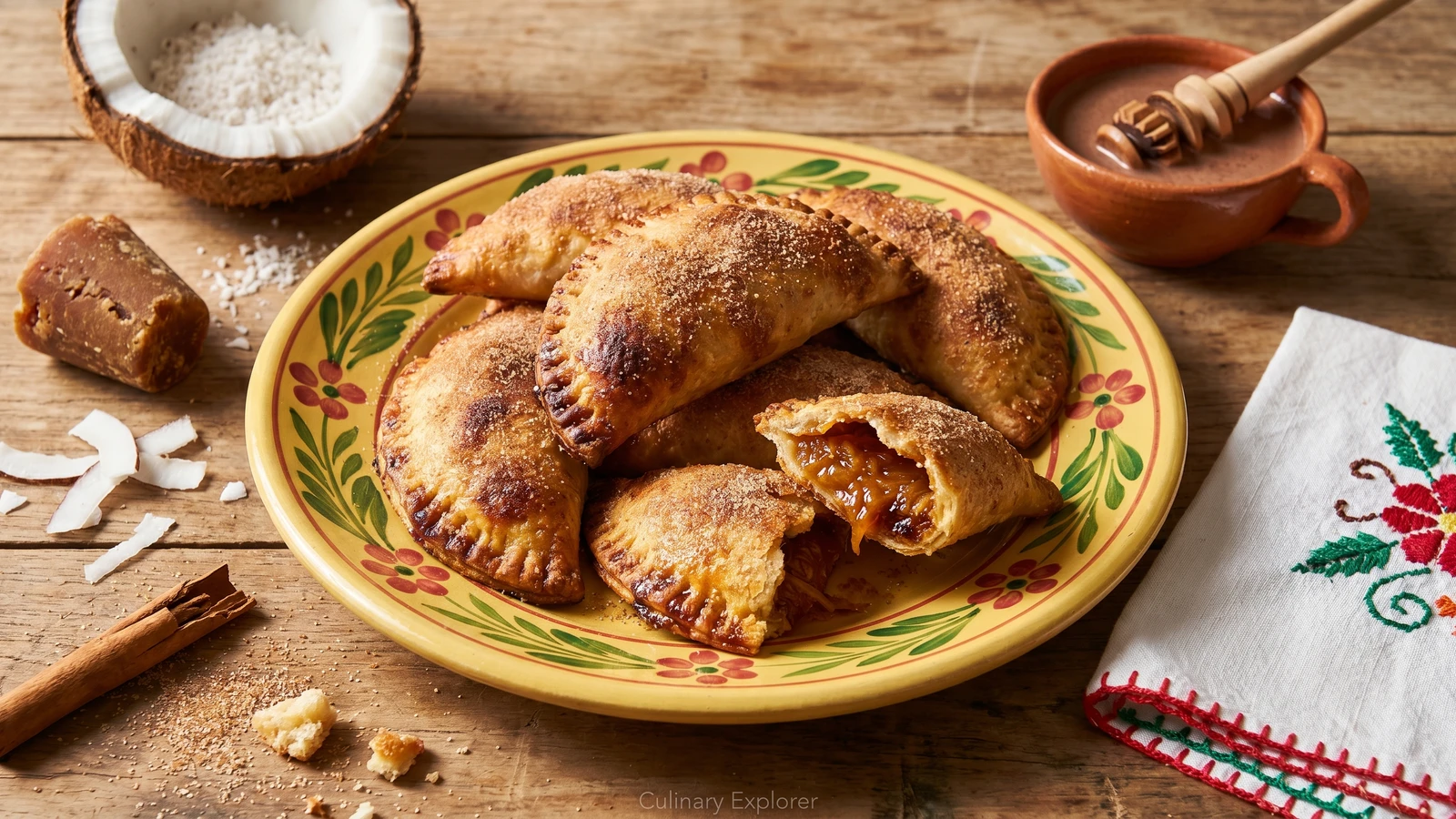
Yucatán's fried coconut empanadas, sweetened with piloncillo and Mexican canela, with a faint corn note from masa harina in the dough. The merienda staple that shows up on the Hanal Pixan altar every November.
These empanadas are from Yucatán. Not from generic Mexico, not from anywhere else in the south. The peninsula has its own pastry tradition, shaped by Spanish convents, Lebanese immigrants, and Maya cooks, and the empanadas de coco belong to that conversation.
The filling is fresh grated coconut cooked down with piloncillo, canela, and a strip of lime zest. Not the bagged sweetened coconut from the baking aisle. Coco fresco, cracked at home, grated by hand. The piloncillo is also non-negotiable. White sugar will give you something sweet but flat. Piloncillo gives you molasses, smoke, and the dark caramel notes that taste like the streets of Merida at four in the afternoon when the dulcerias open after siesta.
These empanadas show up at merienda, the late-afternoon sweet meal yucatecos take with coffee or chocolate. They also show up on the Hanal Pixan altar at the end of October and beginning of November, when families set out food for their dead. The empanada de coco is a guest on that altar because the dead loved coconut and because piloncillo and coconut were within reach for every household, rich or poor.
My mother did not make these. She was from Jalisco. But the woman who taught me, Dona Mercedes from Valladolid, made them with masa harina mixed into the flour. She said: 'El maiz no se va, ni siquiera en el pan dulce.' The corn does not leave, not even in the sweet bread. I have never made them without the masa since. Cada estado, su propia cocina.
Coconut arrived in Yucatán through the Manila Galleon trade in the 16th and 17th centuries, when Spanish ships brought Asian crops to the port of Acapulco and from there overland to the Atlantic coast, where coconut palms eventually naturalized along the peninsula. The empanada form itself is Iberian, brought by Spanish nuns and convent cooks who established the conventual baking tradition in colonial Merida, but the use of piloncillo and the addition of masa harina into the dough are mestizo adaptations that mark the pastry as yucateca rather than peninsular Spanish. Empanadas de coco are a fixture of the Hanal Pixan altars during the Day of the Dead observance unique to the Yucatan Peninsula, where Maya, Catholic, and Spanish traditions converge in the foods set out for returning souls.
Quantity
1 (about 1 pound of meat)
shelled and grated, or 4 cups freshly grated coconut
Quantity
8 ounces (about 1 cup)
chopped
Quantity
1 cup
Quantity
1
broken in half
Quantity
3
Quantity
1 strip
from a Mexican lime
Quantity
pinch
Quantity
3 cups, plus more for rolling
Quantity
1/2 cup
Quantity
1/3 cup
Quantity
1 teaspoon
Quantity
1/2 cup
cold
Quantity
1
Quantity
1/2 cup, plus more as needed
cold
Quantity
1 teaspoon
ideally from Papantla, Veracruz
Quantity
about 4 cups
Quantity
1/2 cup sugar with 1 teaspoon ground canela
for dusting
| Ingredient | Quantity |
|---|---|
| mature brown coconutshelled and grated, or 4 cups freshly grated coconut | 1 (about 1 pound of meat) |
| piloncillochopped | 8 ounces (about 1 cup) |
| water | 1 cup |
| Mexican canela (Ceylon cinnamon) stickbroken in half | 1 |
| whole cloves | 3 |
| lime zestfrom a Mexican lime | 1 strip |
| kosher salt (for filling) | pinch |
| all-purpose flour | 3 cups, plus more for rolling |
| masa harina | 1/2 cup |
| granulated sugar (for dough) | 1/3 cup |
| kosher salt (for dough) | 1 teaspoon |
| manteca de cerdo (pork lard)cold | 1/2 cup |
| large egg | 1 |
| whole milkcold | 1/2 cup, plus more as needed |
| Mexican vanilla extractideally from Papantla, Veracruz | 1 teaspoon |
| neutral oil for frying | about 4 cups |
| granulated sugar mixed with ground canelafor dusting | 1/2 cup sugar with 1 teaspoon ground canela |
Pierce the coconut eyes and drain the water. Save it, drink it cold later. Bake the coconut at 375F for 15 minutes until the shell cracks. Hit the cracks with the back of a heavy knife to free the meat from the shell. Peel off the brown skin with a vegetable peeler. Grate the white meat on the medium holes of a box grater. You want about 4 cups of loose, snowy shreds. Coco fresco is the filling. Bagged dried coconut is sweetened, dyed, and stale. No me vengas con atajos.
Combine the chopped piloncillo, water, canela stick, cloves, lime zest, and a pinch of salt in a heavy saucepan. Heat over medium until the piloncillo dissolves completely. Simmer for 8 to 10 minutes until the syrup thickens to the consistency of honey. The piloncillo carries molasses notes that white sugar will never give you. La caña de azucar es el alma del dulce yucateco. The cane sugar is the soul of Yucatecan sweets.
Strain the syrup to remove the canela, cloves, and zest. Return the syrup to the pan over medium-low heat. Add the grated coconut and stir constantly with a wooden spoon. Cook for 12 to 15 minutes, scraping the bottom, until the mixture pulls away from the sides of the pan and holds its shape on the spoon. The coconut should be glossy, golden, and tender. If it looks dry, add a splash of the reserved coconut water. Cool the filling to room temperature on a sheet pan. Warm filling will tear the dough.
Whisk the flour, masa harina, granulated sugar, and salt in a wide bowl. The masa harina is not a substitute for flour. It is a deliberate addition that gives the dough the faint corn aroma that marks the yucateca version, the same masa that goes into the kibis and salbutes sold from carts in Merida. Cut the cold lard into the dry ingredients with your fingertips or a pastry cutter until the mixture looks like coarse cornmeal. Beat the egg with the milk and vanilla, then pour into the well. Stir with a fork until a shaggy dough forms. Turn out and knead briefly, just until smooth, about a minute. Add a teaspoon of milk at a time if the dough feels dry. Wrap in plastic and rest at room temperature for 30 minutes.
Divide the rested dough in half. Keep one half wrapped. Roll the other on a lightly floured surface to about 1/8 inch thick, no thinner. Yucatecan empanadas de coco are not delicate French pastries. They have body. Cut 4-inch rounds with a glass or biscuit cutter. Stack the scraps, do not knead them again, press them together gently and re-roll once. Repeat with the second half of the dough.
Place a heaping tablespoon of cooled coconut filling on one half of each round. Leave a clean border of dough around the edge. Wet the border with a damp finger, fold the dough over into a half-moon, and press the edges firmly. Crimp with a fork or pinch into a repulgue, the rope-edge pleat. A loose seal opens in the oil and the filling escapes. The empanada deflates and you have wasted good coconut. Set the sealed empanadas on a sheet pan lined with parchment.
Heat about 2 inches of oil in a heavy pot to 350F. Use a thermometer. Guessing the temperature is how you get greasy, pale empanadas. Fry in batches of three or four, never crowding. The oil temperature will drop the moment you add them. Fry for 2 to 3 minutes per side, turning once, until deep golden and blistered. Drain on a wire rack set over a sheet pan, not on paper towels. Paper towels trap steam and soften the crust.
While the empanadas are still warm, but not searing hot, toss them in the canela-sugar mixture until well coated. The warmth sets the sugar against the crust without melting it into a glaze. Cool on the rack for 10 minutes before serving. Eat the same day they are fried. Tomorrow they are still good but the contrast between the crisp edge and the tender coconut center is at its best in the first few hours. Recetas probadas y garantizadas.
1 serving (about 95g)
Culinary guides, cultural storytelling, and the editorial depth that makes cooking meaningful.
Discover Culinary ExplorerChef Lupita
Puebla's convent almond cookies, made from blanched almonds, sugar syrup, egg yolks, canela, and patient hands, the kind of sweet that belongs beside coffee in talavera, not in a plastic bakery box.

Chef Lupita
Ciudad de Mexico's panaderia banderillas are long sticks of hojaldre pressed with sugar, baked until amber, and finished with a hard glaze for coffee at the kitchen table.

Chef Lupita
Mérida's pale egg-yolk-and-vanilla kisses, tiny cookies built on eight yolks and a perfume of orange blossom, sandwiched with guava paste and dusted heavy with powdered sugar.

Chef Lupita
Hidalgo's bisquet de nata carries Pachuca's mining history into the breakfast table: a Cornish-style bread softened by Mexican nata, split warm and eaten with café de olla.