Culinary Explorer
A cooking platform built around craft, culture, and the stories behind what we eat.
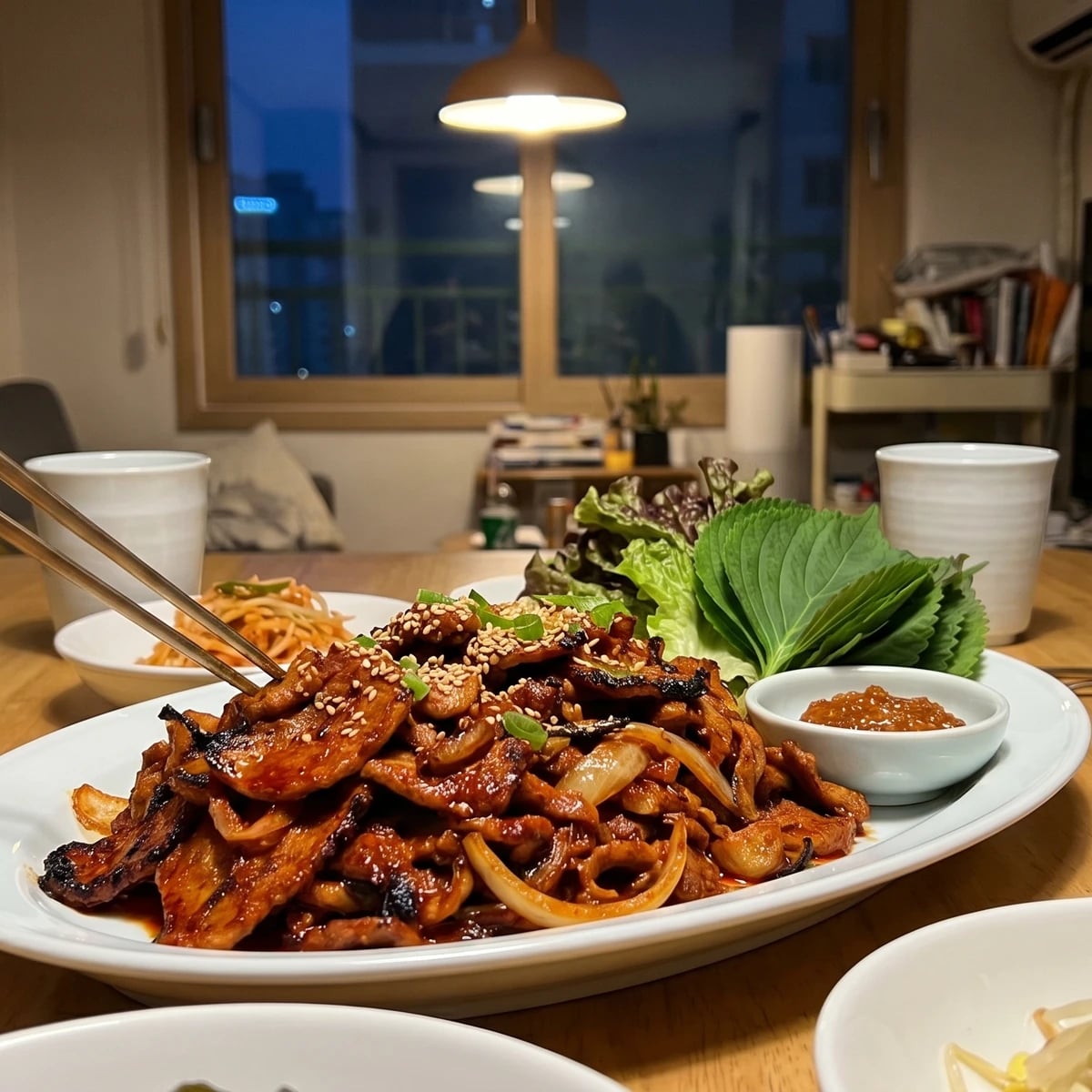
Dwaeji-bulgogi (Spicy Marinated Pork)
Created by Chef Jeong-sun
Thin-sliced pork shoulder in a measured gochujang and soy marinade, cooked hard and fast so the chili clings, the edges char, and the pork still tastes like pork.
Dwaeji-bulgogi lives or dies by heat. The marinade is wet, the pork is thin, and if the pan is timid, everything boils red and tired. Get the pan hot, cook in batches, and let the edges catch. That little char is not decoration. It is where the gochujang (red chili paste), soy, garlic, and pork finally become one dish.
People think spicy pork means more gochujang, more sugar, more red. No. The chili should read against the meat, not bury it. My teacher, Master Seong-nyeo, would taste the raw marinade with the end of a chopstick, then say nothing until the pork was cooked. Only then did she correct it, because pork fat changes the seasoning once it melts. I still do it that way, but I measure first so you don't have to guess in front of a hungry table.
Use pork shoulder, collar, or belly sliced thin, 2 to 3 millimeters if the butcher will do it. Marinate briefly, not overnight, because thin pork takes seasoning quickly and too much time makes it salty. Tonight this asks for a sharp knife or a helpful butcher, a wide pan, and enough patience not to crowd it. Serve it in ssam (leaf wraps) with rice, lettuce, garlic, and one quiet banchan beside it. Write it down. Memory is a borrowed bowl.
Ingredients
pork shoulder, pork collar, or pork belly
Quantity
700g
sliced 2 to 3 mm thick against the grain
onion
Quantity
1/2 medium
thinly sliced
scallions
Quantity
3
cut into 2-inch lengths
| Ingredient | Quantity |
|---|---|
| pork shoulder, pork collar, or pork bellysliced 2 to 3 mm thick against the grain | 700g |
| onionthinly sliced | 1/2 medium |
| scallionscut into 2-inch lengths | 3 |
Where cooking meets culture.
Culinary guides, cultural storytelling, and the editorial depth that makes cooking meaningful.
Discover Culinary Explorer