
Chef Lupita
Acitrón de Cidra Conventual
Puebla's convent-style acitrón, made from cidra peel instead of endangered biznaga, built through repeated syrup soakings until the cubes turn firm, translucent, and ready for rosca or chiles en nogada.
A cooking platform built around craft, culture, and the stories behind what we eat.
Created by
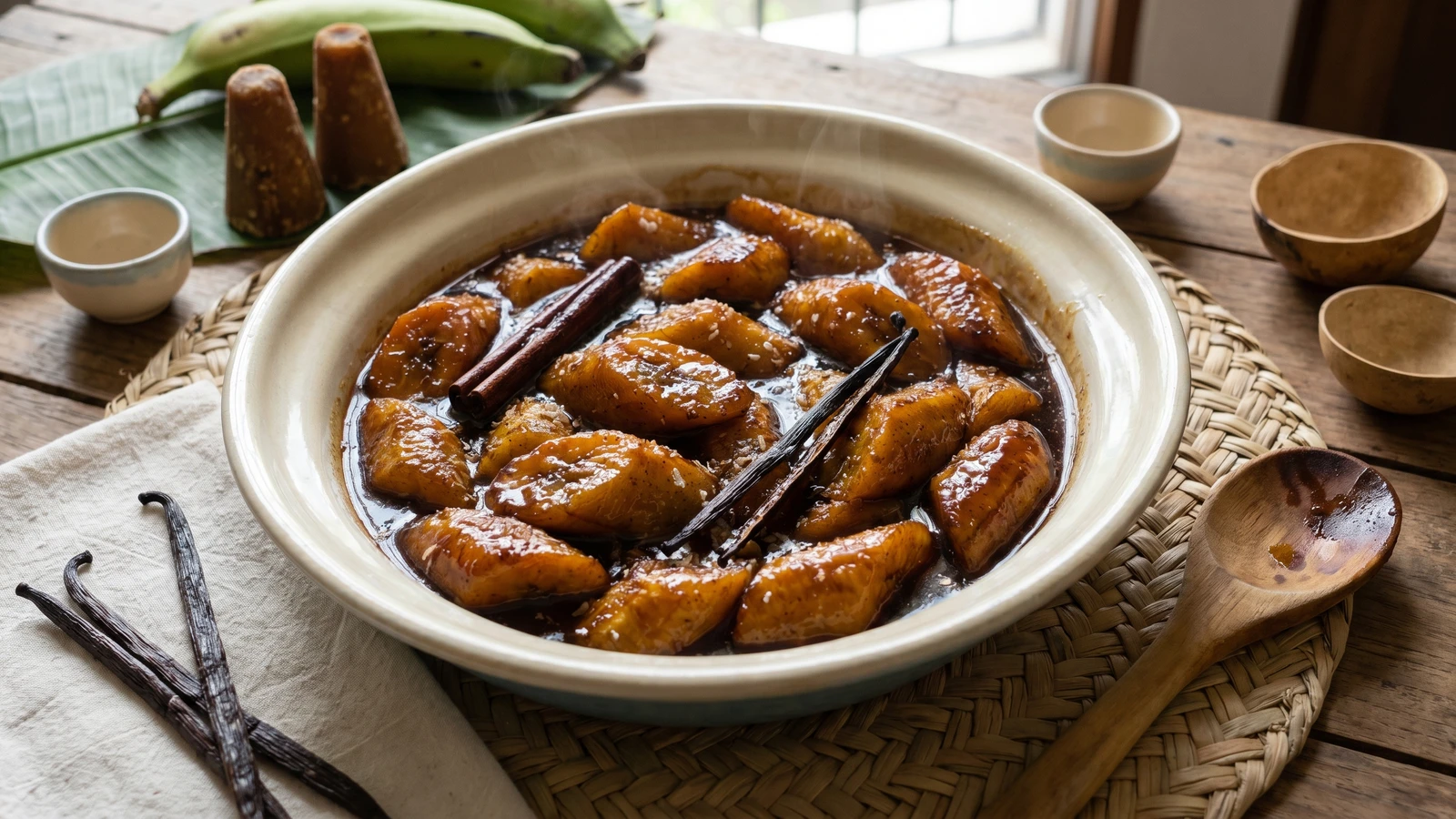
Veracruz's Sotavento coast candy of ripe plátano macho simmered in piloncillo, canela, clavo, and vainilla de Papantla until the fruit turns amber and the syrup clings to the spoon.
Veracruz, the Sotavento coast around Tlacotalpan, Alvarado, and the lower Papaloapan, is where this dulce de plátano macho belongs. The fruit came through the Gulf with the port, the cane came through the trapiches, and the vanilla comes from Papantla, north in Totonacapan. That geography is the dish.
This is not banana in brown sugar. Use plátano macho, skins mostly black, flesh still firm enough to hold a cut. Use piloncillo, not refined sugar. Use a whole vainilla de Papantla pod, not extract. The syrup should taste of cane, canela, clavo, and vanilla before the plantain ever touches it.
I learned this version in a kitchen outside Tlacotalpan, in a pale blue glazed cazuela set near a window with Gulf air pushing through. The señora did not stir. She tilted the cazuela and spooned the syrup over the pieces because ripe plantain breaks if you bully it. That is the technique: low heat, patience, and enough restraint to leave the fruit whole.
This is comfort food, not a plated restaurant dessert. It sits on the table after comida, the syrup getting thicker as the afternoon settles, with copitas or jícaras nearby and maybe a little coco fresco rallado if the coast gave you a good coconut that week. Cada estado, su propia cocina.
Plantains are not native to Mexico; they traveled from Southeast Asia through Africa and the Iberian Atlantic routes, entering New Spain through Caribbean and Gulf ports in the 16th century. Veracruz, founded as a Spanish port in 1519, became one of the places where African, Indigenous, and Spanish cooking met, and plantain sweets cooked in cane syrup belong to that coastal history. Vainilla de Papantla received a Mexican denomination of origin in 2009, recognizing the Totonacapan region of northern Veracruz and Puebla, where vanilla orchids have been cultivated and cured since before the conquest.
Quantity
5
skins mostly black, peeled and cut into 1 1/2-inch diagonal pieces
Quantity
10 ounces
chopped or grated
Quantity
2 cups
Quantity
1
split lengthwise and seeds scraped; use seeds and pod
Quantity
1 stick, about 3 inches
Quantity
3
Quantity
1/4 teaspoon
Quantity
1 teaspoon
Quantity
1/2 cup
freshly grated
| Ingredient | Quantity |
|---|---|
| very ripe plátanos machosskins mostly black, peeled and cut into 1 1/2-inch diagonal pieces | 5 |
| piloncillochopped or grated | 10 ounces |
| water | 2 cups |
| whole vainilla de Papantla podsplit lengthwise and seeds scraped; use seeds and pod | 1 |
| canela mexicana stick | 1 stick, about 3 inches |
| whole clavos de olor | 3 |
| sea salt | 1/4 teaspoon |
| fresh lime juice | 1 teaspoon |
| coco fresco rallado (optional)freshly grated | 1/2 cup |
Use plátano macho, not banana. The skins should be mostly black with a few yellow seams, and the fruit should give slightly when pressed but still hold its shape. Green plantains are for tostones and savory cooking. For this dulce, the sugar has to be inside the fruit before it ever touches the piloncillo.
Wash and dry the plantains. Cut off the ends, score the peel lengthwise, and pull the peel away. Slice the flesh on a diagonal into thick 1 1/2-inch pieces. Do not slice them thin. Thin pieces collapse into syrup and then you have baby food, not dulce de plátano macho.
Place the piloncillo, water, canela, clavos de olor, sea salt, vanilla seeds, and the split vanilla pod in a lead-free clay cazuela or heavy saucepan. Bring to a gentle simmer over medium heat, stirring until the piloncillo dissolves. Simmer 8 to 10 minutes, until the syrup turns clear mahogany and smells of cane, canela, clavo, and Papantla vanilla. Use the pod, not extract. Así se hace y punto.
Slide the plantain pieces into the syrup in a single layer as much as the pot allows. Lower the heat until the syrup bubbles lazily. Spoon syrup over the top instead of stirring hard. Cook 18 to 22 minutes, turning the pieces once with a spoon, until the plantain turns amber and a knife slips in without resistance. Ripe plantain breaks if you bully it. Restraint is technique.
Lift the plantains gently into the serving cazuela if the syrup still looks thin. Raise the heat under the syrup and boil 6 to 8 minutes, until it coats the back of a spoon and the drops fall slowly. Stir in the lime juice during the last minute. Pour the thickened miel back over the plantains. If you took it too far and the syrup tightens like candy, add a tablespoon or two of water and warm it until it loosens.
Let the dulce rest at least 15 minutes before serving. The syrup thickens as it cools and the plantain drinks in the piloncillo. Remove the clavos before serving; count them, because nobody wants to bite one. Leave the canela and vanilla pod in the cazuela so the table sees what flavored the dish. Serve warm or at room temperature, with coco fresco rallado if you have a good fresh coconut. No bagged dry coconut. No me vengas con atajos.
1 serving (about 190g)
Culinary guides, cultural storytelling, and the editorial depth that makes cooking meaningful.
Discover Culinary ExplorerChef Lupita
Puebla's convent-style acitrón, made from cidra peel instead of endangered biznaga, built through repeated syrup soakings until the cubes turn firm, translucent, and ready for rosca or chiles en nogada.

Chef Lupita
Ciudad de México's Tulyehualco alegría is popped huautli folded into piloncillo honey, pressed with peanuts, pepitas, and raisins, then cut into the rectangular bars that built a pueblo's identity.

Chef Lupita
Oaxaca's pre-Columbian amaranth bar, popped on a hot comal and bound with piloncillo, honey, and the sacred Zapotec grain that the Spanish tried, and failed, to outlaw.

Chef Lupita
Querétaro's mercado candy of popped amaranto pressed with dark piloncillo syrup, pepitas, pecans, and cacahuate, a Bajío sweet that respects the seed before it decorates the table.