
Chef Lupita
Acitrón de Cidra Conventual
Puebla's convent-style acitrón, made from cidra peel instead of endangered biznaga, built through repeated syrup soakings until the cubes turn firm, translucent, and ready for rosca or chiles en nogada.
A cooking platform built around craft, culture, and the stories behind what we eat.
Created by
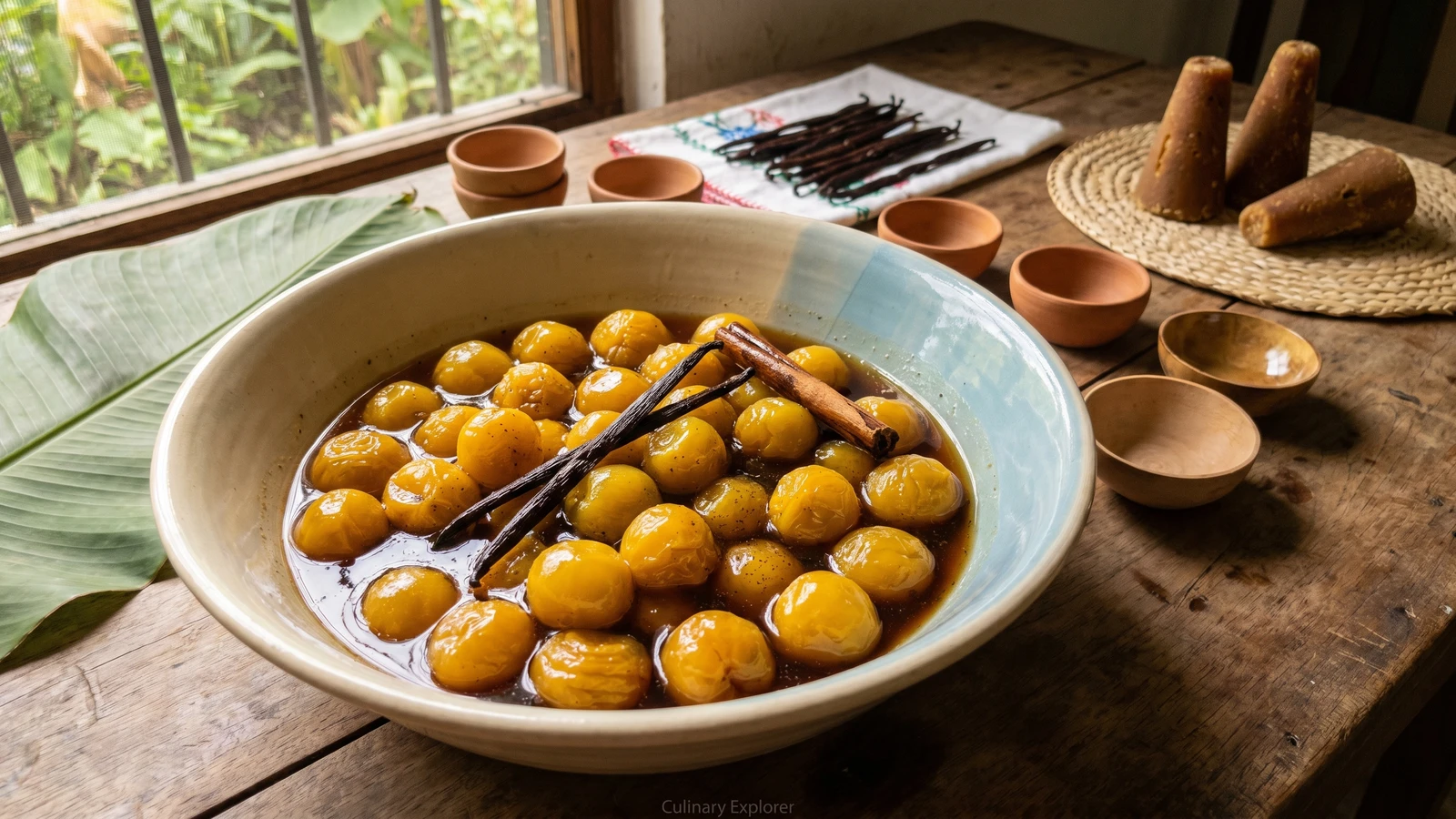
Veracruz's Gulf lowland nanche preserved whole in piloncillo syrup with vainilla de Papantla, the summer dulce sold by the spoonful in markets from Sotavento to Papaloapan.
Veracruz, especially the Gulf lowlands from the Sotavento into the Papaloapan basin, is where this dulce lives. Nanchi, nanche, nance, the name changes by mouth and by town, but the fruit is the same: small, yellow, perfumed, and stubborn. You smell it before you see it in the market.
This is not a chile dessert. Not everything in Mexico needs heat to be Mexican. Here the work belongs to piloncillo, canela, and vainilla de Papantla, the vanilla from northern Veracruz that should be used as a whole pod, split open, not replaced with extract. The syrup has to enter the fruit slowly. Rush it and the nanches stay sour at the center. Boil it hard and they burst. No me vengas con atajos.
I learned this version from a woman near Tlacotalpan who sold it in reused glass jars, the fruit packed tight and the syrup dark from panela. She told me to prick every fruit and to let the jar rest overnight before judging it. She was right. The first day it tastes like syrup and fruit. The second day it tastes like Veracruz. Cada estado, su propia cocina.
Nanche, Byrsonima crassifolia, is native to tropical Mesoamerica and has been eaten fresh, fermented, and preserved in syrup since long before refined sugar became common in Mexican kitchens. In Veracruz, the pairing of lowland nanche with vanilla from the Papantla region reflects the state's long role as both a Gulf trade corridor and one of Mexico's defining vanilla territories. Piloncillo syrups became standard for fruit preserves during the colonial sugar economy, especially in humid regions where preserving seasonal fruit was practical household work, not decoration.
Quantity
2 pounds
rinsed and picked over
Quantity
8 cups
divided
Quantity
1 tablespoon
for firming the fruit
Quantity
1 pound
chopped
Quantity
1
split lengthwise
Quantity
1 stick, about 3 inches
Quantity
3
Quantity
1 small strip
white pith removed
Quantity
1/4 teaspoon
| Ingredient | Quantity |
|---|---|
| ripe yellow nanche fruitrinsed and picked over | 2 pounds |
| waterdivided | 8 cups |
| cal apagada (pickling lime)for firming the fruit | 1 tablespoon |
| piloncillochopped | 1 pound |
| whole vainilla de Papantla podsplit lengthwise | 1 |
| Mexican cinnamon stick (canela) | 1 stick, about 3 inches |
| whole cloves | 3 |
| orange peelwhite pith removed | 1 small strip |
| fine sea salt | 1/4 teaspoon |
Choose ripe yellow nanches that smell floral, fermented, and a little sharp. That smell is not spoilage. That is the fruit. Discard any that are blackened, split badly, or mushy. Rinse them gently in cool water and drain. If your market only has hard green nanches, do not make this today. Pregúntale a las señoras del mercado and come back when the fruit is ready.
Use a toothpick or the tip of a small knife to prick each nanche once or twice. Do not crush them. The skin is thin and the flesh is stubborn. These little holes let the piloncillo syrup enter the fruit instead of just coating the outside.
Stir the cal apagada into 4 cups of water in a nonreactive bowl until cloudy. Add the pricked nanches and let them sit for 20 minutes. This is an old preserving trick. The cal helps the fruit hold its shape in the syrup so you get tender nanches, not jam. Drain and rinse three times under cool water until the water runs clear.
In a clay cazuela or heavy saucepan, combine the chopped piloncillo with the remaining 4 cups water. Add the split vainilla de Papantla pod, canela, cloves, orange peel, and salt. Bring to a steady simmer over medium heat, stirring until the piloncillo dissolves. The syrup should smell dark, warm, and grassy from the vanilla pod. Do not use vanilla extract here. Veracruz did not give you Papantla so you could pour brown perfume from a bottle.
Add the rinsed nanches to the syrup. Lower the heat so the liquid moves gently, with small bubbles around the edge of the cazuela. Cook uncovered for 45 to 55 minutes, stirring now and then with a wooden spoon, until the fruit turns glossy and the syrup thickens enough to coat the spoon lightly. The nanches should stay whole and tender, with their yellow color deepened by the piloncillo.
Turn off the heat and let the fruit cool in the syrup. Remove the cloves if you can find them, but leave the vanilla pod and canela in the jar. The flavor is better after a night in the refrigerator. This is a make-ahead dulce, not a last-minute dessert. Saber cocinar es saber vivir.
Serve the dulce chilled or at room temperature in small copitas, jícaras, or a shallow glazed clay bowl, with enough syrup to shine around the fruit. Do not bury it under whipped cream or ice cream unless you want to hide the nanche. A spoonful after lunch is enough. That is how market sweets work.
1 serving (about 280g)
Culinary guides, cultural storytelling, and the editorial depth that makes cooking meaningful.
Discover Culinary ExplorerChef Lupita
Puebla's convent-style acitrón, made from cidra peel instead of endangered biznaga, built through repeated syrup soakings until the cubes turn firm, translucent, and ready for rosca or chiles en nogada.

Chef Lupita
Ciudad de México's Tulyehualco alegría is popped huautli folded into piloncillo honey, pressed with peanuts, pepitas, and raisins, then cut into the rectangular bars that built a pueblo's identity.

Chef Lupita
Oaxaca's pre-Columbian amaranth bar, popped on a hot comal and bound with piloncillo, honey, and the sacred Zapotec grain that the Spanish tried, and failed, to outlaw.

Chef Lupita
Querétaro's mercado candy of popped amaranto pressed with dark piloncillo syrup, pepitas, pecans, and cacahuate, a Bajío sweet that respects the seed before it decorates the table.