
Chef Lupita
Acitrón de Cidra Conventual
Puebla's convent-style acitrón, made from cidra peel instead of endangered biznaga, built through repeated syrup soakings until the cubes turn firm, translucent, and ready for rosca or chiles en nogada.
A cooking platform built around craft, culture, and the stories behind what we eat.
Created by
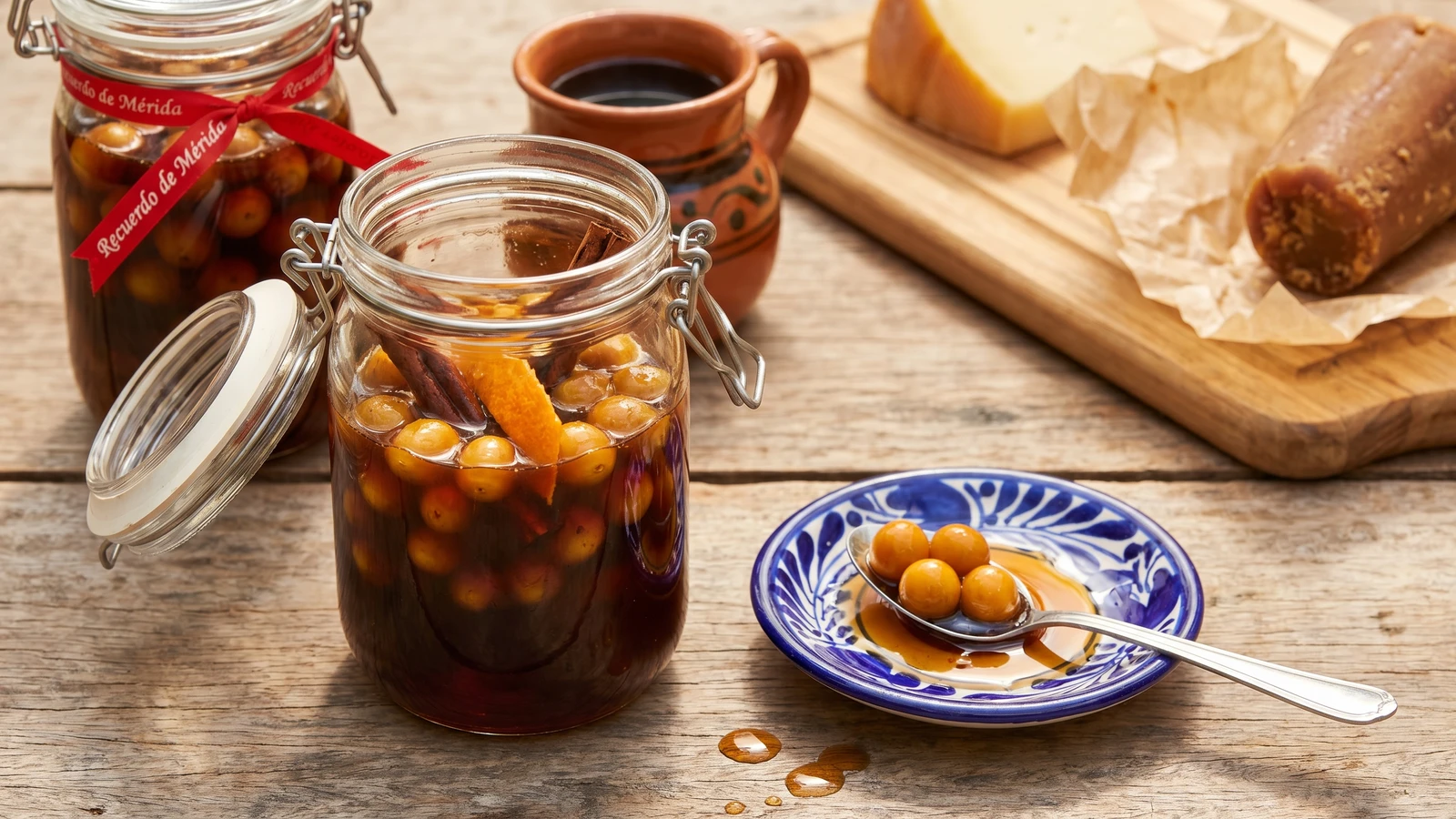
Yucatán's tiny yellow nance simmered slow in piloncillo syrup with Mexican canela and a strip of orange peel, jarred and given as recuerdo de Mérida.
This is from Yucatán. Specifically from the dulcerías along Calle 65 in Mérida and from the frasco stands at the Lucas de Gálvez market, where the women line up jars of dulces in rows: papaya verde, ciruela, calabaza, grosella, and the little amber jars of nance that travelers buy on the way out of the city. You give one to your mother-in-law. You give one to the comadre who watched the children. That is what a frasco of dulce de nance is in Yucatán. Not a dessert. A gesture.
The nance is what makes it. A tiny yellow fruit the size of a marble, with a pit inside and a smell that people either love or refuse to be in the same room with. Some say cheese. Some say sweaty socks. The Yucatecans say nance and that is the end of the conversation. You will find them piled in baskets at the markets through the summer and early fall, sold by the kilo by women who know exactly which fruit is ripe enough to cook and which still needs a day in the sun. If your market does not carry them fresh, frozen nance from a Yucatecan brand is the next best thing. Canned in syrup is already cooked and will give you a different dish. La cocina no es decoración, es trabajo.
The syrup is piloncillo, water, Mexican canela, a strip of orange peel, one clove. That is it. The dulcerías do not complicate this. They reduce the syrup slowly while the fruit softens, and they jar it in the almíbar that drips off the spoon in a thick amber ribbon. My mother had a note in her notebook from a Yucatecan woman she met at a wedding in 1991, written in blue ink: 'Una clavito nada más. Si pones dos arruinas todo.' One clove only. If you put two you ruin it. She was right. Saber cocinar es saber vivir.
Nance (Byrsonima crassifolia), known in Yucatec Maya as 'chi' or 'changunga' in other parts of Mexico, is a native fruit of southern Mexico and Central America cultivated since pre-Columbian times by the Maya, who fermented it into a mild alcoholic beverage long before the Spanish arrived. The technique of preserving fruit in piloncillo syrup, known across Mexico as 'dulces en almíbar,' emerged in the 17th and 18th centuries when colonial convents in cities such as Mérida, Puebla, and Oaxaca adapted Spanish fruit-preserving traditions to local ingredients, using the unrefined cane sugar that sugar mills in Veracruz and Yucatán were producing in quantity. Yucatán's dulcería tradition, centered in Mérida and still visible in shops along Calle 65, preserves dozens of regional fruit dulces (papaya verde, ciruela, grosella, ciricote, nance) that have largely disappeared from the Mexican imagination outside the peninsula.
Quantity
2 pounds (about 6 cups)
rinsed and stemmed
Quantity
1 pound
chopped, or 2 cups dark brown sugar packed
Quantity
3 cups
Quantity
2 sticks, about 4 inches each
Quantity
1 strip, about 3 inches
no pith
Quantity
1
Quantity
1 pinch
Quantity
1 tablespoon
| Ingredient | Quantity |
|---|---|
| fresh nancerinsed and stemmed | 2 pounds (about 6 cups) |
| piloncillochopped, or 2 cups dark brown sugar packed | 1 pound |
| water | 3 cups |
| Mexican canela (true cinnamon) | 2 sticks, about 4 inches each |
| orange peelno pith | 1 strip, about 3 inches |
| whole clove | 1 |
| sea salt | 1 pinch |
| fresh lime juice | 1 tablespoon |
Tip the nance into a colander and rinse under cold water. Pick through them carefully. Discard any that are split, fermented, or have a sour smell. The fruit should be firm to soft, the color of a wax candle, with the perfume that Yucatecans recognize from a block away. Some cooks call it cheese-like, some say sweaty socks. That is the nance. If yours has no smell, it was picked too early and the syrup will taste like nothing.
In a heavy 4-quart saucepan or a wide clay cazuela, combine the chopped piloncillo and the water. Set over medium heat. Stir occasionally until every chunk of piloncillo has dissolved. Do not rush this with high heat or the sugar will scorch on the bottom and the whole pot will taste burnt. The syrup should be the color of dark amber and smell faintly of molasses and brown sugar. Piloncillo is not brown sugar. It carries minerals and a deep caramel funk that white sugar cannot fake.
Drop in the canela sticks, the strip of orange peel, the clove, and the pinch of salt. Use Mexican canela, the soft bark that crumbles between your fingers, not the hard cassia they sell as cinnamon in most supermarkets. Cassia is harsh and medicinal. Mexican canela is floral and warm. One clove only. More than that and the dulce will taste like a dentist's office.
Slide the nance into the syrup. The fruit should bob just at the surface. Bring the pot to a bare simmer, lazy bubbles, never a rolling boil. A hard boil bursts the skins and turns the syrup cloudy. You want the fruit to soften slowly while the syrup reduces around it. Cook uncovered for 50 to 60 minutes, stirring gently with a wooden spoon every ten minutes or so. The syrup will deepen in color and start to coat the back of the spoon.
After 50 minutes, drag the wooden spoon across the bottom of the pot. The syrup should leave a clear trail that closes slowly. Lift a spoonful and let it fall back. It should run in a thick ribbon, not water. Drop a few drops onto a cold plate. If the drops hold their shape and turn glossy as they cool, the dulce is ready. If they spread thin, simmer another five minutes and test again. No me vengas con atajos. The almíbar is the recipe.
Pull the pot off the heat. Stir in the tablespoon of lime juice. The acid cuts the sweetness and keeps the syrup from crystallizing on the second day. Let the dulce cool in the pot for 30 minutes. The fruit will keep absorbing the syrup as it cools and the flavor will deepen. Do not skip the resting time.
Ladle the cooled dulce into clean glass frascos, making sure the syrup covers the fruit completely. Tuck the canela sticks down into the jars where they will keep perfuming the syrup. Seal and refrigerate. The dulce is ready to eat immediately but it is better after 24 hours in the jar, when the nance has had time to surrender fully to the piloncillo. This is what the señoras at Lucas de Gálvez tie with a ribbon and sell as recuerdo de Mérida. Así se hace y punto.
1 serving (about 135g)
Culinary guides, cultural storytelling, and the editorial depth that makes cooking meaningful.
Discover Culinary ExplorerChef Lupita
Puebla's convent-style acitrón, made from cidra peel instead of endangered biznaga, built through repeated syrup soakings until the cubes turn firm, translucent, and ready for rosca or chiles en nogada.

Chef Lupita
Ciudad de México's Tulyehualco alegría is popped huautli folded into piloncillo honey, pressed with peanuts, pepitas, and raisins, then cut into the rectangular bars that built a pueblo's identity.

Chef Lupita
Oaxaca's pre-Columbian amaranth bar, popped on a hot comal and bound with piloncillo, honey, and the sacred Zapotec grain that the Spanish tried, and failed, to outlaw.

Chef Lupita
Querétaro's mercado candy of popped amaranto pressed with dark piloncillo syrup, pepitas, pecans, and cacahuate, a Bajío sweet that respects the seed before it decorates the table.