
Chef Lupita
Acitrón de Cidra Conventual
Puebla's convent-style acitrón, made from cidra peel instead of endangered biznaga, built through repeated syrup soakings until the cubes turn firm, translucent, and ready for rosca or chiles en nogada.
A cooking platform built around craft, culture, and the stories behind what we eat.
Created by
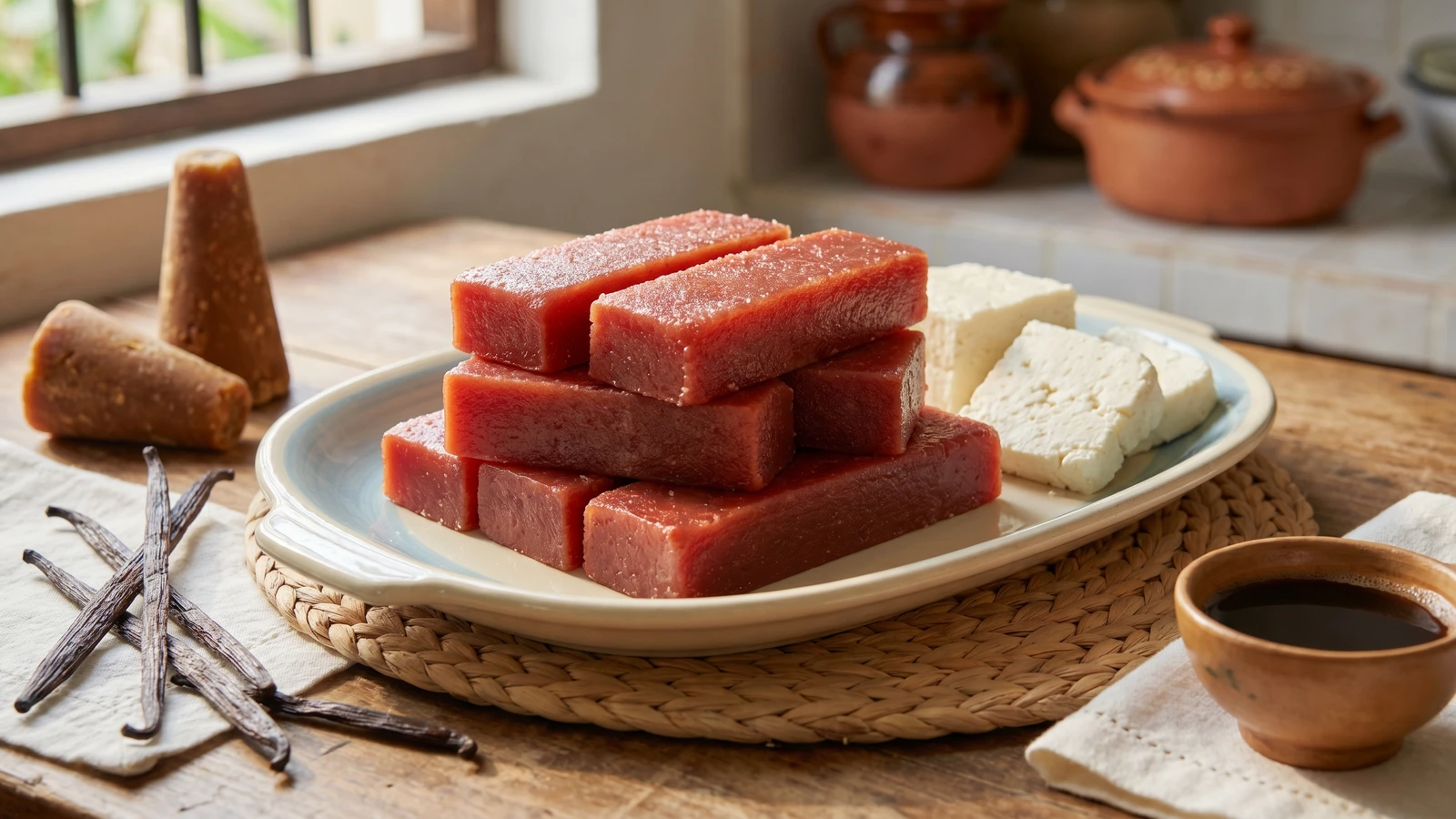
Veracruz's Gulf coast guava paste, simmered with piloncillo, cane sugar, and whole vainilla de Papantla until the fruit darkens, thickens, and holds a knife for clean holiday bars beside queso fresco.
Veracruz, especially the humid fruit markets of the Sotavento and the roads toward Papantla, is where this version lives. Guayaba comes in perfumed and yellow from the Gulf heat, and the vanilla has a name: vainilla de Papantla, whole pod, not extract. This is not a chile dish. Not all Mexican food needs chile to tell you where it comes from. The fruit, the piloncillo, and the vanilla do the geography.
I learned this style from a señora near Tlacotalpan who cooked the paste in a wide pot until her wooden spoon could stand a second before falling. She served it in thick slices with queso fresco on pale blue glazed earthenware, the kind you see on tables along the Papaloapan. Nothing precious. Just fruit cooked until it becomes something that can travel, keep, and feed visitors during the holidays.
The rule is patience. You are not making jam. You are cooking past jam, past sauce, past anything that runs. The guava has to darken, tighten, and pull away from the pan until a knife dragged through it leaves a clean wall. No me vengas con atajos. If you stop early, you get guava spoon candy. Good, but not dulce de guayaba.
My mother used to say that fruit tells you when it is ready if you stop arguing with it. She was right. Buy ripe guayabas that smell from a step away. Cook them slowly. Strain the seeds. Let the paste set. Saber cocinar es saber vivir.
Guava, Psidium guajava, is native to tropical America and was eaten in Mesoamerica before the Spanish brought cane sugar into New Spain in the 16th century. Veracruz became one of Mexico's important sugar and fruit preserving regions through the colonial sugar corridor around Córdoba and Orizaba, which made dense fruit pastes practical for storage and transport. Morelia in Michoacán is famous for ate, but this Veracruz version signals the Gulf with piloncillo and vainilla de Papantla, a Totonacapan crop recognized with a Mexican denomination of origin in 2009.
Quantity
2 pounds
washed, stems removed, and halved
Quantity
2 cups
Quantity
2 1/2 cups
Quantity
3/4 cup
finely grated or shaved
Quantity
1
split lengthwise and seeds scraped
Quantity
2 tablespoons
Quantity
1/4 teaspoon
Quantity
2 tablespoons
Quantity
8 ounces
sliced
| Ingredient | Quantity |
|---|---|
| ripe guayabawashed, stems removed, and halved | 2 pounds |
| water | 2 cups |
| azúcar de caña | 2 1/2 cups |
| piloncillofinely grated or shaved | 3/4 cup |
| whole vainilla de Papantla podsplit lengthwise and seeds scraped | 1 |
| fresh Mexican lime juice | 2 tablespoons |
| sea salt | 1/4 teaspoon |
| azúcar de caña for dusting (optional) | 2 tablespoons |
| queso fresco de rancho or queso panela (optional)sliced | 8 ounces |
Use ripe guayabas that smell floral and sweet before you cut them. The skin should be yellow with a little give under your thumb, not hard green. If the fruit has no perfume, do not make this today. Pregúntale a las señoras del mercado. They will tell you which basket is ready.
Line an 8-inch square pan with parchment, leaving overhang on two sides so you can lift the paste out later. Dust the bottom very lightly with azúcar de caña if you want a drier surface. Set the pan near the stove. Once the paste is ready, you do not have time to go looking for equipment.
Put the halved guayabas and water in a wide heavy pot. Bring to a gentle simmer over medium heat, cover, and cook 18 to 25 minutes, until the skins dull and the flesh collapses when pressed with a spoon. Do not add sugar yet. Sugar tightens fruit before it has softened, and then you fight the texture for the rest of the recipe.
Pass the softened guayabas and their liquid through a food mill, or pulse them briefly in a blender and press through a fine-mesh strainer. Briefly means briefly. Do not pulverize the seeds. Guava seeds are hard, and if you grind them into the pulp the finished paste will feel sandy under the teeth. You should have about 3 1/2 cups strained guava pulp.
Return the strained pulp to the pot. Stir in the azúcar de caña, grated piloncillo, lime juice, sea salt, the scraped seeds from the vainilla de Papantla pod, and the pod itself. Cook over medium heat, stirring until the sugars dissolve completely. The color will shift from pale coral to deeper amber-red as the piloncillo melts into the fruit.
Lower the heat to medium-low and cook 60 to 80 minutes, stirring often at first and almost constantly near the end. Use a long wooden spoon because hot fruit paste spits. The mixture will move from loose puree to thick jam, then to a heavy paste that pulls away from the sides of the pot. When your spoon drags across the bottom and leaves a clean path for three seconds, you are close.
Drop a spoonful of paste onto a small plate and wait one minute. Cut through it with a knife. If the line holds and the sides do not run back together, it is ready. If it slumps, cook 10 to 15 minutes more. Fruit paste is not offended by a second chance. It is offended by impatience.
Remove the vanilla pod. Scrape the paste into the prepared pan and press it into an even layer with a damp spatula. Let it cool uncovered at room temperature for at least 4 hours, preferably overnight. Do not cover it with plastic while warm or the surface will sweat.
Lift the set dulce from the pan and cut it into squares or thick bars with a knife wiped clean between cuts. Serve with sliced queso fresco de rancho or queso panela and strong coffee in small cups. The cheese is not decoration. It gives salt and milk against the sweet guava. Cada estado, su propia cocina.
1 serving (about 55g)
Culinary guides, cultural storytelling, and the editorial depth that makes cooking meaningful.
Discover Culinary ExplorerChef Lupita
Puebla's convent-style acitrón, made from cidra peel instead of endangered biznaga, built through repeated syrup soakings until the cubes turn firm, translucent, and ready for rosca or chiles en nogada.

Chef Lupita
Ciudad de México's Tulyehualco alegría is popped huautli folded into piloncillo honey, pressed with peanuts, pepitas, and raisins, then cut into the rectangular bars that built a pueblo's identity.

Chef Lupita
Oaxaca's pre-Columbian amaranth bar, popped on a hot comal and bound with piloncillo, honey, and the sacred Zapotec grain that the Spanish tried, and failed, to outlaw.

Chef Lupita
Querétaro's mercado candy of popped amaranto pressed with dark piloncillo syrup, pepitas, pecans, and cacahuate, a Bajío sweet that respects the seed before it decorates the table.