
Chef Jeong-sun
Aehobak-guk (애호박국, Korean Zucchini Soup)
A clean summer soup of Korean zucchini and salted shrimp, built on quick anchovy-kelp broth and finished before the half-moons lose their shape on a weeknight table.
A cooking platform built around craft, culture, and the stories behind what we eat.
Created by
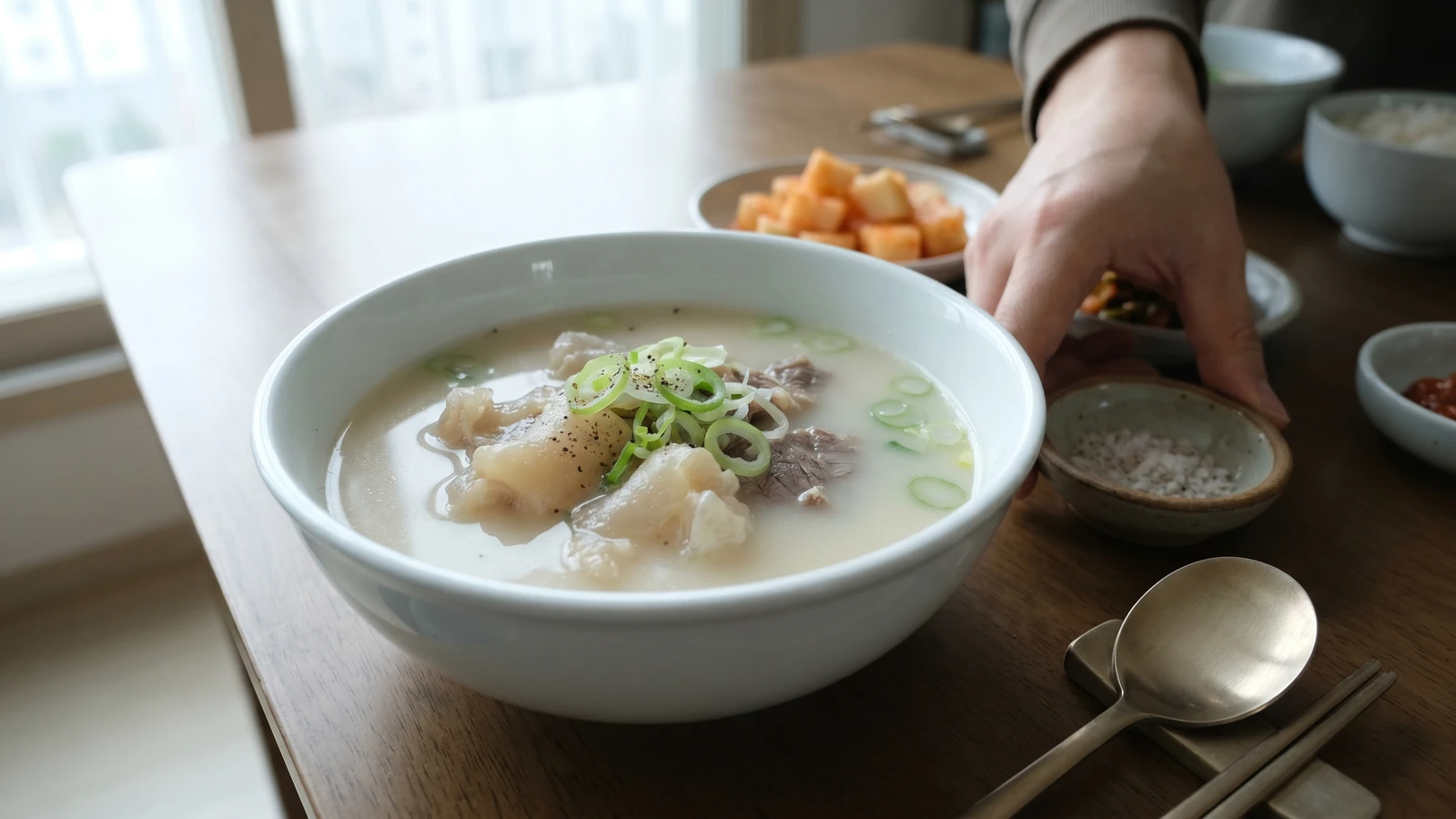
Ox knee cartilage simmered until the broth turns milky and the cartilage slips between the teeth, a plain Korean soup that rewards patience more than ornament.
Doganitang lives or dies by washing, blanching, and time. My teacher called this kind of soup labor made visible. She was right. There is no loud seasoning to hide careless work, only bones, cartilage, water, and the long boil that turns stiffness into silk.
This is not a quick weeknight soup. Tonight it asks you to soak the ox knee pieces until the water runs cleaner, blanch them hard, scrub the pot, then simmer without impatience. That first dirty boil is not wasteful. It removes blood and scum so the final broth tastes clean instead of heavy.
Season it at the table with salt, black pepper, and scallion. That restraint matters. The broth should taste of beef and collagen, with a gentle stickiness on the lips, not garlic and sauce shouting over it. 손맛 is real. I still measure it, so it can be handed on: for each bowl, start with 1/4 teaspoon salt, 1 pinch pepper, and 2 tablespoons sliced scallion, then adjust after tasting.
Make it a day ahead if you can. The fat lifts off cleanly when cold, the broth settles, and the cartilage slices neatly. Food this plain is not lesser food. It is the home table's quiet strength, and it deserves a notebook.
Doganitang belongs to Korea's long family of beef bone soups, alongside seolleongtang and gomguk, foods shaped by using hard-working cuts that needed long boiling before they became tender. Ox knee cartilage, prized for its gelatin-rich texture rather than meatiness, became especially associated with soup houses that served nourishing bowls with rice, kkakdugi, salt, and scallion set out for each diner to season. It carries no palace grandeur; its history is closer to market, butcher, and soup pot, where time made a difficult cut generous.
Quantity
1.5kg
cut by the butcher into 2 to 3 inch pieces
Quantity
500g
kept in one piece
Quantity
4.5 liters
for the main broth, plus more for soaking and blanching
Quantity
1 large, about 350g
peeled and cut into 2 thick pieces
Quantity
1 medium
halved
Quantity
8 large
lightly crushed
Quantity
2 large
white parts for broth, green parts reserved for serving
Quantity
1 teaspoon
Quantity
1 tablespoon
for initial seasoning, plus more at the table
Quantity
1/2 teaspoon
for serving
Quantity
4
thinly sliced, for serving
Quantity
to serve
Quantity
to serve
| Ingredient | Quantity |
|---|---|
| ox knee cartilage and joint pieces (dogani)cut by the butcher into 2 to 3 inch pieces | 1.5kg |
| beef shank or brisketkept in one piece | 500g |
| cold waterfor the main broth, plus more for soaking and blanching | 4.5 liters |
| Korean radishpeeled and cut into 2 thick pieces | 1 large, about 350g |
| onionhalved | 1 medium |
| garlic cloveslightly crushed | 8 large |
| scallionswhite parts for broth, green parts reserved for serving | 2 large |
| whole black peppercorns | 1 teaspoon |
| kosher saltfor initial seasoning, plus more at the table | 1 tablespoon |
| freshly ground black pepperfor serving | 1/2 teaspoon |
| scallionsthinly sliced, for serving | 4 |
| cooked short-grain rice (optional) | to serve |
| kkakdugi (cubed radish kimchi) (optional) | to serve |
Rinse the ox knee pieces and beef shank under cold running water, rubbing away bone dust and dark clots. Put them in a large bowl, cover with cold water by 2 inches, and soak 2 hours, changing the water twice. This pulls out blood that would muddy the broth. Do not skip it and then wonder why the soup tastes tired.
Drain the soaked meat and joints. Put them in a large stockpot, cover with fresh cold water, and bring to a full rolling boil over high heat. Boil hard for 10 minutes. The water will look ugly. Good. That ugliness belongs here, not in the final soup.
Drain everything into the sink and rinse each piece under warm running water, rubbing the bones and cartilage clean with your fingers. Wash the pot too, including the rim. Starting the real broth in a dirty pot is like putting clean laundry back into muddy water.
Return the cleaned ox knee pieces and beef shank to the clean pot. Add 4.5 liters cold water and bring to a boil over medium-high heat. Once it boils, lower to a steady simmer, not a violent boil, and skim the surface for the first 20 minutes. The broth should move steadily enough to pull collagen from the joints, but not so hard that it turns greasy and harsh.
Add the radish, onion, garlic, scallion whites, and peppercorns. Simmer uncovered for 2 hours. Keep the water level just covering the meat and joints; add hot water, 1 cup at a time, if it drops too low. Cold water shocks the simmer and slows the work you are asking the pot to do.
After 2 hours, check the beef shank or brisket. When a skewer slides through with little resistance, lift the meat out and wrap it loosely so it does not dry out. Keep simmering the ox knee pieces another 3 to 4 hours, until the broth is cloudy and lightly sticky and the cartilage gives when pressed with chopsticks.
Lift out the ox knee pieces and strain the broth through a fine sieve into a clean pot or storage container. Discard the spent aromatics. Cool the broth quickly, then refrigerate until the fat firms on top, at least 4 hours or overnight. This is the safe corner to cut by schedule: cook one day, serve the next. Do not cut the washing or simmering.
When the joints are cool enough to handle, pull away edible cartilage and tendon from the bone. Slice the cartilage, tendon, and reserved beef into pieces about 1/4 inch thick. Keep them covered with a ladle of broth so they stay moist. If a piece is still stiff and rubbery, return it to the broth and simmer longer; the pot is not finished just because the clock is tired.
Remove the hardened fat from the chilled broth. Bring the broth back to a simmer and add 1 tablespoon kosher salt. Taste before adding more. Return the sliced cartilage, tendon, and beef to the pot and warm 10 minutes, until the pieces are tender and glossy at the edges.
Divide the meat and cartilage among warm bowls and ladle in the broth. Put sliced scallion, salt, and black pepper on the table. For each bowl, begin with 2 tablespoons scallion, 1/4 teaspoon salt, and a small pinch of pepper, then taste. Serve with rice and kkakdugi. The soup is mild on purpose; the radish kimchi is the bright edge beside it.
1 serving (about 950g)
Culinary guides, cultural storytelling, and the editorial depth that makes cooking meaningful.
Discover Culinary ExplorerChef Jeong-sun
A clean summer soup of Korean zucchini and salted shrimp, built on quick anchovy-kelp broth and finished before the half-moons lose their shape on a weeknight table.

Chef Jeong-sun
A Masan coast monkfish stew with firm white meat, gelatin at the bones, soybean sprouts for crunch, and a red broth seasoned to carry the fish, not bury it.
Chef Jeong-sun
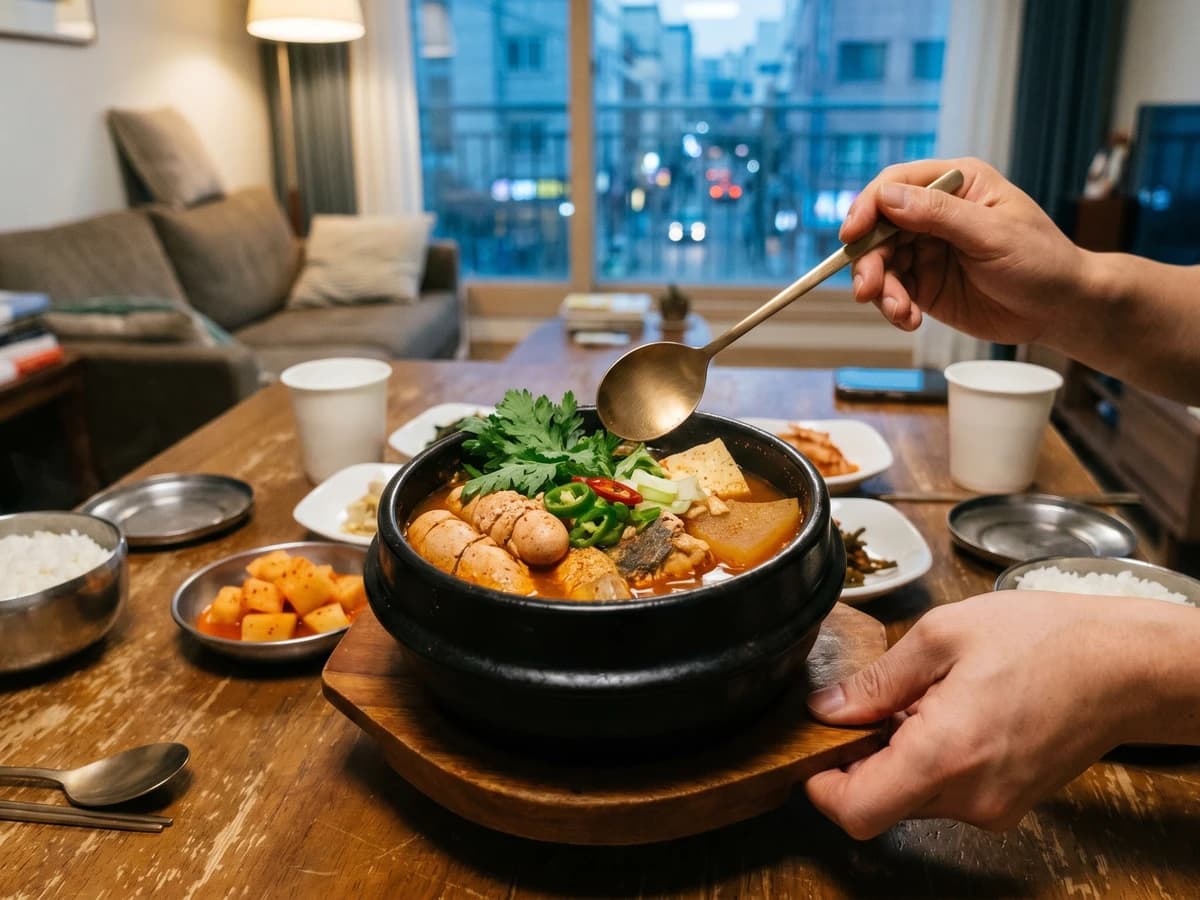
A weeknight fish roe stew with radish and crown daisy in a clean spicy broth, where the whole success depends on adding the roe late enough that it sets tender, not chalky.

Chef Jeong-sun
Late-summer mallow leaves rubbed with salt until the bitter green water runs off, then simmered in a clean doenjang broth with dried shrimp, the quiet soup a Korean weeknight deserves.