
Chef Jeong-sun
Agwi-jjim (Braised Monkfish with Bean Sprouts)
Firm monkfish buried under crisp soybean sprouts, minari, and a red gochugaru sauce thickened at the end; Masan's market dish asks for heat, timing, and a steady hand.
A cooking platform built around craft, culture, and the stories behind what we eat.
Created by
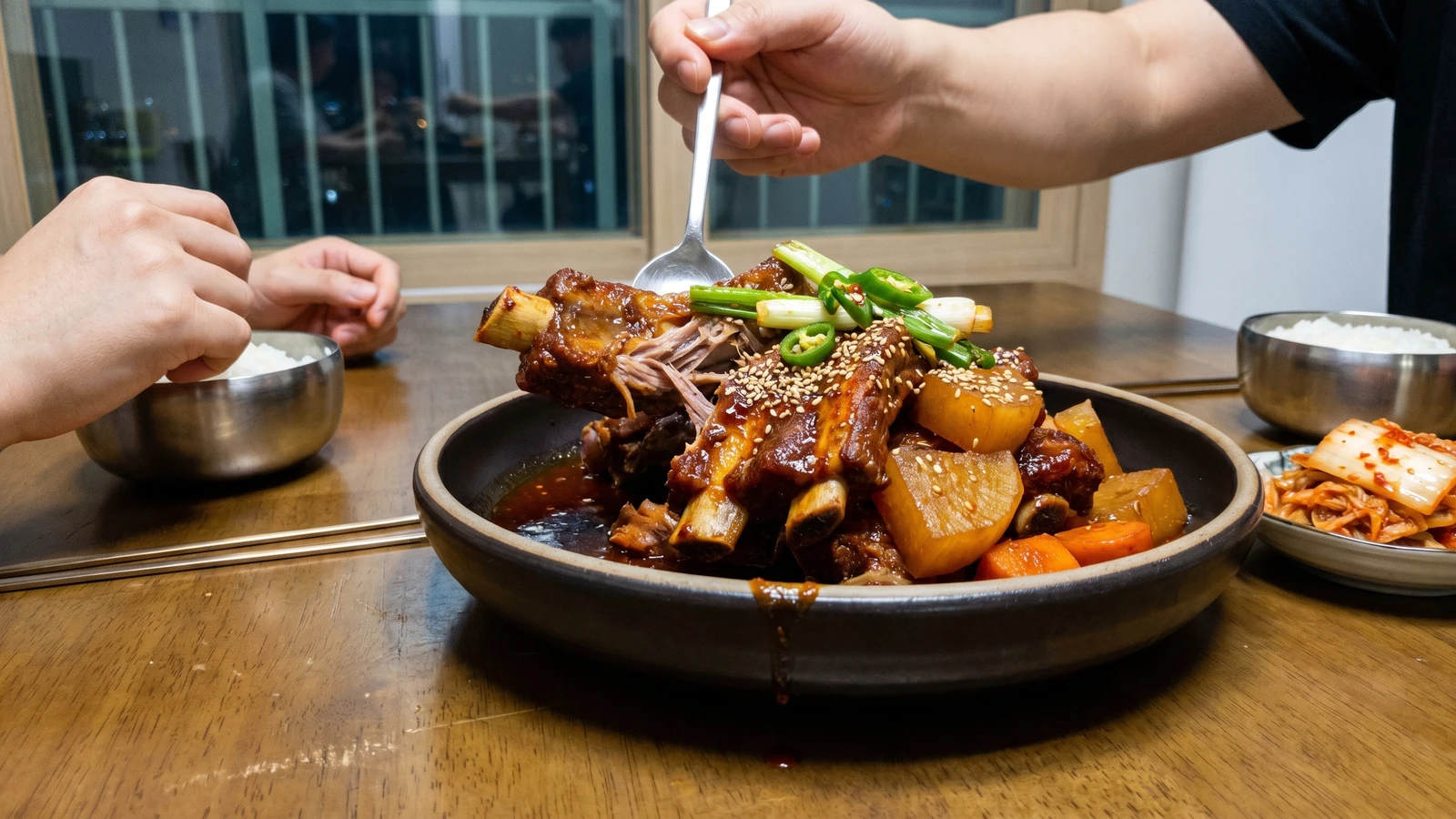
Pork back ribs simmered until the meat loosens from the bone, then reduced in a soy-garlic chili sauce that is hearty, affordable, and made for a weeknight rice table.
Deunggalbi-jjim lives or dies by two things: cleaning the ribs properly and reducing the sauce at the end. Skip the first and the pot tastes muddy. Skip the second and you have boiled pork with seasoning nearby, not a braise that clings to the bone.
My teacher made us blanch pork ribs before any sauce touched them. She didn't say it kindly, but she was right. Pork back ribs carry bone dust and blood near the cut edges, and a ten-minute soak plus a quick blanch gives the soy, garlic, ginger, and chili a clean place to land. That is not fussing. That is the difference between a pot people eat quietly and a pot they push around.
This is the budget cousin of beef galbi-jjim, and there is no shame in that. A Korean table has always known how to make a modest cut sit in the center and feed everyone well. Keep the sweetness restrained, use enough radish and onion to round the sauce, and finish the last ten minutes uncovered so the ribs turn glossy. Write it down. Memory is a borrowed bowl.
Jjim is the Korean family of simmered or steamed dishes, but deunggalbi-jjim is modern home and restaurant cooking, not an old court dish dressed in new clothes. Beef galbi-jjim belonged to expensive festive tables, while pork rib braises became more common in South Korea in the late twentieth century as pork grew cheaper and casual restaurants popularized spicy maeun deunggalbi-jjim. The soy-braised and chili-braised versions now sit comfortably at the weeknight table, especially with rice and simple banchan.
Quantity
1.4kg
cut between the bones
Quantity
as needed
for soaking
Quantity
1 tablespoon
for blanching water
Quantity
6 slices
divided
Quantity
1/2 cup
Quantity
3 tablespoons
Quantity
1 tablespoon
Quantity
2 tablespoons
Quantity
2 tablespoons
Quantity
2 tablespoons
Quantity
1 tablespoon
Quantity
8 cloves
minced
Quantity
1/2 medium
grated
Quantity
1/2 pear or 1 small apple
grated
Quantity
1/2 teaspoon
freshly ground
Quantity
2 cups
Quantity
300g
cut into 1-inch chunks
Quantity
1 medium
cut into thick wedges
Quantity
1 medium
cut into 1-inch chunks
Quantity
2
soaked and sliced
Quantity
2
cut into 2-inch lengths
Quantity
1
sliced on the diagonal
Quantity
1 teaspoon
| Ingredient | Quantity |
|---|---|
| pork back ribs (deunggalbi)cut between the bones | 1.4kg |
| cold waterfor soaking | as needed |
| coarse saltfor blanching water | 1 tablespoon |
| fresh gingerdivided | 6 slices |
| soy sauce | 1/2 cup |
| gochugaru (Korean chili flakes) | 3 tablespoons |
| gochujang (Korean chili paste) | 1 tablespoon |
| sugar | 2 tablespoons |
| rice syrup or honey | 2 tablespoons |
| mirin or rice wine | 2 tablespoons |
| toasted sesame oil | 1 tablespoon |
| garlicminced | 8 cloves |
| oniongrated | 1/2 medium |
| Korean pear or small applegrated | 1/2 pear or 1 small apple |
| black pepperfreshly ground | 1/2 teaspoon |
| water or unsalted anchovy-kelp broth | 2 cups |
| Korean radish (mu)cut into 1-inch chunks | 300g |
| onioncut into thick wedges | 1 medium |
| carrotcut into 1-inch chunks | 1 medium |
| dried shiitake mushrooms (optional)soaked and sliced | 2 |
| scallionscut into 2-inch lengths | 2 |
| green chili (optional)sliced on the diagonal | 1 |
| toasted sesame seeds | 1 teaspoon |
Put the ribs in a large bowl and cover with cold water for 20 minutes, changing the water once if it turns very red. This pulls out loose blood and bone dust from the cut edges, so the finished sauce tastes clean instead of heavy.
Bring a large pot of water to a boil with the coarse salt and 3 slices of ginger. Add the drained ribs and boil hard for 5 minutes. Drain, then rinse the ribs under warm running water, rubbing away any gray foam or bone grit. Wash the pot too. A dirty pot gives back what you just removed.
In the clean pot, stir together soy sauce, gochugaru, gochujang, sugar, rice syrup, mirin, sesame oil, garlic, grated onion, grated pear, black pepper, and the remaining 3 ginger slices. Use only 1 tablespoon gochujang. The chili paste should deepen the sauce, not turn every bite into the same sweet red flavor.
Add the blanched ribs and 2 cups water or unsalted broth to the sauce. Bring to a boil, then lower to a steady simmer. Cover and cook 35 minutes, turning the ribs once or twice so the exposed bones do not dry out. The meat should begin to pull back from the bone tips, but it will not be tender yet.
Add the radish, onion wedges, carrot, and soaked shiitake if using. Cover again and simmer 20 to 25 minutes, until the radish is translucent at the edges and a chopstick passes through the thickest rib meat with slight resistance. The vegetables go in later because they should drink the sauce, not collapse into it.
Uncover the pot, raise the heat to medium-high, and simmer 10 to 15 minutes, spooning the sauce over the ribs often. The liquid should reduce to about 1 cup and turn glossy enough to coat the ribs. This is the braise becoming jjim. Stop while there is still sauce for rice.
Stir in the scallions and green chili for the last 2 minutes, just until they soften. Taste the sauce. If it is too sharp, add 1 teaspoon rice syrup; if it is flat, add 1 teaspoon soy sauce. Scatter sesame seeds over the top and serve with hot rice, kimchi, and one clean vegetable banchan so the table does not become all salt and heat.
1 serving (about 480g)
Culinary guides, cultural storytelling, and the editorial depth that makes cooking meaningful.
Discover Culinary ExplorerChef Jeong-sun
Firm monkfish buried under crisp soybean sprouts, minari, and a red gochugaru sauce thickened at the end; Masan's market dish asks for heat, timing, and a steady hand.

Chef Jeong-sun
A quick Korean rice bowl built on contrast: warm rice, cold popping flying-fish roe, chopped vegetables, gim, sesame oil, and the crisp rice bottom a hot stone bowl gives you.

Chef Jeong-sun
Andong's guest noodles, wheat and roasted soybean flour rolled thin, boiled and rinsed cold, then set in a clear chilled anchovy broth with careful strips of beef, egg, and cucumber.

Chef Jeong-sun
Andong's ritual-table rice served on an ordinary day: separate soy-sesame namul, warm rice, and clear radish soup, mixed without gochujang so every vegetable keeps its own voice.