
Chef Takumi
Azuki-gayu (小豆粥, red bean porridge)
Azuki-gayu is deep-winter porridge, rice bloomed in the beans' rosy cooking liquid until soft and quiet. Salt it lightly, or sweeten each bowl, but keep the azuki intact.
A cooking platform built around craft, culture, and the stories behind what we eat.
Created by
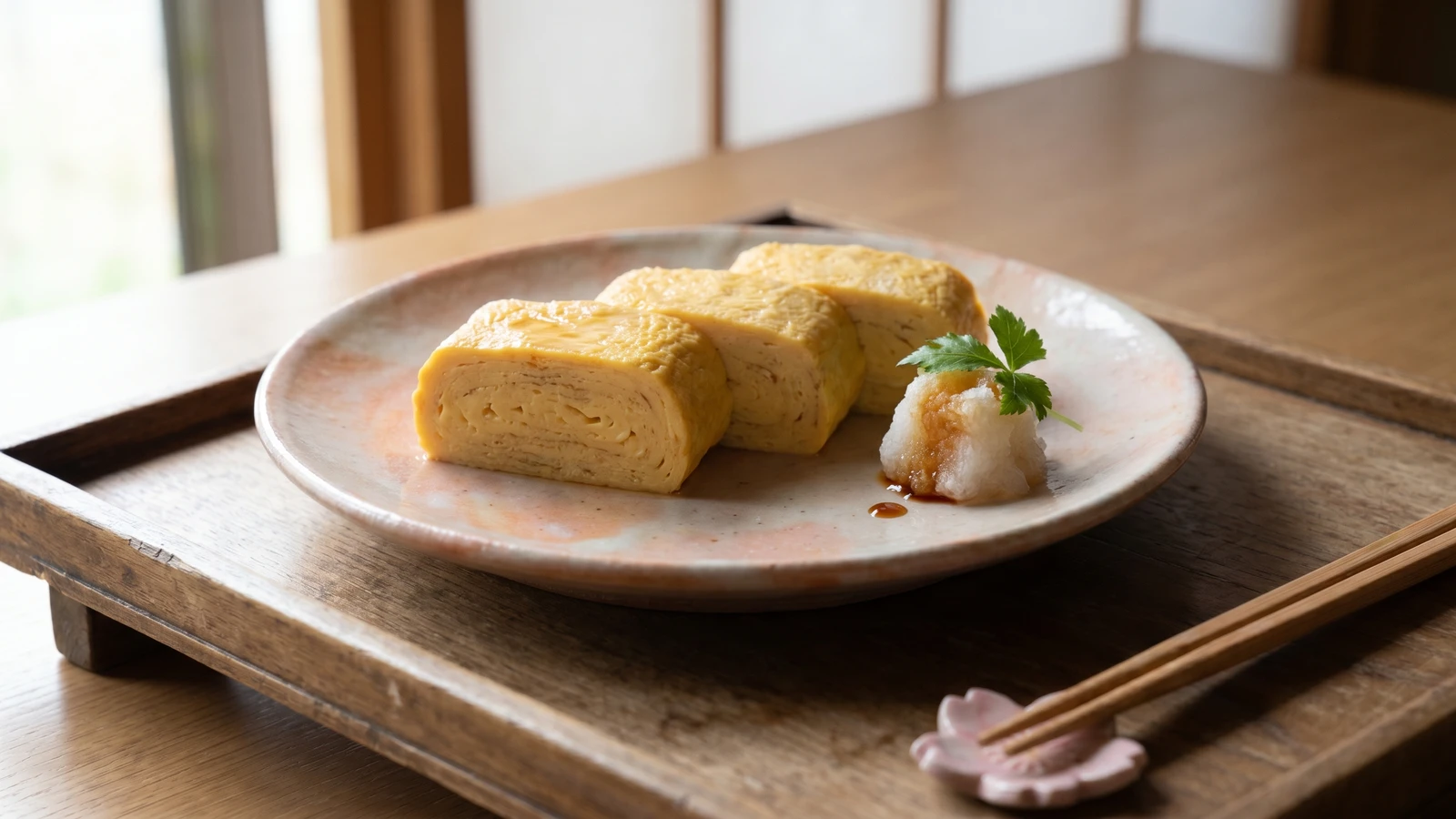
This is the softer cousin of tamagoyaki: more dashi, less sugar, and a roll that should tremble a little when sliced. The trick is thin layers and a patient hand.
Dashimaki tamago looks like a test of wrist and nerve. It isn't. The square pan helps, yes, but the dish is decided before the rolling begins: good eggs, clear dashi, and a mixture loose enough to make a tender omelet, not a rubber doorstop. We take the reputation down to its proper size.
The whole point is the dashi. In Kansai, where this style is loved, the egg is barely sweetened and the stock speaks plainly. Too little dashi and you have ordinary tamagoyaki. Too much and the roll tears like wet paper. The first secret is balance: eggs just loosened enough that each slice is soft, moist, and still golden.
Pour thin. Roll fast. Oil lightly between layers because the surface must release before the egg browns, and keep the heat moderate so the underside sets while the top stays glossy. That wet top is not a mistake. It is the glue that joins one layer to the next.
Serve it for breakfast, tuck it into bento, or set a few slices beside rice and miso soup on a tired weeknight. Nothing hidden, nothing grand. Dashimaki tamago is honmono when it tastes of egg and stock, and when the cut face shows tight, tender layers with room to breathe.
Dashimaki tamago is especially associated with Kansai cooking, where dashi-forward seasoning and restraint with sugar distinguish it from the sweeter tamagoyaki often linked with Kantō tastes. Rolled omelets became common in the Edo period after eggs moved from medicinal or luxury use toward everyday cooking, aided by poultry keeping and the spread of specialized pans. The rectangular makiyakinabe, the pan used for rolled eggs, reflects the dish's practical purpose: building neat layers that could be sliced cleanly for meals, bento, and sushi shops.
Quantity
4
Quantity
1/3 cup
cooled
Quantity
1 teaspoon
Quantity
1 teaspoon
Quantity
1/4 teaspoon
Quantity
1/2 teaspoon
Quantity
as needed
for wiping the pan
Quantity
3 tablespoons
grated and lightly squeezed
Quantity
a few drops
| Ingredient | Quantity |
|---|---|
| large eggs | 4 |
| ichiban dashicooled | 1/3 cup |
| usukuchi shōyu (light soy sauce) | 1 teaspoon |
| mirin | 1 teaspoon |
| fine sea salt | 1/4 teaspoon |
| sugar (optional) | 1/2 teaspoon |
| neutral oilfor wiping the pan | as needed |
| daikongrated and lightly squeezed | 3 tablespoons |
| soy sauce (optional) | a few drops |
Stir the cooled dashi, usukuchi shōyu, mirin, salt, and sugar if using until the salt dissolves. Taste it before the eggs go in. It should be lightly seasoned but clear, because the eggs will soften every edge.
Break the eggs into a bowl and cut through them with chopsticks or a fork until the whites loosen, but don't beat in air. Stir in the seasoned dashi, then strain the mixture through a fine sieve. Straining removes stubborn egg white so the finished roll sets evenly and slices cleanly.
Warm a makiyakinabe, the rectangular omelet pan, over medium heat and wipe it with a thin film of oil. A small nonstick skillet will work, though the slices won't be as square. Touch in a drop of egg mixture: it should sizzle softly and set at once without browning.
Pour in just enough egg mixture to cover the pan in a thin sheet. Tilt the pan so it reaches the corners. When the underside is set and the top is still glossy, roll it toward you in two or three folds. That slightly wet surface is what joins the layers, so don't wait until it dries.
Push the roll to the far end of the pan, wipe the empty surface with oil, and pour in another thin layer. Lift the roll so the new egg runs underneath it, then roll again toward you while the top is still glossy. Repeat until all the egg is used, adjusting the heat down if you see browning.
Slide the omelet onto a bamboo sushi mat or a clean towel and press it gently into a neat bar while it's still warm. Rest it for two minutes. The brief rest lets the layers settle, so the knife shows their work instead of dragging them apart.
Cut into thick slices with a clean, damp knife. Set three slices slightly leaning against one another, with grated daikon to the side and a few drops of soy sauce on the daikon. Serve warm or at room temperature, while the egg is still tender.
1 serving (about 130g)
Culinary guides, cultural storytelling, and the editorial depth that makes cooking meaningful.
Discover Culinary ExplorerChef Takumi
Azuki-gayu is deep-winter porridge, rice bloomed in the beans' rosy cooking liquid until soft and quiet. Salt it lightly, or sweeten each bowl, but keep the azuki intact.

Chef Takumi
This is an egg taught by warm water: a thick, spoonable yolk, a barely set white, and a little soy-dashi sauce to make breakfast feel calm.

Chef Takumi
Rice, hojicha, salt, and restraint: Chagayu asks only that you keep the grains loose and the tea clear, so the bowl tastes clean, amber, and quietly steady.

Chef Takumi
Nattō gohan asks only for hot rice, good fermented beans, and the courage to stir until the strands turn glossy and pale. The smell talks first. The flavor is gentler.