Culinary Explorer

A cooking platform built around craft, culture, and the stories behind what we eat.
Discover Culinary Explorer
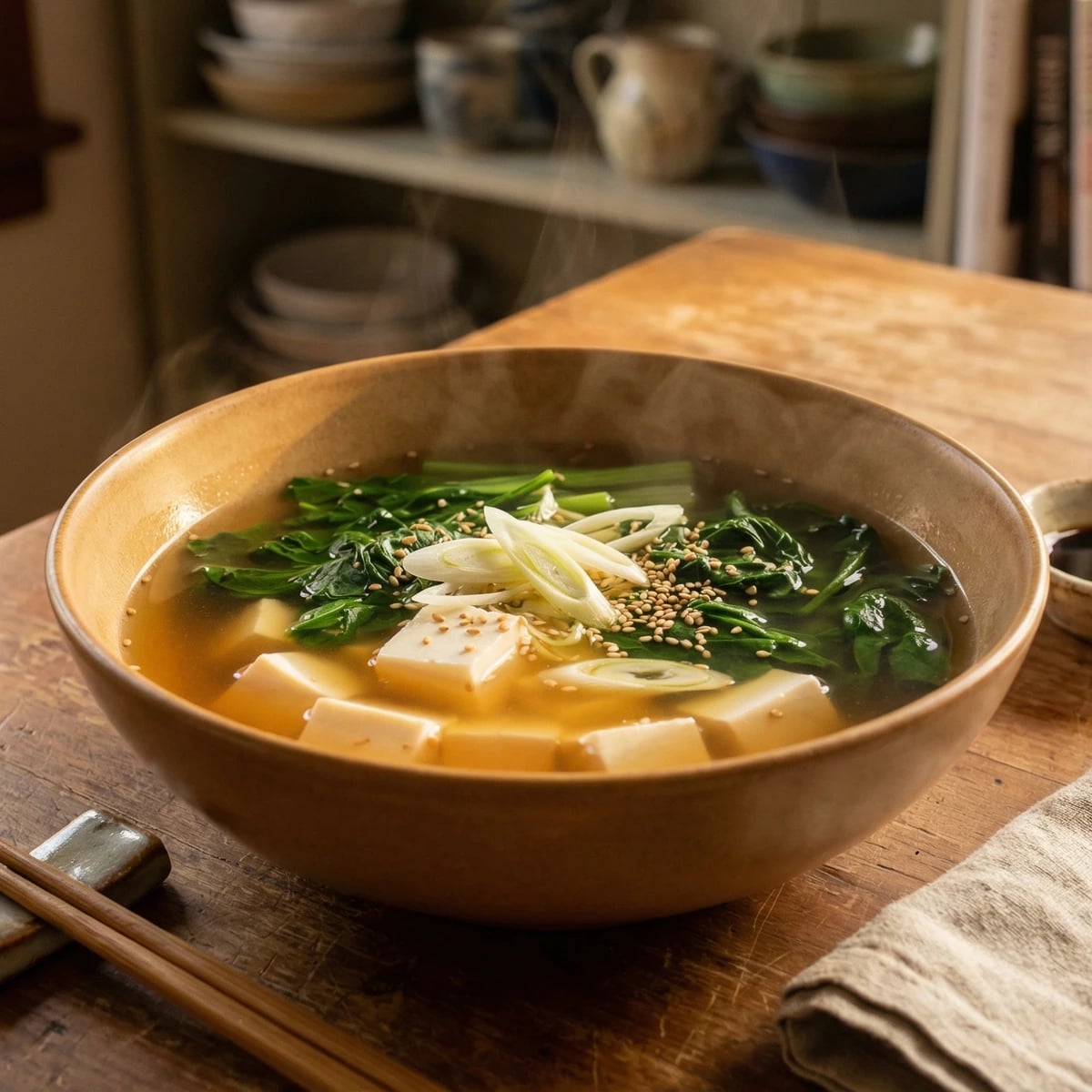
Dashi with Silken Tofu and Seasonal Greens

Dashi with Silken Tofu and Seasonal Greens

Created by

A bowl of honest, crystal-clear Japanese broth that lets perfect ingredients speak for themselves: trembling silken tofu, bright market greens, and a dashi made with your own hands.

Soups & Stews
Japanese
Weeknight
Quick Meal
15 min
Active Time
20 min cook35 min total
Yield4 servings

Dashi is the soul of Japanese cooking, and making it yourself is an act of intention. Two ingredients, kombu and bonito, steeped with care. The result is a broth so clean and alive that you understand immediately why this cuisine values restraint.

Perfect ingredients need almost nothing done to them. Silken tofu, barely warmed. Greens that were growing this morning. A broth that tastes of the sea without shouting about it. This is a meal that feeds you twice: once with its nourishment, and again with the calm that comes from cooking simply and well.

Go to the market. See what greens are speaking to you today. Spinach in spring, bok choy in autumn, mizuna whenever you can find it. The recipe bends to the season, as all honest cooking should. What matters is that the leaves are fresh and bright, not the specific variety.

The technique, the tradition, and the story behind every dish.

Discover Culinary Explorer

Ingredients

dried kombu

Quantity

1 piece (about 4x6 inches)

cold filtered water

Quantity

4 cups

bonito flakes (katsuobushi)

Quantity

1 cup loosely packed

good soy sauce

Quantity

1 tablespoon, or to taste

mirin

Quantity

1 teaspoon

fine sea salt

Quantity

1/2 teaspoon, or to taste

silken tofu

Quantity

14 ounces

drained

seasonal greens

Quantity

4 cups

spinach, bok choy, mizuna, or whatever the market offers

scallions

Quantity

2

sliced thin on the bias

toasted sesame seeds (optional)

Quantity

for finishing

Equipment Needed

  • Medium pot (3-4 quart)
  • Fine-mesh strainer
  • Cheesecloth or clean kitchen towel
  • Sharp knife for tofu
  • Slotted spoon

Instructions

  1. 1

    Soak the kombu

    Place the kombu in a medium pot with the cold water. Let it rest at room temperature for at least thirty minutes, or up to several hours if you have the time. The seaweed will soften and release its minerals slowly. You will see the water turn faintly golden. This patience is the foundation of everything that follows.

    Never rinse the white powder from kombu. That is glutamate, the source of umami. Wipe gently with a damp cloth if there is visible grit, nothing more.
  2. 2

    Heat gently

    Set the pot over medium-low heat. Watch carefully. You want the water to warm slowly, small bubbles forming at the edges, the kombu beginning to undulate. This should take ten to fifteen minutes. If you rush this step with high heat, the kombu releases bitter compounds and the broth turns murky.

  3. 3

    Remove kombu before boiling

    Just before the water reaches a full boil, when you see bubbles rising steadily but not yet breaking the surface in a rolling churn, remove the kombu with tongs or a slotted spoon. Set it aside. The kombu has given what it has to give. Boiling makes it slimy and overwhelms the broth with an unpleasant ocean taste.

    Save the spent kombu. Slice it thin, toss with soy sauce and sesame oil, and you have a small side dish. Waste is a sign of disconnection from the food.
  4. 4

    Add bonito flakes

    Bring the kombu water to a gentle boil, then remove from heat immediately. Scatter the bonito flakes over the surface and let them settle naturally, like leaves falling on a still pond. Do not stir. The flakes will drift to the bottom over two to three minutes, releasing their smoky, oceanic essence.

  5. 5

    Strain for clarity

    Line a fine-mesh strainer with cheesecloth or a clean kitchen towel and set it over a clean pot. Pour the broth through slowly. Do not press the bonito flakes or squeeze the cloth. Let gravity do the work. Pressing extracts bitterness. You should have a broth that is golden and nearly transparent, with a clean fragrance of the sea.

  6. 6

    Season the dashi

    Return the strained dashi to low heat. Add the soy sauce, mirin, and salt. Taste. Adjust. The broth should be subtle, savory, and balanced. It should not taste strongly of soy sauce. The dashi itself carries the dish. Your seasonings are there to support, not to dominate.

  7. 7

    Cut the tofu with care

    Silken tofu is delicate by nature. Handle it like what it is: something alive and trembling. Cut the block into one-inch cubes using a sharp knife and minimal pressure. Do not saw. One clean motion per cut. Set the cubes aside gently. They will break if you are careless, and that matters here.

  8. 8

    Prepare the greens

    Whatever greens you have, wash them well and cut them into pieces that can be eaten gracefully with chopsticks or a spoon. Remove tough stems from spinach or chard. Halve baby bok choy lengthwise. Tear mizuna into manageable lengths. The greens should feel alive in your hands, not tired or wilted.

  9. 9

    Warm the tofu

    Slide the tofu cubes into the barely simmering dashi. Do this with a slotted spoon, lowering each piece into the broth rather than dropping from above. Let them warm through for two to three minutes. Do not stir. The cubes need only to absorb heat, not to be jostled about.

  10. 10

    Add greens and serve

    Add the greens to the pot and let them wilt just until tender, thirty seconds to two minutes depending on what you have. Ladle the soup into warmed bowls, dividing tofu and greens evenly. Scatter scallions and sesame seeds over each portion. Serve immediately while everything still has its aliveness.

Chef Tips

  • Seek out kombu and bonito from a Japanese grocery or a supplier who moves product quickly. Freshness matters even for dried goods. Old bonito flakes taste dusty and flat.
  • If local greens are what the season offers, use them. Young kale, tender chard, even fresh pea shoots work beautifully. The dashi welcomes whatever is alive in your market.
  • Warm your serving bowls before ladling. A cold bowl cools the soup too quickly, and this dish is about the comfort of heat.
  • For a heartier meal, add soba noodles or a soft-cooked egg. The dashi can carry more without losing its character.
  • Leftover dashi keeps refrigerated for three days. Use it as a base for miso soup, for poaching vegetables, or for cooking rice with remarkable depth of flavor.

Advance Preparation

  • Dashi can be made up to three days ahead and refrigerated. Reheat gently before adding tofu and greens.
  • Kombu can soak in cold water overnight in the refrigerator for deeper flavor extraction. This is traditional cold-brew dashi.
  • Tofu should be cut just before cooking. It does not hold well once exposed to air.

Frequently Asked Questions

Nutrition Information

1 serving (about 300g)

Calories
95 calories
Total Fat
4 g
Saturated Fat
1 g
Trans Fat
0 g
Unsaturated Fat
3 g
Cholesterol
3 mg
Sodium
610 mg
Total Carbohydrates
5 g
Dietary Fiber
2 g
Sugars
1 g
Protein
9 g

Note: Chef personas and recipes are created with AI assistance. Cook with care: follow safe food-handling practices, check doneness with a thermometer when needed, and adapt for allergies and your kitchen.

Where cooking meets culture.

Culinary guides, cultural storytelling, and the editorial depth that makes cooking meaningful.

Discover Culinary Explorer

More from Chef Ally Soups and Stews

Browse the full collection