
Chef Jeong-sun
Aehobak-guk (애호박국, Korean Zucchini Soup)
A clean summer soup of Korean zucchini and salted shrimp, built on quick anchovy-kelp broth and finished before the half-moons lose their shape on a weeknight table.
A cooking platform built around craft, culture, and the stories behind what we eat.
Created by
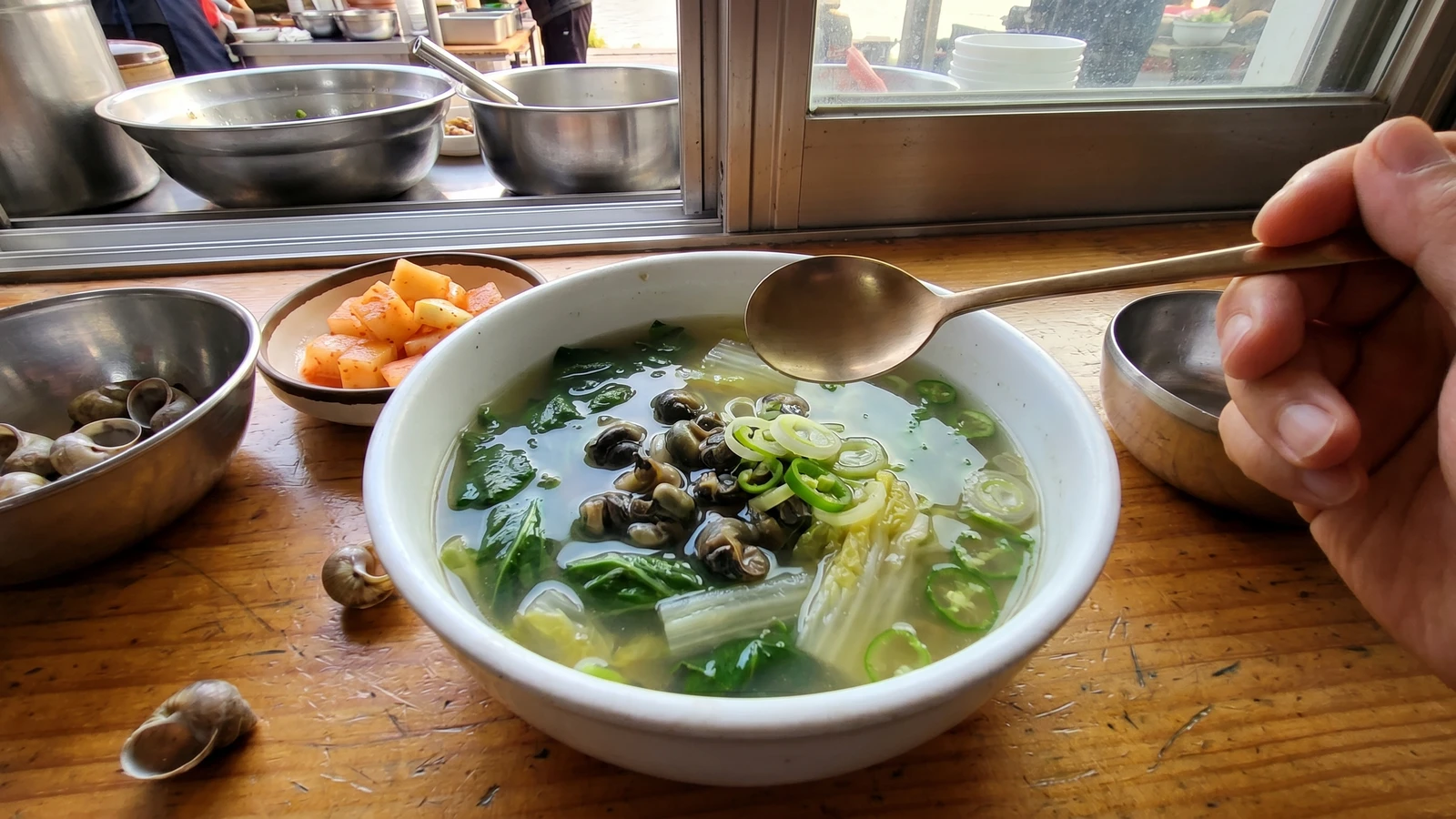
Tiny freshwater snails boiled, picked, and returned to a pale green broth with tender greens, the Chungcheong soup that asks for patience before it gives comfort.
Daseulgi-guk lives or dies before the soup pot looks like soup. You boil the tiny freshwater snails, sit down, and pick the meat one by one. People call this troublesome. They are correct. Some dishes ask for patience because the ingredient is small, and the cook has to become steady enough to meet it.
In Chungcheong kitchens the same snail is often called olgaengi (올갱이), and the broth can come out pale green, almost shy, with chard or young napa softening inside it. It is a comfort soup, but not a lazy one. The mistake is to drown it in doenjang or garlic until every bowl tastes like the same pot. Let it taste like itself: mineral, clean, faintly sweet from the greens, with the snail meat firm under the spoon.
My teacher would make students pick a whole basin before she let them season anything. 눈동냥, 귀동냥, borrowing with the eyes and ears. We learned the rhythm first: boil, pick, strain, season lightly, then bring the meat back only at the end. Tonight this dish asks you for clean hands, a small sharp tool, and restraint. Give it those, and it will feed the table quietly and properly.
Daseulgi-guk is strongly associated with inland river regions, especially Chungcheong, where the freshwater snails are commonly called olgaengi and were gathered from clean streams rather than bought as a luxury ingredient. The soup belongs to home and market cooking, not court records: local restaurants in places such as Goesan and Cheongju helped make olgaengi-guk a regional specialty in the late twentieth century as stream foods became tied to hometown identity. Its greenish broth comes from the snails and leafy greens, and the careful boiling and picking remain the practical mark of the dish.
Quantity
1 kg
purged and scrubbed
Quantity
10 cups
divided
Quantity
1 tablespoon, plus 1 teaspoon
for boiling and purging
Quantity
1 piece, about 4 inches square
Quantity
8 large
heads and guts removed
Quantity
1 small strip
Quantity
250g
cut into 2-inch pieces
Quantity
1 tablespoon
Quantity
1 tablespoon
Quantity
3 cloves
minced
Quantity
1 teaspoon
Quantity
1
thinly sliced
Quantity
1
thinly sliced
Quantity
1/4 teaspoon
| Ingredient | Quantity |
|---|---|
| live freshwater snails (daseulgi or olgaengi)purged and scrubbed | 1 kg |
| waterdivided | 10 cups |
| coarse saltfor boiling and purging | 1 tablespoon, plus 1 teaspoon |
| dried kelp (dasima) | 1 piece, about 4 inches square |
| dried anchovies (myeolchi)heads and guts removed | 8 large |
| dried pollock strip (bugeochae) (optional) | 1 small strip |
| Swiss chard or napa cabbage leavescut into 2-inch pieces | 250g |
| doenjang (fermented soybean paste) | 1 tablespoon |
| guk-ganjang (Korean soup soy sauce) | 1 tablespoon |
| garlicminced | 3 cloves |
| perilla seed powder (deulkkae-garu) (optional) | 1 teaspoon |
| scallionthinly sliced | 1 |
| green chili (optional)thinly sliced | 1 |
| toasted sesame oil (optional) | 1/4 teaspoon |
Put the live snails in a large bowl with cold water and 1 teaspoon salt. Let them sit 30 minutes, then rub them hard between both hands and rinse until the water runs mostly clear. Discard any with broken shells or any that smell sour. This soup begins with clean river mud leaving the bowl, not entering the pot.
Bring 6 cups water and 1 tablespoon coarse salt to a rolling boil. Add the scrubbed snails and boil 12 minutes, stirring once or twice. They must be fully cooked before picking. Drain them, reserving 4 cups of the greenish cooking liquid, and rinse the shells briefly so grit does not follow you to the table.
Use a toothpick, small skewer, or snail pick to pull the meat from each shell. Pinch away any hard shell bits. You should have about 1 cup picked meat from 1 kg live snails. I won't tell you this is quick. This is the work of the dish, and the broth tastes different when the meat is picked by hand instead of chopped carelessly.
Put the reserved snail cooking liquid in a pot with 4 cups fresh water, the kelp, anchovies, and dried pollock if using. Bring it to a simmer over medium heat and remove the kelp as soon as the water trembles, about 5 minutes, before it turns the broth slick. Simmer the anchovies 10 minutes more, then strain. You want a clean mineral broth, not a murky one.
Whisk the doenjang into the strained broth until no lumps remain, then add the guk-ganjang and garlic. Keep the doenjang to 1 tablespoon. It should round the river taste, not make doenjang-guk wearing another soup's name. Taste now, because the snail liquid may already carry salt.
Add the chard or napa cabbage and simmer 6 to 8 minutes, until the stems are tender but still hold their shape. Greens go in before the snail meat because they need time to soften and sweeten the broth. If using chard, the broth will take on a gentle green cast. That is proper.
Add the picked snail meat and simmer 3 minutes, just long enough to warm it through and let it meet the broth again. Do not boil hard now, or the meat tightens. Stir in the perilla seed powder if you want a little body, but keep it light. The soup should stay clear enough to taste the river snail.
Taste and adjust only if needed with another 1/2 teaspoon guk-ganjang. Scatter the scallion and green chili over the top and add the sesame oil only if the broth tastes too lean. Serve with rice and one sharp kimchi. Write down whether your snails needed extra soy sauce. 손맛 is real; I measure it anyway.
1 serving (about 450g)
Culinary guides, cultural storytelling, and the editorial depth that makes cooking meaningful.
Discover Culinary ExplorerChef Jeong-sun
A clean summer soup of Korean zucchini and salted shrimp, built on quick anchovy-kelp broth and finished before the half-moons lose their shape on a weeknight table.

Chef Jeong-sun
A Masan coast monkfish stew with firm white meat, gelatin at the bones, soybean sprouts for crunch, and a red broth seasoned to carry the fish, not bury it.
Chef Jeong-sun
A weeknight fish roe stew with radish and crown daisy in a clean spicy broth, where the whole success depends on adding the roe late enough that it sets tender, not chalky.

Chef Jeong-sun
Late-summer mallow leaves rubbed with salt until the bitter green water runs off, then simmered in a clean doenjang broth with dried shrimp, the quiet soup a Korean weeknight deserves.