Culinary Explorer
A cooking platform built around craft, culture, and the stories behind what we eat.
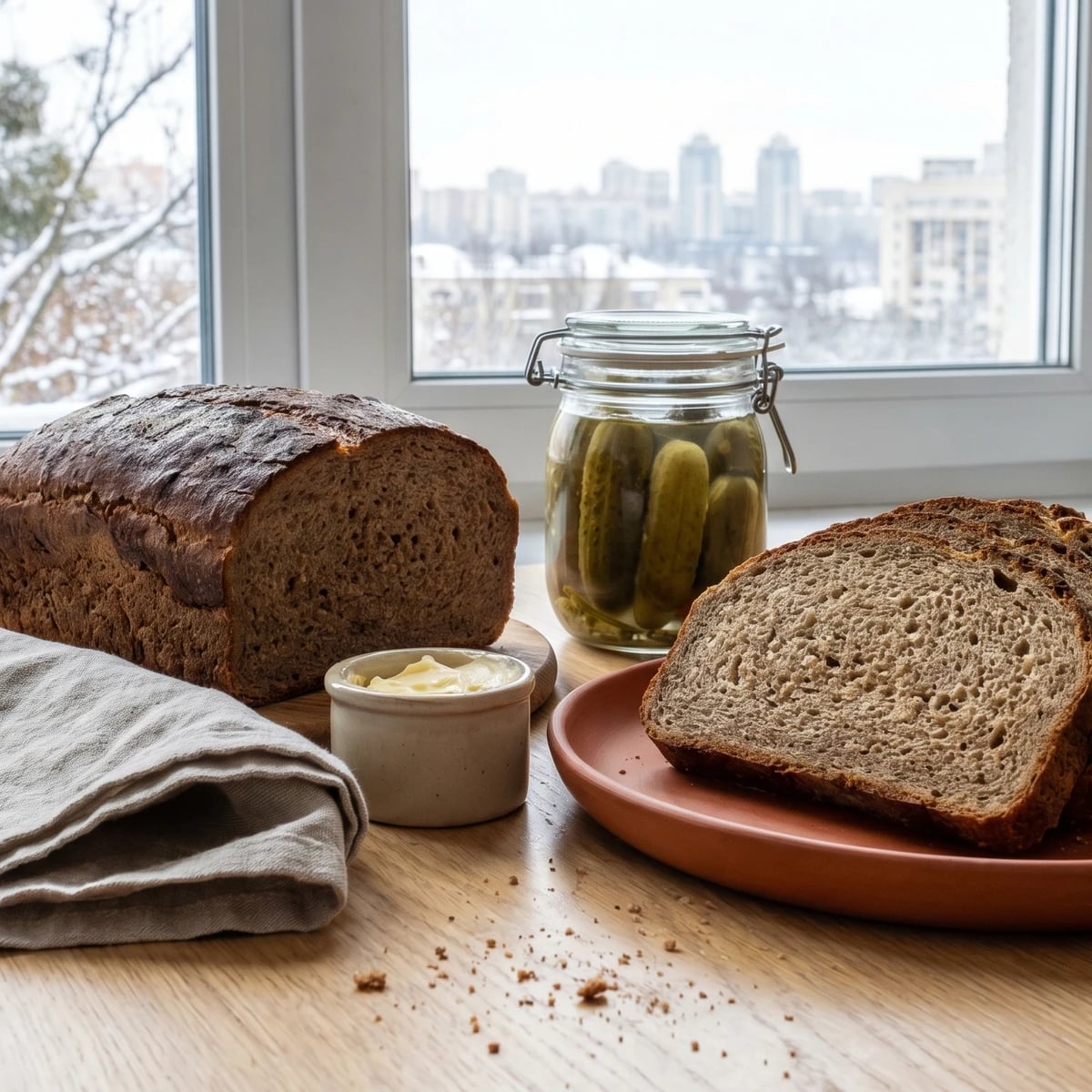
Darnytskyi Khlib (дарницький хліб, rye-wheat sourdough)
Created by Chef Lesia
This is the loaf that does not perform for you. Dark-crusted, close-crumbed, faintly sour, it sits on the board all week and makes butter, soup, and salo behave.
The crust is almost black before the loaf is ready, and that is the first lesson. Darnytskyi khlib is not a pale bakery loaf pretending to be delicate. It is rye and wheat meeting in the middle: sour enough to wake the mouth, soft enough to slice for sandwiches, sturdy enough for soup, cheese, salo, pickles, whatever the week puts on the table.
The one thing that decides it is the живий starter, zhyvyi, the living one. Rye likes acid. Give it a lively sourdough and it bakes into a moist, even crumb instead of a gummy brick. Aunt Nadia wrote once, infuriatingly, "let it stand until it smells right," and for bread she was not being poetic. When the sponge smells fruity-sour, like apples kept too long in a pantry, it is ready to carry the loaf.
Don't chase height here. This bread rises lower and broader than white wheat bread, and it tells you it is done by sound: tap the base and listen for a hollow knock, then let it cool until the crumb settles. Cut too soon and the knife drags. Wait, and you get clean slices for days.
Make two if your oven allows. One loaf is for now, still warm at the edges with butter melting into it. The other is for the week, wrapped in linen on the board, doing the quiet work of feeding people.
Ingredients
active rye sourdough starter
Quantity
150g
100 percent hydration, bubbly and fruity-sour
water
Quantity
450g
lukewarm
whole rye flour
Quantity
350g
| Ingredient | Quantity |
|---|---|
| active rye sourdough starter100 percent hydration, bubbly and fruity-sour | 150g |
| waterlukewarm | 450g |
| whole rye flour | 350g |
Where cooking meets culture.
Culinary guides, cultural storytelling, and the editorial depth that makes cooking meaningful.
Discover Culinary Explorer