
Chef Jeong-sun
Aehobak-guk (애호박국, Korean Zucchini Soup)
A clean summer soup of Korean zucchini and salted shrimp, built on quick anchovy-kelp broth and finished before the half-moons lose their shape on a weeknight table.
A cooking platform built around craft, culture, and the stories behind what we eat.

Created by
A whole chicken stretched into a clean, pale broth and tender shreds of meat, the everyday answer when beef bones cost too much and the table still needs comfort.
Dak-gomtang lives or dies by the simmer. Boil it hard and the broth turns rough, the meat tightens, and the pot tastes tired before it reaches the table. Keep it steady and quiet, and one modest chicken gives you broth, meat, and supper for four.
This is not samgyetang, the stuffed summer chicken with ginseng and sweet rice. Dak-gomtang is plainer, more frugal, and more useful. My teacher would pull the meat when it was just cooked, then put the bones back in the pot. That is the part people skip. Meat and bones do not need the same time, and a good cook respects the difference.
Tonight this dish asks for patience, not difficulty. Skim the first scum, keep the aromatics simple, shred the meat by hand while it is warm, and season the bowl at the end so the chicken still tastes like chicken. Write it down. Memory is a borrowed bowl.
Gomtang names a Korean family of long-simmered soups, most famously beef bone soups, but households also made dak-gomtang when chicken was more available or beef was too costly. In modern Korean home cooking it sits beside baeksuk and samgyetang as a practical whole-chicken soup, but without stuffing, medicinal herbs, or ceremonial weight. Its place is the everyday table: broth over rice, shredded meat, scallion, salt, and pepper adjusted at the bowl.
Quantity
1, 1.4 to 1.6 kg
giblets removed
Quantity
10 cups
Quantity
1 large
halved
Quantity
250g
peeled and cut into 2 large chunks
Quantity
1 large leek or 4 scallions
white parts bruised
Quantity
10
peeled
Quantity
15g
sliced
Quantity
1 piece, about 4 inches square
Quantity
2 teaspoons, divided, plus more to serve
Quantity
1/2 teaspoon, plus more to serve
freshly ground
Quantity
3
thinly sliced
Quantity
2 teaspoons
Quantity
1 teaspoon
Quantity
4 bowls
| Ingredient | Quantity |
|---|---|
| whole chickengiblets removed | 1, 1.4 to 1.6 kg |
| cold water | 10 cups |
| onionhalved | 1 large |
| Korean radishpeeled and cut into 2 large chunks | 250g |
| leek or scallionswhite parts bruised | 1 large leek or 4 scallions |
| garlic clovespeeled | 10 |
| gingersliced | 15g |
| dried kelp (dasima) (optional) | 1 piece, about 4 inches square |
| kosher salt | 2 teaspoons, divided, plus more to serve |
| black pepperfreshly ground | 1/2 teaspoon, plus more to serve |
| scallionsthinly sliced | 3 |
| toasted sesame oil | 2 teaspoons |
| soup soy sauce (guk-ganjang) (optional) | 1 teaspoon |
| cooked short-grain rice (optional) | 4 bowls |
Trim excess fat from the cavity and tail end, then rinse the chicken quickly under cold water and pat it dry. Do not soak it. You are removing loose blood and bits, not washing away flavor. If the cavity has dark clots near the backbone, scrape them out with your fingers because they cloud the broth.
Put the chicken in a heavy pot with 10 cups cold water, onion, radish, leek or scallion whites, garlic, ginger, kelp if using, and 1 teaspoon salt. Starting cold draws flavor out gradually and gives you a cleaner broth than dropping the chicken into boiling water.
Bring the pot just to a simmer over medium heat, then lower the heat so small bubbles rise steadily. Skim the gray foam for the first 10 minutes. Cover the pot halfway and simmer 45 to 50 minutes, turning the chicken once, until the thickest part of the thigh reaches 74 C or 165 F.
Lift the chicken to a tray and let it cool just until your hands can bear it. Pull off the breast and thigh meat in large pieces, then return the bones, wings, skin, and any juices from the tray to the pot. This is the measure my teacher insisted on: cooked meat leaves the pot, bones stay and finish the broth.
Simmer the bones and aromatics another 40 to 45 minutes, still gentle, uncovered if you want the broth a little stronger. Strain through a fine sieve and discard the solids. You should have about 7 cups broth. If you have much more, simmer it down; if you have less, add hot water and taste again.
Shred the warm chicken by hand into bite-size strands. Toss it with 1 teaspoon salt, 1/2 teaspoon black pepper, 2 teaspoons sesame oil, 1 teaspoon soup soy sauce if using, and half the sliced scallions. Seasoning the meat before it returns to the bowl keeps it from tasting flat inside a good broth.
Bring the strained broth back to a bare simmer and taste it. Add salt 1/4 teaspoon at a time until it tastes clean and chicken-rich, not salty. Put rice in each bowl if serving as gukbap (soup with rice), add shredded chicken, ladle over the broth, and finish with the remaining scallions and black pepper. Serve extra salt on the table so each person can correct the bowl.
1 serving (about 650g)
Culinary guides, cultural storytelling, and the editorial depth that makes cooking meaningful.
Discover Culinary ExplorerChef Jeong-sun
A clean summer soup of Korean zucchini and salted shrimp, built on quick anchovy-kelp broth and finished before the half-moons lose their shape on a weeknight table.

Chef Jeong-sun
A Masan coast monkfish stew with firm white meat, gelatin at the bones, soybean sprouts for crunch, and a red broth seasoned to carry the fish, not bury it.
Chef Jeong-sun
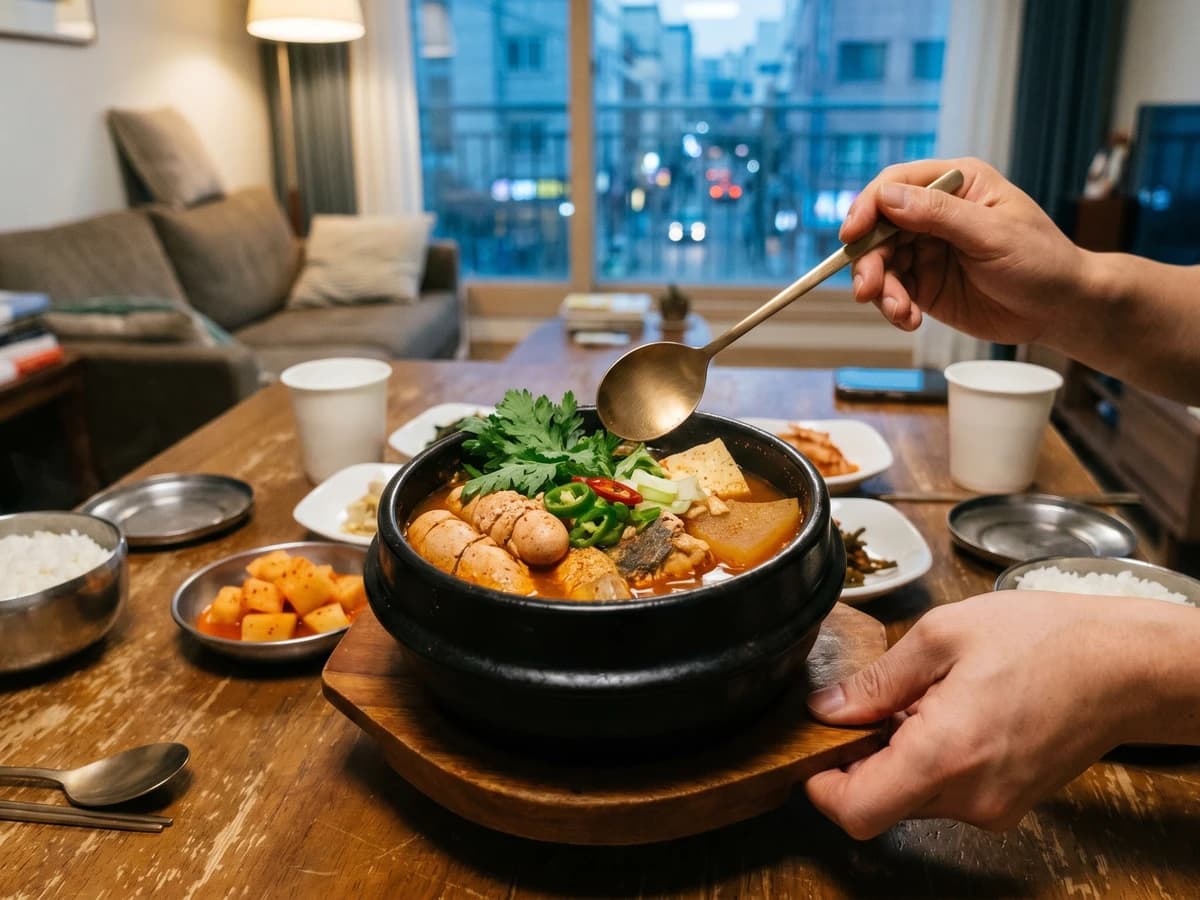
A weeknight fish roe stew with radish and crown daisy in a clean spicy broth, where the whole success depends on adding the roe late enough that it sets tender, not chalky.

Chef Jeong-sun
Late-summer mallow leaves rubbed with salt until the bitter green water runs off, then simmered in a clean doenjang broth with dried shrimp, the quiet soup a Korean weeknight deserves.