
Chef Jeong-sun
Agwi-jjim (Braised Monkfish with Bean Sprouts)
Firm monkfish buried under crisp soybean sprouts, minari, and a red gochugaru sauce thickened at the end; Masan's market dish asks for heat, timing, and a steady hand.
A cooking platform built around craft, culture, and the stories behind what we eat.
Created by
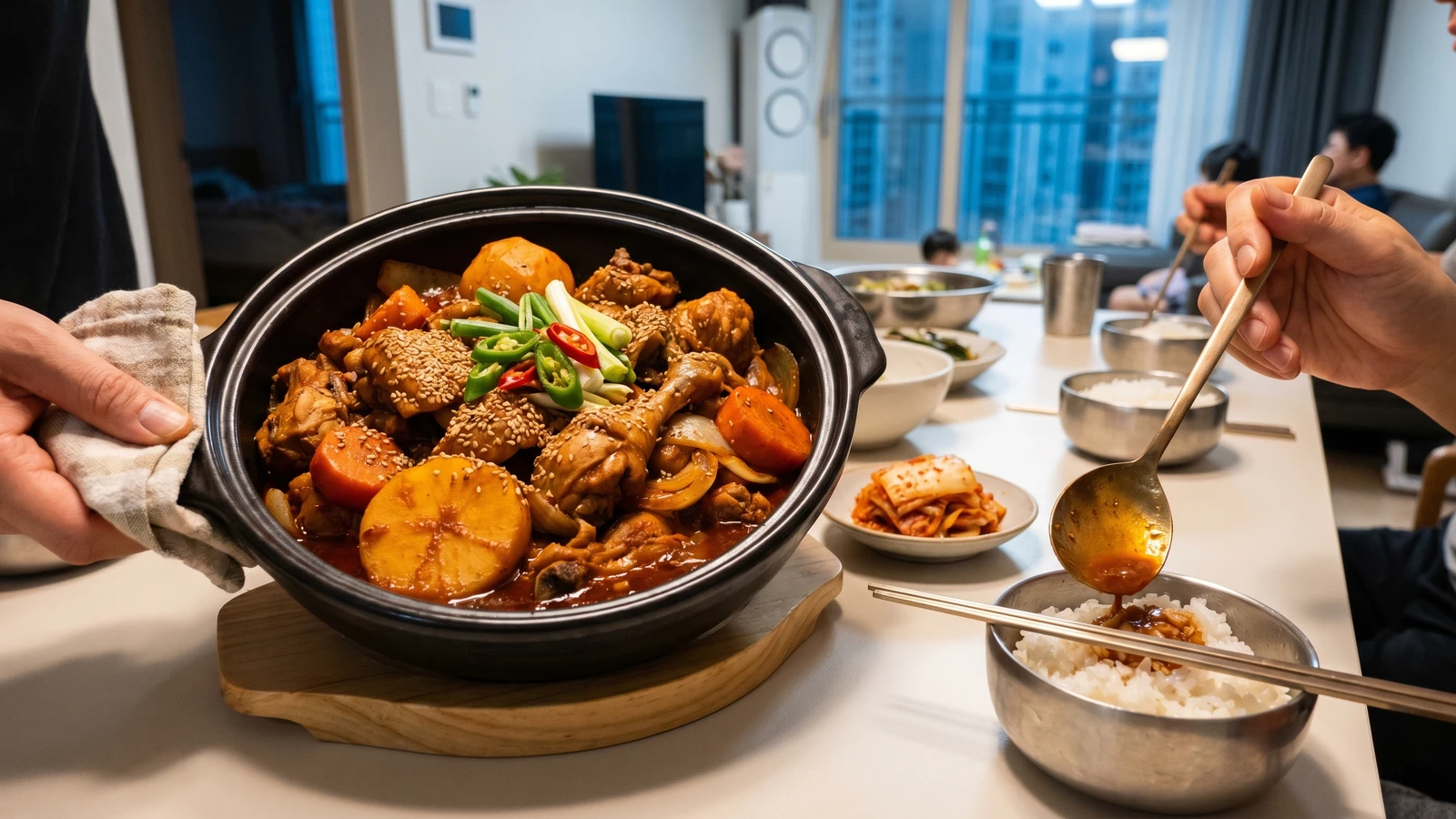
Bone-in chicken, potatoes, and carrots braised in a deep red sauce until the meat is tender and the potatoes drink enough seasoning to deserve the rice beside them.
Dak-bokkeumtang lives or dies before the lid ever goes on. If you stir raw gochujang straight into water and hope the pot will forgive you, the heat stays sharp and flat. Bloom the gochugaru (Korean chili flakes) and gochujang (chili paste) in a little oil first. That one minute makes the sauce deeper, rounder, and less like it came from the tub in a hurry.
This is weeknight comfort food, not banquet food, and that is exactly why it deserves careful measuring. A chicken cut through the bone, two potatoes, one carrot, onion, scallion, and enough sauce to stain the rice red at the bottom of the bowl. The potatoes should hold their edges while turning creamy inside. The chicken should pull cleanly from the bone. The sauce should cling, not flood.
Notebook 38 says the sugar is the first place people lose their way. Use just enough to soften the chili and soy, not enough to make the chicken taste candied. Let it taste like itself. When times change, food must change too, so use a heavy pot, a Dutch oven, or an electric pressure cooker if that is the evening you have. But cut the vegetables large, bloom the chili, and reduce the sauce at the end. Those corners are not for cutting.
Dak-bokkeumtang is a modern Korean home and restaurant braise, closely tied to the wider spread of gochugaru and gochujang-based everyday cooking and to the availability of factory-cut chicken in the twentieth century. Many older menus and home cooks still call it dakdoritang, a name that became controversial because some argued dori came from Japanese; the National Institute of Korean Language encouraged dak-bokkeumtang, though food historians and cooks still debate the word's origin. Whatever name is used, the dish belongs to the practical Korean table: one pot, enough sauce for rice, and vegetables that make a modest chicken feed more people.
Quantity
1.2kg
cut through the bone, excess fat trimmed
Quantity
1 teaspoon, divided
Quantity
1/2 teaspoon
freshly ground
Quantity
1 tablespoon
Quantity
2 tablespoons
medium-coarse
Quantity
2 tablespoons
Quantity
4 tablespoons
Quantity
1 tablespoon
Quantity
2 tablespoons
Quantity
1 tablespoon
Quantity
5 cloves
minced
Quantity
1 teaspoon
grated
Quantity
2 cups
Quantity
2 medium (about 450g)
peeled and cut into 2-inch chunks
Quantity
1 large (about 180g)
cut into 1-inch chunks
Quantity
1 medium
cut into thick wedges
Quantity
2
cut into 2-inch lengths
Quantity
1
sliced on the diagonal
Quantity
1
sliced on the diagonal
Quantity
1 teaspoon
Quantity
1 teaspoon
| Ingredient | Quantity |
|---|---|
| bone-in chicken piecescut through the bone, excess fat trimmed | 1.2kg |
| kosher salt | 1 teaspoon, divided |
| black pepperfreshly ground | 1/2 teaspoon |
| neutral oil | 1 tablespoon |
| gochugaru (Korean chili flakes)medium-coarse | 2 tablespoons |
| gochujang (Korean chili paste) | 2 tablespoons |
| soy sauce | 4 tablespoons |
| soup soy sauce (guk-ganjang) (optional) | 1 tablespoon |
| rice wine or mirin | 2 tablespoons |
| rice syrup or sugar | 1 tablespoon |
| garlicminced | 5 cloves |
| fresh gingergrated | 1 teaspoon |
| water or unsalted chicken stock | 2 cups |
| waxy potatoespeeled and cut into 2-inch chunks | 2 medium (about 450g) |
| carrotcut into 1-inch chunks | 1 large (about 180g) |
| onioncut into thick wedges | 1 medium |
| scallionscut into 2-inch lengths | 2 |
| green chili (optional)sliced on the diagonal | 1 |
| red chili (optional)sliced on the diagonal | 1 |
| toasted sesame oil | 1 teaspoon |
| toasted sesame seeds | 1 teaspoon |
Trim away loose fat and any sharp bone fragments from the chicken. Pat it dry, then season with 1/2 teaspoon salt and the black pepper. Dry chicken browns and braises cleanly; wet chicken throws off liquid before the sauce has a chance to build.
In a small bowl, stir together the gochujang, soy sauce, soup soy sauce, rice wine, rice syrup, garlic, ginger, and remaining 1/2 teaspoon salt. Keep the gochugaru separate for now. It blooms better in oil before the wet sauce goes in, and that is the difference between deep heat and raw heat.
Heat the oil in a wide heavy pot over medium-high heat. Add the chicken skin-side down where there is skin, and brown it in one layer for 3 to 4 minutes per side. Work in batches if needed. You are not cooking it through yet; you are giving the sauce browned edges to hold onto.
Lower the heat to medium. Push the chicken to one side or lift it briefly to a plate if the pot is crowded. Add the gochugaru to the oil left in the pot and stir for 30 to 45 seconds, just until the oil turns red and the chili smells rounded. Do not let it blacken. Stir in the prepared sauce and cook 1 minute more, scraping the bottom of the pot.
Return all the chicken to the pot and turn it through the sauce. Add the water or stock, then bring it to a steady simmer. Cover and cook 15 minutes. The liquid will look too loose at first. Leave it alone; the reduction comes later, after the chicken has had time to become tender.
Add the potatoes, carrot, and onion, tucking them between the chicken pieces so they sit partly in the sauce. Cover again and simmer 18 to 22 minutes, turning the pieces once halfway through. The potatoes are ready when a chopstick slides in without cracking them apart.
Uncover the pot and simmer 8 to 10 minutes, spooning sauce over the chicken and vegetables. This is where dak-bokkeumtang becomes itself. The sauce should thicken enough to gloss the chicken and cling to the potatoes, with some liquid left for rice. Check that the thickest chicken piece reaches 74C or 165F at the bone.
Stir in the scallions and sliced chilies, then cook 1 minute so they soften but keep their color. Turn off the heat and add the sesame oil. Scatter sesame seeds over the top. Rest the pot 5 minutes before serving; the sauce settles, the potatoes firm slightly, and the table has time to get rice into bowls.
1 serving (about 500g)
Culinary guides, cultural storytelling, and the editorial depth that makes cooking meaningful.
Discover Culinary ExplorerChef Jeong-sun
Firm monkfish buried under crisp soybean sprouts, minari, and a red gochugaru sauce thickened at the end; Masan's market dish asks for heat, timing, and a steady hand.

Chef Jeong-sun
A quick Korean rice bowl built on contrast: warm rice, cold popping flying-fish roe, chopped vegetables, gim, sesame oil, and the crisp rice bottom a hot stone bowl gives you.

Chef Jeong-sun
Andong's guest noodles, wheat and roasted soybean flour rolled thin, boiled and rinsed cold, then set in a clear chilled anchovy broth with careful strips of beef, egg, and cucumber.

Chef Jeong-sun
Andong's ritual-table rice served on an ordinary day: separate soy-sesame namul, warm rice, and clear radish soup, mixed without gochujang so every vegetable keeps its own voice.