
Chef Jeong-sun
Agwi-jjim (Braised Monkfish with Bean Sprouts)
Firm monkfish buried under crisp soybean sprouts, minari, and a red gochugaru sauce thickened at the end; Masan's market dish asks for heat, timing, and a steady hand.
A cooking platform built around craft, culture, and the stories behind what we eat.
Created by
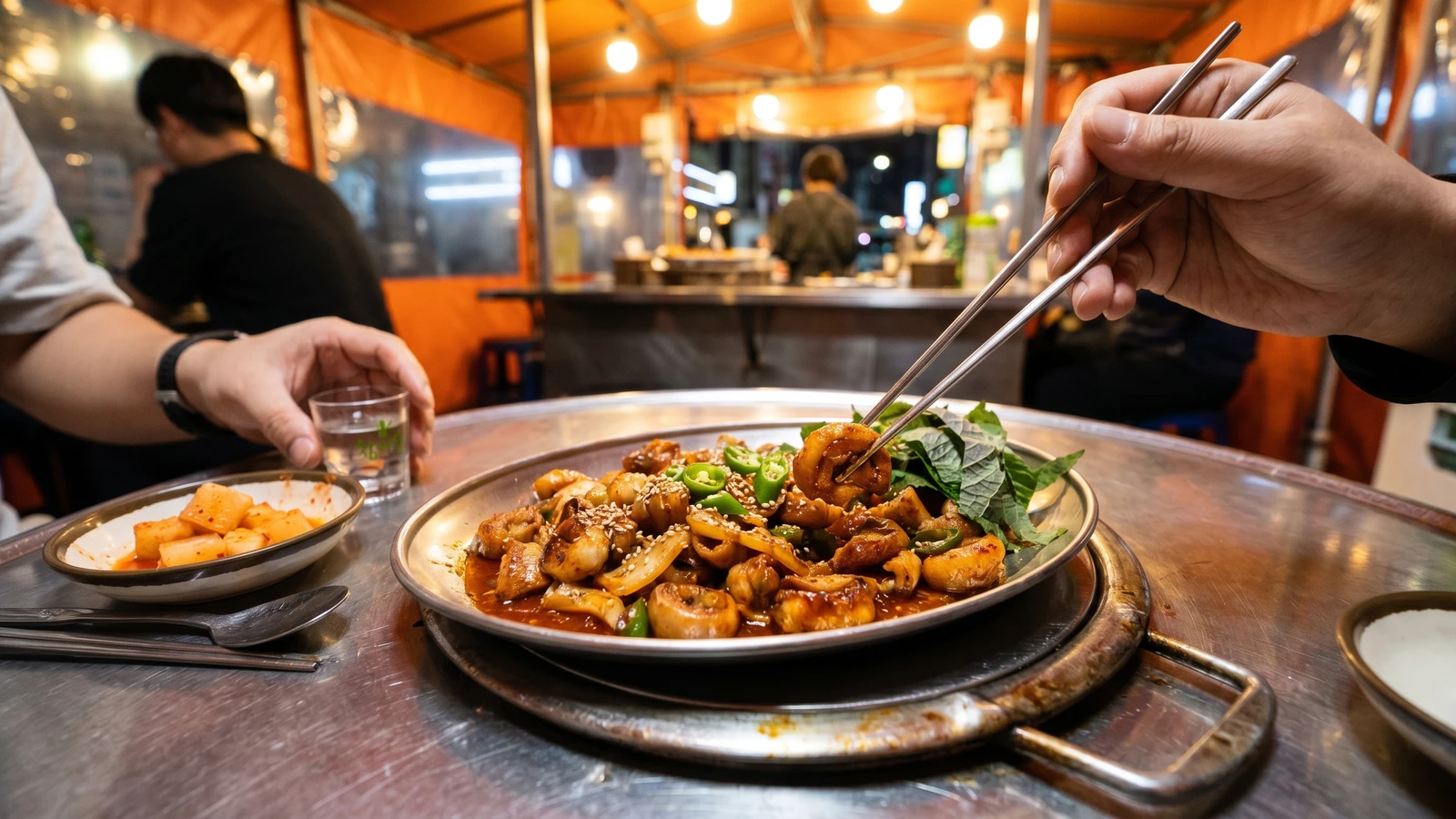
Pork large intestine cleaned, simmered, dried, then stir-fried hard with garlic, chilies, cabbage, and perilla leaves, a late-table anju where the fat must brown before the sauce ever touches the pan.
Daechang-bokkeum lives or dies before the sauce touches the pan. Wet intestine boils. Dry intestine browns. If you remember only that, you will be ahead of many loud night restaurants that hide a puddle of grease under a red sauce.
In many restaurants daechang means beef large intestine, so say it clearly at the market for this version: dwaeji-daechang (pork large intestine), cleaned but not stripped bare. It is a drinking dish, anju, the kind brought to a small table with rice on one side and something sharp and cold on the other. I keep dishes like this in the same notebooks as holiday food. Street tables have lineage too.
Tonight it asks for patience first: salt, flour, and rinsing; then a simmer with doenjang (fermented soybean paste), soju, garlic, and ginger; then a hard stir-fry. The safe corner to cut is buying well-cleaned intestine from a butcher you trust. The corner you cannot cut is drying and rendering. Gochujang is not a blanket. Use enough for body, then let the browned fat, cabbage, chilies, garlic, and perilla leaves speak.
Notebook 31 says dry twice, once after the pot and once before the pan. That small instruction is the difference between glossy and greasy. 손맛 is real; I measure it anyway, so the next cook doesn't have to guess.
Daechang most often names beef large intestine on Korean restaurant menus, while pork large intestine sits close to dwaeji-gopchang and makchang in market-stall and anju cooking. Stir-fried offal dishes grew in the postwar urban decades, with butcher markets such as Seoul's Majang-dong livestock market, which took shape in the early 1960s, making these cuts visible and affordable. There is no court story here; the dish belongs to night stalls, grill houses, and practical cooks who knew that careful cleaning and high heat could turn a cheap part into the reason people ordered another bottle.
Quantity
700g
cleaned, fresh or thawed
Quantity
2 tablespoons
for scrubbing
Quantity
1/2 cup
for scrubbing
Quantity
2 tablespoons
for rinsing
Quantity
8 cups
Quantity
2 tablespoons
for simmering
Quantity
1/4 cup
Quantity
1/2 medium
peeled, for simmering
Quantity
6
crushed, for simmering
Quantity
4 thick slices
Quantity
2
cut in half, for simmering
Quantity
2 tablespoons
Quantity
1 1/2 tablespoons
Quantity
2 tablespoons
Quantity
1 tablespoon
Quantity
1 tablespoon
Quantity
2 teaspoons
Quantity
1 teaspoon
for the sauce
Quantity
1 tablespoon
minced
Quantity
1 teaspoon
grated
Quantity
1/2 teaspoon
freshly ground
Quantity
2 tablespoons
for loosening the sauce
Quantity
1 teaspoon
Quantity
8
thickly sliced
Quantity
1/2 medium
sliced 1/2 inch thick
Quantity
2 cups
cut into 2-inch squares
Quantity
2
sliced on the diagonal
Quantity
1
sliced on the diagonal
Quantity
2
cut into 2-inch lengths
Quantity
10
stacked and sliced wide
Quantity
1 tablespoon
Quantity
1 tablespoon
Quantity
to serve
| Ingredient | Quantity |
|---|---|
| pork large intestine (dwaeji-daechang)cleaned, fresh or thawed | 700g |
| coarse saltfor scrubbing | 2 tablespoons |
| all-purpose flourfor scrubbing | 1/2 cup |
| rice vinegarfor rinsing | 2 tablespoons |
| water | 8 cups |
| doenjang (fermented soybean paste)for simmering | 2 tablespoons |
| soju or mirin | 1/4 cup |
| onionpeeled, for simmering | 1/2 medium |
| garlic clovescrushed, for simmering | 6 |
| fresh ginger | 4 thick slices |
| scallionscut in half, for simmering | 2 |
| gochugaru (Korean chili flakes) | 2 tablespoons |
| gochujang (Korean chili paste) | 1 1/2 tablespoons |
| soy sauce | 2 tablespoons |
| rice wine or mirin | 1 tablespoon |
| maesil-cheong (green plum syrup) (optional) | 1 tablespoon |
| sugar (optional) | 2 teaspoons |
| doenjang (fermented soybean paste)for the sauce | 1 teaspoon |
| garlicminced | 1 tablespoon |
| gingergrated | 1 teaspoon |
| black pepperfreshly ground | 1/2 teaspoon |
| waterfor loosening the sauce | 2 tablespoons |
| neutral oil (optional) | 1 teaspoon |
| garlic clovesthickly sliced | 8 |
| onionsliced 1/2 inch thick | 1/2 medium |
| green cabbagecut into 2-inch squares | 2 cups |
| Korean green chiliessliced on the diagonal | 2 |
| red chili (optional)sliced on the diagonal | 1 |
| scallionscut into 2-inch lengths | 2 |
| perilla leaves (kkaennip)stacked and sliced wide | 10 |
| toasted sesame oil | 1 tablespoon |
| toasted sesame seeds | 1 tablespoon |
| cooked short-grain rice (optional) | to serve |
Put the pork large intestine in a large bowl and rinse it under cold running water. Rub it with the coarse salt for 2 minutes, then add the flour and knead it through for 3 minutes. The flour grabs the slickness and the salt scours without perfume. Rinse until the water runs clear, then soak it in cold water with the rice vinegar for 10 minutes and rinse once more.
Bring the 8 cups water to a boil in a large pot with the 2 tablespoons doenjang, soju or mirin, onion half, crushed garlic, ginger slices, and halved scallions. Add the cleaned intestine, lower to a steady simmer, and cook 45 to 55 minutes, skimming the gray foam during the first 10 minutes. It is ready when a skewer slips in with a little resistance and the thickest piece reaches at least 160 degrees F. Drain and discard the simmering liquid and aromatics.
Stir together the gochugaru, gochujang, soy sauce, rice wine, maesil-cheong or sugar, 1 teaspoon doenjang, minced garlic, grated ginger, black pepper, and 2 tablespoons water. Let it stand 10 minutes while the intestine cools. This wakes up the chili flakes and gives you a sauce that clings instead of streaking the pan.
When the intestine is cool enough to handle, cut it into 1-inch pieces. Pat every piece dry with a clean towel, then spread them on a tray for 10 minutes. Notebook 31 says dry twice, once after the pot and once before the pan. Wet intestine boils. Dry intestine browns.
Heat a 12-inch cast-iron skillet or wok over high heat until a drop of water jumps and disappears. Add the intestine in a single layer, using the teaspoon of neutral oil only if the pan is dry. Cook 5 to 7 minutes, turning often, until the edges are browned and the fat has gathered in the pan. Spoon off all but 2 tablespoons of fat. This dish wants richness in the bite, not a lake under it.
Keep the heat high. Add the sliced garlic, onion, cabbage, green chilies, and red chili if using. Toss 2 to 3 minutes, just until the cabbage edges gloss and the onion starts to bend. The vegetables should still have bite because they are there to cut the fat, not melt into it.
Lower the heat to medium-high and scrape in the sauce. Toss hard for 90 seconds to 2 minutes, until the raw chili smell is gone and the sauce is glossy on every piece. Add the scallions and perilla leaves for the last 30 seconds. Turn off the heat and fold in the sesame oil. Perilla leaves should wilt, not disappear.
Pile the daechang-bokkeum onto a shallow platter and scatter with toasted sesame seeds. Serve at once with hot rice, crisp lettuce or extra perilla leaves, and a sharp banchan like kkakdugi (cubed radish kimchi) or oi-muchim (seasoned cucumber). Eat it while the browned edges still hold. That is when the work shows.
1 serving (about 380g)
Culinary guides, cultural storytelling, and the editorial depth that makes cooking meaningful.
Discover Culinary ExplorerChef Jeong-sun
Firm monkfish buried under crisp soybean sprouts, minari, and a red gochugaru sauce thickened at the end; Masan's market dish asks for heat, timing, and a steady hand.

Chef Jeong-sun
A quick Korean rice bowl built on contrast: warm rice, cold popping flying-fish roe, chopped vegetables, gim, sesame oil, and the crisp rice bottom a hot stone bowl gives you.

Chef Jeong-sun
Andong's guest noodles, wheat and roasted soybean flour rolled thin, boiled and rinsed cold, then set in a clear chilled anchovy broth with careful strips of beef, egg, and cucumber.

Chef Jeong-sun
Andong's ritual-table rice served on an ordinary day: separate soy-sesame namul, warm rice, and clear radish soup, mixed without gochujang so every vegetable keeps its own voice.