
Chef Juliana
Açaí com Farinha de Tapioca
You don't need a blender trick or a sweet shop bowl. Thick unsweetened açaí, crunchy farinha de tapioca, and the discipline to read the label solve this Belém spoon plate.
A cooking platform built around craft, culture, and the stories behind what we eat.
Created by
You think cuscuz is the kind of thing someone else knows by instinct. It's not. Hydrate the flocao, let it rest, steam it gently, and breakfast is solved.
You, with your quiet "isso nao e pra mim," come here a minute. Cuscuz nordestino looks like family knowledge, the kind people make half-asleep while coffee is still deciding to exist. That doesn't mean it's a gift. Cozinhar nao e dom, e um aprendizado. Anota ai: flocao, water, salt, rest, cuscuzeira.
I learned too late that the foods that look effortless usually have one small method hiding inside them. Here, the method is hydration. The flocao needs time to drink the salted water before it ever goes near heat, or the outside turns wet while the middle stays dry and sandy. After that, the cuscuzeira does the quiet work. It steams instead of boils, so the grains swell and hold together without turning into corn paste.
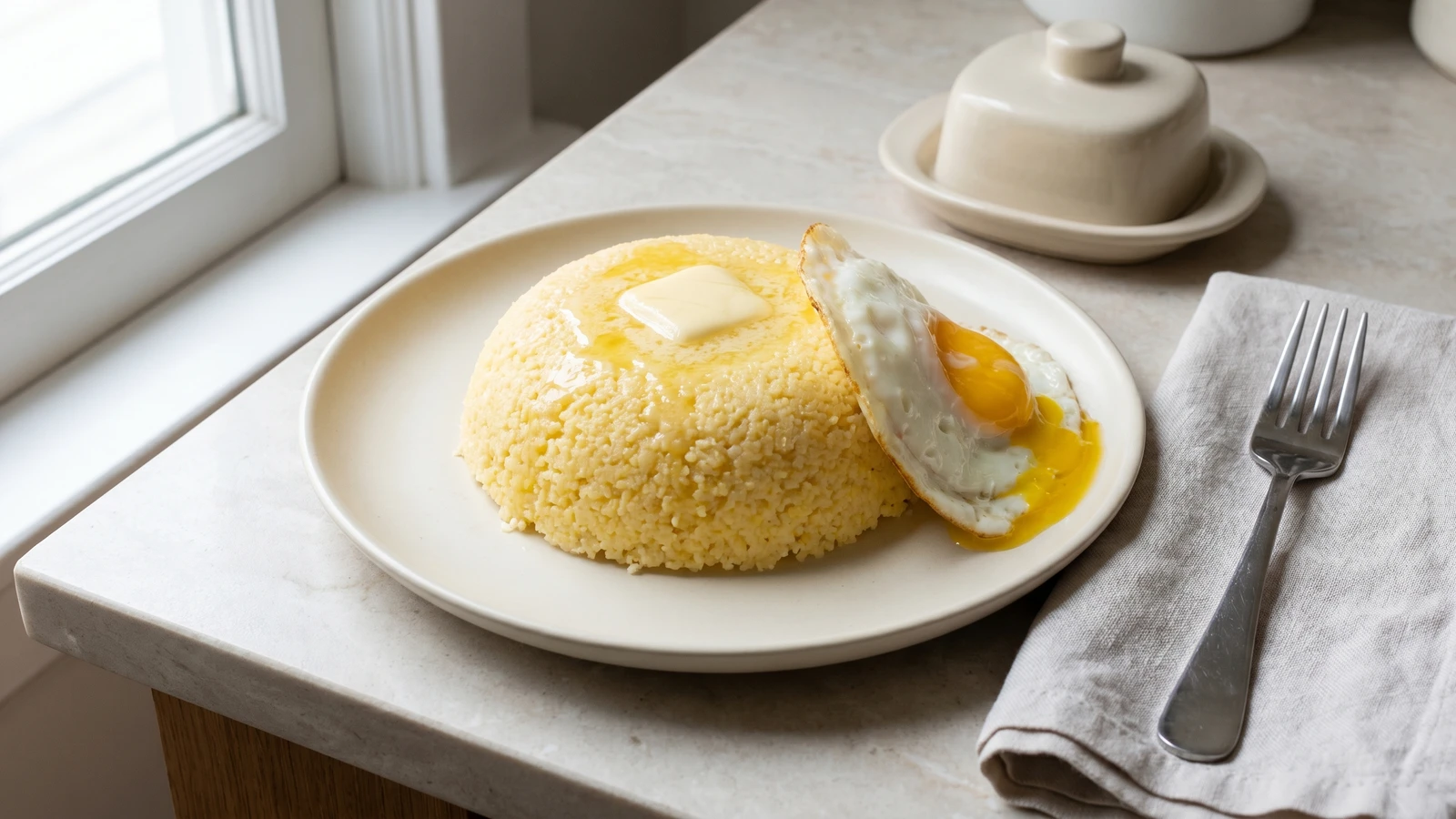
Eat it with butter melting into the pale yellow crumb and an egg on top, and you understand why this is comida de verdade for so many mornings in the Nordeste. It can be breakfast, a fast supper, or the starch on an everyday plate beside beans, greens, and whatever real food is happening in the pan. No packet pretending to be flavor. No drama. Just a working recipe for a working kitchen.
By the end, you should be able to press the cuscuz with a fork and see tender grains falling apart softly, not a brick, not sand. That's the point of receitas que funcionam: the food teaches you back.
Cuscuz nordestino is made from flocao de milho, a coarse pre-cooked corn flake, and is especially tied to daily breakfast and supper tables across Brazil's Northeast. Its roots sit in the long Atlantic history of couscous techniques brought from North Africa and reshaped in Brazil around local corn and cassava traditions. Regional versions vary by state and household, from plain buttered cuscuz to versions with milk, queijo coalho, carne de sol, or seafood, and the people who cook those daily traditions are the ones to listen to first.
Quantity
1 cup
Quantity
1/2 teaspoon
Quantity
1/2 cup, plus 2 tablespoons if needed
Quantity
2 cups
Quantity
2 tablespoons, plus more to serve if you like
Quantity
2 large
Quantity
1 teaspoon
Quantity
to taste
| Ingredient | Quantity |
|---|---|
| flocao de milho | 1 cup |
| fine salt | 1/2 teaspoon |
| room-temperature water | 1/2 cup, plus 2 tablespoons if needed |
| water for the cuscuzeira | 2 cups |
| butter | 2 tablespoons, plus more to serve if you like |
| eggs | 2 large |
| oil or butter for frying | 1 teaspoon |
| freshly ground black pepper (optional) | to taste |
Put the flocao and salt in a bowl and stir with your fingers so the salt spreads through the corn. Sprinkle in 1/2 cup water while rubbing the grains gently between your hands. Stop when the mixture feels evenly damp, like wet beach sand that clumps when you squeeze it and breaks apart when you poke it. This matters because dry flocao cooks into loose grit, and soaked-on-the-outside flocao gives you wet edges with a hard center.
Cover the bowl with a plate or clean towel and let the flocao rest for 10 minutes. After resting, fluff it with a fork or your fingers. The grains should look swollen and separate, not dusty and not soupy. Resting gives the water time to reach the middle of each grain, which is the difference between tender cuscuz and a sandy little disappointment.
Pour 2 cups water into the bottom of the cuscuzeira and bring it to a boil. Spoon the hydrated flocao into the top basket lightly, leveling it without pressing hard. Keep it airy. If you pack it down like cement, the heat can't move through the grains and the center stays heavy while the outside overcooks.
Set the basket over the boiling water, cover, and cook over medium heat for 10 to 12 minutes. The cuscuz is ready when it smells sweet and corny, looks set on top, and a fork slides in without hitting dry grains. The cuscuzeira steams instead of boils because the cuscuz needs gentle moisture from below, not water crashing through it and turning the whole thing into paste.
Turn the cuscuz out onto a plate or open it gently in the basket with a fork. Add the butter while it's still hot and let it melt into the crumb, then fluff again. You want tender yellow grains with a light sheen, not a greasy lump. Butter carries the corn flavor and softens the texture, but too much makes it heavy.
Warm 1 teaspoon oil or butter in a small nonstick or well-seasoned skillet over medium heat. Crack in the eggs and cook until the whites are set and the yolks are still soft, about 2 to 3 minutes, or longer if you like them firm. Salt them lightly. A soft yolk runs into the cuscuz like a sauce, which is why this simple plate feels complete without any industrial shortcut getting involved.
Divide the buttered cuscuz between two plates and put an egg on each portion. Finish with black pepper if you like. Eat it right away while the grains are tender and the butter still glistens. If you're making supper, put beans or greens beside it and call the pê-efe by its name: ordinary, Brazilian, and doing its job.
1 serving (about 200g)
Culinary guides, cultural storytelling, and the editorial depth that makes cooking meaningful.
Discover Culinary ExplorerChef Juliana
You don't need a blender trick or a sweet shop bowl. Thick unsweetened açaí, crunchy farinha de tapioca, and the discipline to read the label solve this Belém spoon plate.

Chef Juliana
You don't need a shop to make a thick açaí bowl. You need real frozen pulp, a ripe banana, and the discipline to stop blending before it becomes juice.

Chef Juliana
You don't need boxed cereal to get breakfast on the table. Fine cassava farinha, milk, salt, and steady stirring turn into a warm Amazonian bowl that actually carries you.

Chef Juliana
If you think two ingredients can't feed you, anota aí. Good farinha d'água, cold water, and salt make a bowl that's plain, Brazilian, and smarter than the packet.