
Chef Dimitra
Froutalia Androu (Φρουτάλια Άνδρου)
Andros's froutalia is a thick pan omelet of potatoes, village sausage, and herbs, cooked slowly so the potatoes soften first and the eggs set around them.
A cooking platform built around craft, culture, and the stories behind what we eat.
Created by
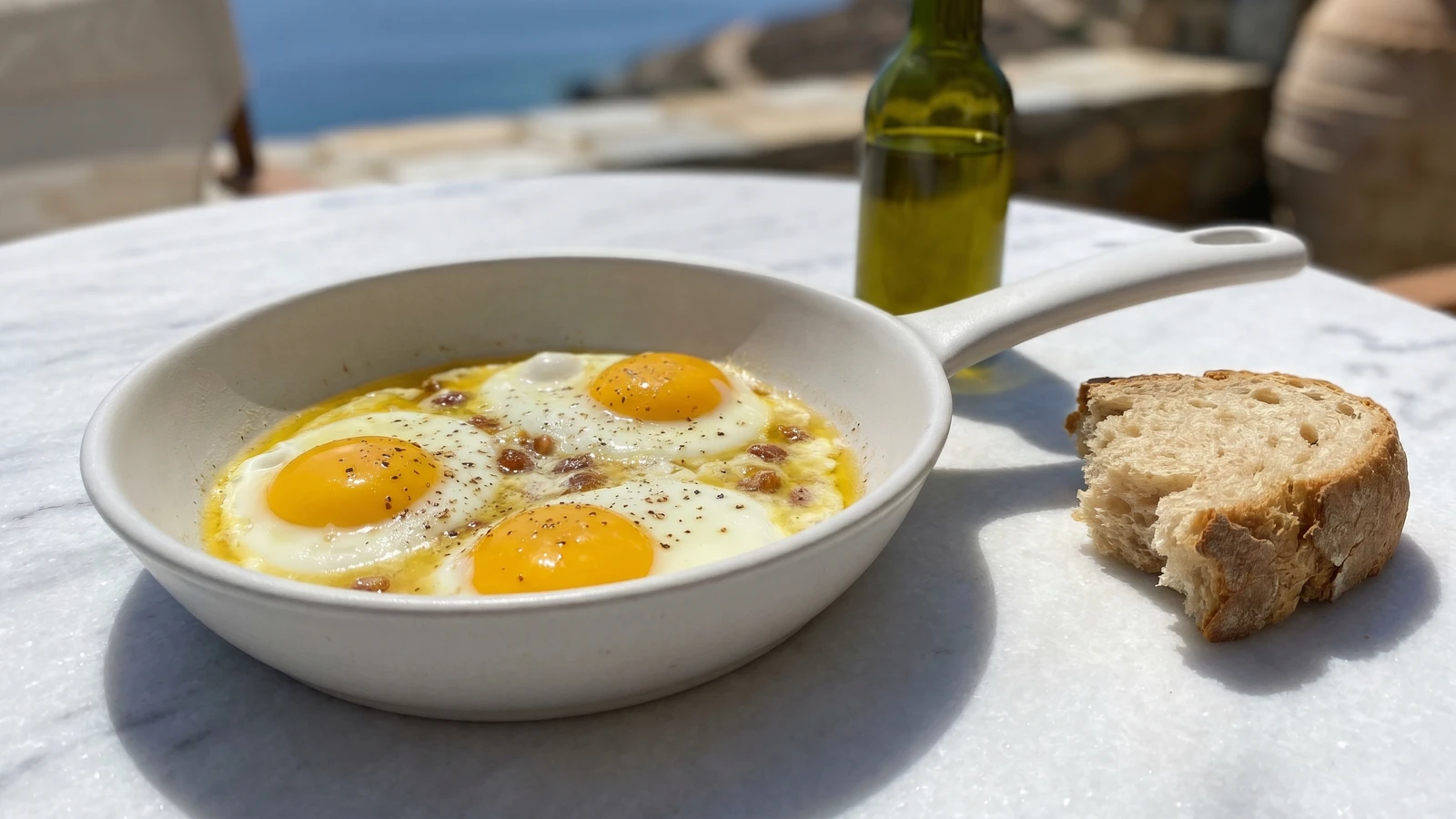
In Crete, eggs meet staka, sheep's-milk cream warmed until its butter separates, making a breakfast so rich it needs only bread and restraint.
Staka me avga belongs to Crete, especially the western side of the island, where sheep's-milk cream is saved, salted, and cooked until it gives up its butter. The eggs don't fry in olive oil here. They settle into staka, which turns golden and nutty around them.
The one method is low heat. Staka is full of milk solids, and they reward patience but punish hurry. Warm it gently until it loosens and shines, then add the eggs and let the whites set in that rich yellow fat. If the pan spits and browns hard, you've gone too far.
I don't dress this up. Bread, eggs, staka, and the morning. Λίγα και καλά, a few things, and good ones. A Cretan cook would know the smell by heart; the rest of us get the number, the flame, and the permission to stop before we ruin it.
Staka is a western Cretan dairy preparation made from the cream skimmed from sheep's or goat's milk, cooked with a little flour and salt until its butter separates. The clarified yellow fat, stakovoutyro, is used in pilafi and wedding rice, while the thick creamy part is eaten with bread, pasta, or eggs. Staka me avga is a farmhouse breakfast of abundance, tied to shepherding households rather than the tourist table.
Quantity
120g
Quantity
4
Quantity
1g
or to taste
Quantity
a little
Quantity
to serve
| Ingredient | Quantity |
|---|---|
| Cretan staka (στάκα) | 120g |
| large eggs | 4 |
| fine sea saltor to taste | 1g |
| freshly ground black pepper (optional) | a little |
| country bread | to serve |
Set a small heavy frying pan over low heat and add the staka. Let it melt slowly, stirring once or twice, until yellow butter begins to show at the edges and the cream loosens. Don't rush it. High heat catches the milk solids and turns Crete's richest spoonful bitter.
Crack the eggs directly into the pan, leaving the yolks whole. Spoon a little of the hot staka over the whites so they set without hard frying. Salt lightly, because good staka already carries its own savor.
Keep the heat low and cook for 4 to 5 minutes, until the whites are set and the yolks are still soft. The staka should look glossy and golden around the eggs, with small nutty flecks where the milk solids have browned just enough.
Finish with black pepper if you like, then bring the pan to the table with bread. This is not a dish for waiting. Tear the bread, break the yolks, and chase the staka while it is still warm and loose.
1 serving (about 215g)
Culinary guides, cultural storytelling, and the editorial depth that makes cooking meaningful.
Discover Culinary ExplorerChef Dimitra
Andros's froutalia is a thick pan omelet of potatoes, village sausage, and herbs, cooked slowly so the potatoes soften first and the eggs set around them.

Chef Dimitra
Ionian and Cretan strapatsada is the summer egg pan: ripe tomato cooked down until sweet, feta folded in at the end, and eggs kept soft enough for bread.

Chef Dimitra
Mani's tomato eggs are made hearty with rendered syglino, sharp sfela, and ripe tomato cooked down until the oil shows at the edge of the pan.

Chef Dimitra
Menemeni is the Politiki tomato-and-egg scramble: onion, green pepper, ripe tomato, and eggs cooked soft enough to stay spoonable.