
Chef Lupita
Aguascalientes Beef Tongue Pozole (Pozole de Lengua)
Aguascalientes' Bajio pozole de lengua, built with cacahuazintle hominy, tender beef tongue, chile ancho and guajillo, with xoconostle brightness and table garnishes.
A cooking platform built around craft, culture, and the stories behind what we eat.
Created by
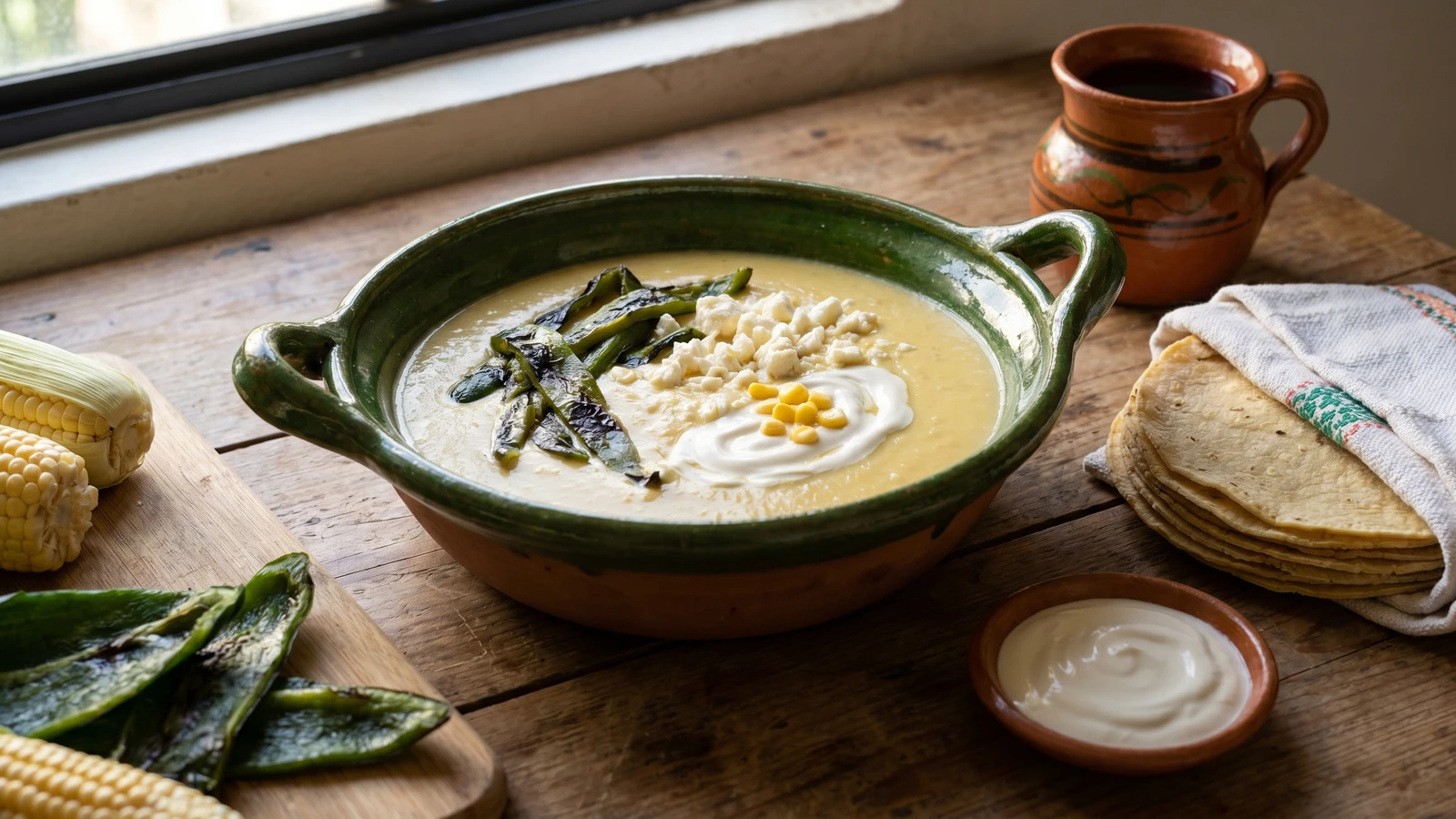
Puebla's cream of the milpa, where the season's sweetest elote tierno meets the smoky char of chile poblano. A soup that carries the whole logic of central Mexican cooking in one bowl.
This is a Poblano dish. It comes from the central highlands, from the same valleys where the chile poblano grows and where the milpa, the ancient triad of corn, beans, and squash, still organizes the rhythm of the agricultural year. Crema de elote con rajas is what cooks in Puebla and Tlaxcala make when the corn is at its sweetest and the poblanos are heavy on the vine. Late summer into early fall. Outside of that window, you can still make this soup, but you'll be working against the season instead of with it.
The two ingredients carry the whole dish. Elote tierno, young sweet corn cut from the cob the same day if you can manage it, and chile poblano roasted over open flame until the skin blisters black. Sweet against smoke. That contrast is the soup. Everything else, the onion, the garlic, the milk, the crema, exists to hold those two flavors in suspension. La manteca and the cob simmered into the milk give the cream its body. No flour. No cornstarch. Puebla doesn't need them.
My mother made a version of this from Jalisco that used queso instead of crema and skipped the rajas. Good in its own way. But the Poblano version, with the chile carrying the smoke and the crema softening the edges, is the one that taught me what this soup is supposed to do. I learned it from a senora in San Pedro Cholula who charred her poblanos over a gas burner in a tiny kitchen and told me, without looking up, that if I washed the skins off under the tap she would not finish the lesson. She was right. Cada estado, su propia cocina, and this soup belongs to the central highlands.
The chile poblano takes its name from the city of Puebla de los Angeles, founded by the Spanish in 1531, where the fresh green chile has been cultivated in the surrounding valleys for centuries and where it became the defining ingredient of the region's cuisine, anchoring chiles en nogada, chiles rellenos, and rajas dishes in their countless forms. Crema de elote belongs to the broader Mexican tradition of cremas vegetales, which emerged in the late 19th and early 20th centuries when French culinary technique met indigenous milpa ingredients in the kitchens of central Mexico's middle class, producing a category of pureed vegetable soups that used native corn, squash, and chiles in place of European leeks and potatoes. The pairing of sweet elote with smoky rajas is older than the cream format itself, having existed as a side dish and a taco filling long before anyone thought to blend it into a soup.
Quantity
6 ears
husks removed, kernels cut from the cob, cobs reserved
Quantity
4
Quantity
1 medium
half finely diced, half cut into thin half-moons
Quantity
3
peeled
Quantity
3 tablespoons
Quantity
4 cups
Quantity
2 cups
Quantity
1 cup
Quantity
2 sprigs
Quantity
1 1/2 teaspoons, plus more to taste
Quantity
1/2 teaspoon
Quantity
1/2 cup
crumbled
Quantity
for serving
Quantity
for serving
warmed
| Ingredient | Quantity |
|---|---|
| fresh sweet corn (elote tierno)husks removed, kernels cut from the cob, cobs reserved | 6 ears |
| fresh chiles poblanos | 4 |
| white onionhalf finely diced, half cut into thin half-moons | 1 medium |
| garlic clovespeeled | 3 |
| manteca de cerdo (pork lard) | 3 tablespoons |
| whole milk | 4 cups |
| water or light chicken broth | 2 cups |
| Mexican crema | 1 cup |
| fresh epazote | 2 sprigs |
| kosher salt | 1 1/2 teaspoons, plus more to taste |
| freshly ground black pepper | 1/2 teaspoon |
| queso fresco (optional)crumbled | 1/2 cup |
| additional Mexican crema (optional) | for serving |
| hand-pressed corn tortillas (optional)warmed | for serving |
Set the chiles poblanos directly over an open flame on the stovetop, or on a hot comal if you don't have gas. Turn them with tongs every minute or so. The skin should blister and char black in patches across the whole chile, not just on one side. This takes about 8 minutes per chile. Drop the charred chiles into a plastic bag or a covered bowl and let them sweat for 10 minutes. The trapped warmth loosens the skin.
Rub the charred skin off the poblanos with your fingers. Use a paper towel if you need to. Do not rinse them under water. Water washes the smoke right off the flesh and you've just thrown away the whole point of charring. Slit each chile open, remove the seeds and stem, and cut the flesh into strips about the width of your little finger. These are your rajas.
Cut the kernels off the cobs with a sharp knife, scraping the cobs afterward to release the milky liquid that clings to them. Reserve two of the bare cobs and snap them in half. In a heavy pot, melt 2 tablespoons of the manteca over medium heat. Add the finely diced half of the onion and one whole garlic clove. Cook until the onion turns translucent and sweet, about 5 minutes. Do not let it brown. You want the corn's sweetness clean, not toasted.
Add about three-quarters of the corn kernels to the pot, reserving the rest. Pour in the milk and the water, drop in the reserved cob halves, and add one sprig of epazote and a teaspoon of salt. Bring to a low simmer. Cook for 20 minutes, partially covered, stirring now and then. The cobs give body to the liquid the way nothing else will. The kernels soften and surrender their starch. This is how the cream gets its texture without flour.
Fish out the cob halves and the epazote sprig and discard them. Working in two batches, transfer the corn and liquid to a high-powered blender with the remaining two cloves of garlic. Blend on high for a full two minutes per batch. Two minutes. Not thirty seconds. You want the puree completely smooth and the corn skins broken down. Pass everything through a medium-mesh strainer back into the pot, pressing on the solids with a wooden spoon. The hulls left behind go in the compost. The cream that comes through is silky.
While the soup base rests, heat the remaining tablespoon of manteca in a skillet over medium heat. Add the onion half-moons and cook until soft and translucent, about 4 minutes. Add the poblano rajas and a pinch of salt. Cook for another 5 minutes, stirring, until the chiles take on the onion's sweetness and the smoky aroma fills the kitchen. Reserve a handful of the prettiest rajas for garnish. The rest go into the soup.
Return the strained soup base to medium-low heat. Stir in the reserved whole corn kernels, the cooked rajas, the cup of crema, the second sprig of epazote, the remaining salt, and the black pepper. Warm through gently for 5 to 8 minutes. Do not boil after the crema goes in. Boiling breaks the crema and you'll see fat separating across the surface. Taste. The soup should be sweet from the corn, smoky from the chile, herbal from the epazote, with the crema rounding it all out. Adjust salt to your taste.
Ladle into clay bowls. Top each serving with a small spoonful of crema, a scatter of crumbled queso fresco, and a few of the reserved rajas laid across the top. Serve with warm corn tortillas. This is a soup that belongs on a table with the cazuela in the center and people reaching for seconds. Recetas probadas y garantizadas.
1 serving (about 400g)
Culinary guides, cultural storytelling, and the editorial depth that makes cooking meaningful.
Discover Culinary ExplorerChef Lupita
Aguascalientes' Bajio pozole de lengua, built with cacahuazintle hominy, tender beef tongue, chile ancho and guajillo, with xoconostle brightness and table garnishes.

Chef Lupita
Veracruz's Gulf coast rice from Alvarado, built with seafood stock, tomato, chile chipotle, epazote, shrimp, fish, jaiba, and pulpo, served loose and brothy in a clay cazuela.

Chef Lupita
Costa Chica's wet salt-beef stew, built from chile costeño, guajillo, tomato, manteca, yuca, plantain, and masa dumplings, the ranching pot of Cuajinicuilapa and Pinotepa.

Chef Lupita
Michoacán's P'urhépecha atápakua is a masa-thickened sauce and stew at once, built with pork, chile guajillo, and hierbabuena added only at the end.