
Chef Lupita
Aguascalientes Beef Tongue Pozole (Pozole de Lengua)
Aguascalientes' Bajio pozole de lengua, built with cacahuazintle hominy, tender beef tongue, chile ancho and guajillo, with xoconostle brightness and table garnishes.
A cooking platform built around craft, culture, and the stories behind what we eat.
Created by
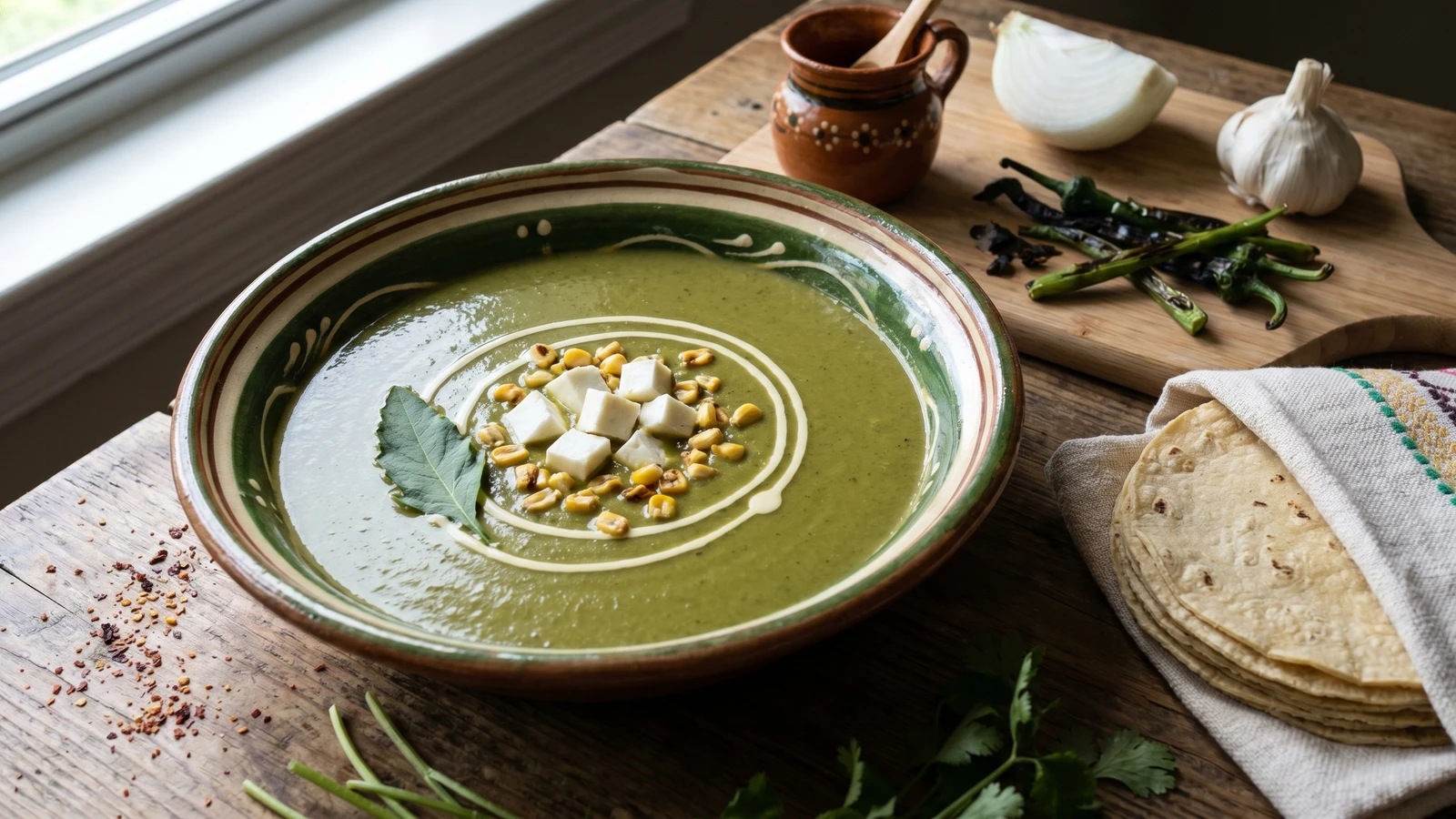
Puebla's velvet-green crema of roasted chile poblano, sweet corn, and crema mexicana, finished with cubes of queso panela that soften in the bowl without melting away.
This is from Puebla. Specifically from the highland kitchens that built their entire culinary identity around the chile poblano, the heart-shaped, deep-green chile that gives this soup its name, its color, and its reason to exist. There is no version of this soup that uses a different chile. Substitute and you have made something else.
The poblano has to be charred over open flame until the skin blisters black. Then sweated, peeled, seeded, and blended with sweated onion, garlic, a few leaves of epazote, and warm caldo de pollo. The puree gets fried in lard until the fat beads at the edge, the same principle that gives a mole or a salsa its depth. Crema mexicana goes in at the end, tempered and stirred over the lowest heat so it does not break. Finish with cubes of queso panela, which soften in the bowl without melting, and a scatter of sweet elote tierno. This is what poblano kitchens serve when they want to comfort someone.
My mother made crema de poblano on cold nights in Colonia Roma. She used the small blue blender that sat on the counter for thirty years and a clay cazuela that her own mother had brought from Jalisco. She would not let me near the chiles on the flame until I was twelve, and then she would not let me leave the stove until I had charred all six. She used to say a cook who is afraid of fire is not yet a cook. Saber cocinar es saber vivir.
If the poblanos at the mercado look pale, thin-walled, or shriveled, do not make this soup today. The poblano carries everything. Pregúntale a las señoras del mercado, they will tell you which week the chile is right.
The chile poblano takes its name directly from Puebla, where it has been cultivated since pre-Columbian times and where it remains the defining ingredient of dishes ranging from chiles en nogada to rajas con crema to this crema. Creamed soups in the European sense entered Mexican cooking through the convent kitchens of colonial Puebla in the 17th and 18th centuries, where Spanish nuns and indigenous cooks adapted the French and Spanish potage tradition by replacing the customary leeks and herbs with native chiles, corn, and squash blossom. The result, crema de poblano among them, sits in a category Mexican food historians call cocina conventual poblana, the convent cuisine of Puebla, the same tradition that produced mole poblano and chiles en nogada.
Quantity
6 large
Quantity
3 tablespoons
Quantity
1 medium
finely chopped
Quantity
3
finely chopped
Quantity
2 ears
kernels cut from the cob, reserve 1/2 cup for garnish
Quantity
5 cups
warm
Quantity
1 1/2 cups
at room temperature
Quantity
1/2 cup
Quantity
2 sprigs
leaves only
Quantity
1 1/2 teaspoons, plus more to taste
Quantity
to taste
Quantity
6 ounces
cut into 1/2-inch cubes
Quantity
1/2 cup
lightly toasted on a comal
Quantity
for drizzling
Quantity
for serving
warmed
| Ingredient | Quantity |
|---|---|
| fresh chile poblano | 6 large |
| manteca de cerdo (pork lard) | 3 tablespoons |
| white onionfinely chopped | 1 medium |
| garlic clovesfinely chopped | 3 |
| fresh elote tierno (tender white corn)kernels cut from the cob, reserve 1/2 cup for garnish | 2 ears |
| caldo de pollo (homemade chicken stock)warm | 5 cups |
| crema mexicanaat room temperature | 1 1/2 cups |
| whole milk | 1/2 cup |
| fresh epazoteleaves only | 2 sprigs |
| kosher salt | 1 1/2 teaspoons, plus more to taste |
| freshly ground black pepper | to taste |
| queso panela (optional)cut into 1/2-inch cubes | 6 ounces |
| reserved elote kernels for garnish (optional)lightly toasted on a comal | 1/2 cup |
| crema mexicana (for serving) (optional) | for drizzling |
| hand-pressed corn tortillas (optional)warmed | for serving |
Set the poblanos directly over the open flame of a gas burner, or under a hot broiler if you do not have gas. Turn them with tongs as the skin blisters and blackens, every couple of minutes, until every side is charred. You want the skin to look ruined. That is the point. The flesh underneath softens at the same time and takes on the smoky note that defines this soup.
Drop the blackened chiles into a plastic bag or a bowl covered tightly with a plate. Let them sit for 15 minutes. The trapped warmth loosens the skin from the flesh. After that, rub the skin off with your fingers under a thin stream of cold water, then split each chile open and pull out the stem, seeds, and the white veins inside. Do not be precious. A few flecks of char left behind are flavor, not failure.
In a heavy 4-quart cazuela or Dutch oven, melt the manteca over medium heat. Add the chopped onion with a pinch of salt and cook for 6 to 8 minutes, stirring often, until the onion turns translucent and sweet but takes no color. Add the garlic and cook one minute more. La manteca es el sabor. This base is what gives the crema its body before the chile and the cream do their work.
Transfer the cooked onion and garlic to a blender. Add the peeled poblanos, 1 1/2 cups of the warm caldo de pollo, the epazote leaves, and the salt. Blend on high for a full minute, until the mixture is completely smooth and a vivid, even green. The color should make you stop. That is the poblano showing you what it is.
Return the same cazuela to medium heat. Pour the green puree back in. It will sputter at first. Cook for 8 to 10 minutes, stirring with a wooden spoon, until the puree darkens slightly, thickens, and the fat starts to bead at the edges. This is the same principle as frying a salsa or a mole. Raw blended chile tastes flat. Fried blended chile tastes like a finished sauce.
Stir in the corn kernels (holding back 1/2 cup for garnish) and the remaining 3 1/2 cups of warm caldo de pollo. Bring to a gentle simmer and cook for 10 minutes. The corn should just turn tender and sweet. The broth should taste of chile, corn, and stock in equal measure. Adjust salt now. The crema you add at the end will round it but it will also dull it slightly, so the broth should taste a touch assertive at this stage.
Lower the heat to the gentlest simmer. In a small bowl, whisk the crema mexicana with the milk until smooth. Ladle about 1/2 cup of the hot soup into the crema, whisking constantly. This warms the crema without breaking it. Pour the tempered crema back into the cazuela in a slow stream, stirring as you pour. Cook for 3 to 4 more minutes, never letting the soup come back to a boil. Boiling now will split the cream. Taste, adjust salt and pepper, and pull the cazuela off the heat.
Ladle the crema into warm clay bowls. Top each with cubes of queso panela, a small pile of the reserved toasted corn kernels, and a thin drizzle of crema mexicana. Send warm corn tortillas to the table in a woven servilleta. The panela will soften but not melt. That is the texture you want. Así se hace y punto.
1 serving (about 490g)
Culinary guides, cultural storytelling, and the editorial depth that makes cooking meaningful.
Discover Culinary ExplorerChef Lupita
Aguascalientes' Bajio pozole de lengua, built with cacahuazintle hominy, tender beef tongue, chile ancho and guajillo, with xoconostle brightness and table garnishes.

Chef Lupita
Veracruz's Gulf coast rice from Alvarado, built with seafood stock, tomato, chile chipotle, epazote, shrimp, fish, jaiba, and pulpo, served loose and brothy in a clay cazuela.

Chef Lupita
Costa Chica's wet salt-beef stew, built from chile costeño, guajillo, tomato, manteca, yuca, plantain, and masa dumplings, the ranching pot of Cuajinicuilapa and Pinotepa.

Chef Lupita
Michoacán's P'urhépecha atápakua is a masa-thickened sauce and stew at once, built with pork, chile guajillo, and hierbabuena added only at the end.