
Chef Lupita
Aguascalientes Beef Tongue Pozole (Pozole de Lengua)
Aguascalientes' Bajio pozole de lengua, built with cacahuazintle hominy, tender beef tongue, chile ancho and guajillo, with xoconostle brightness and table garnishes.
A cooking platform built around craft, culture, and the stories behind what we eat.
Created by
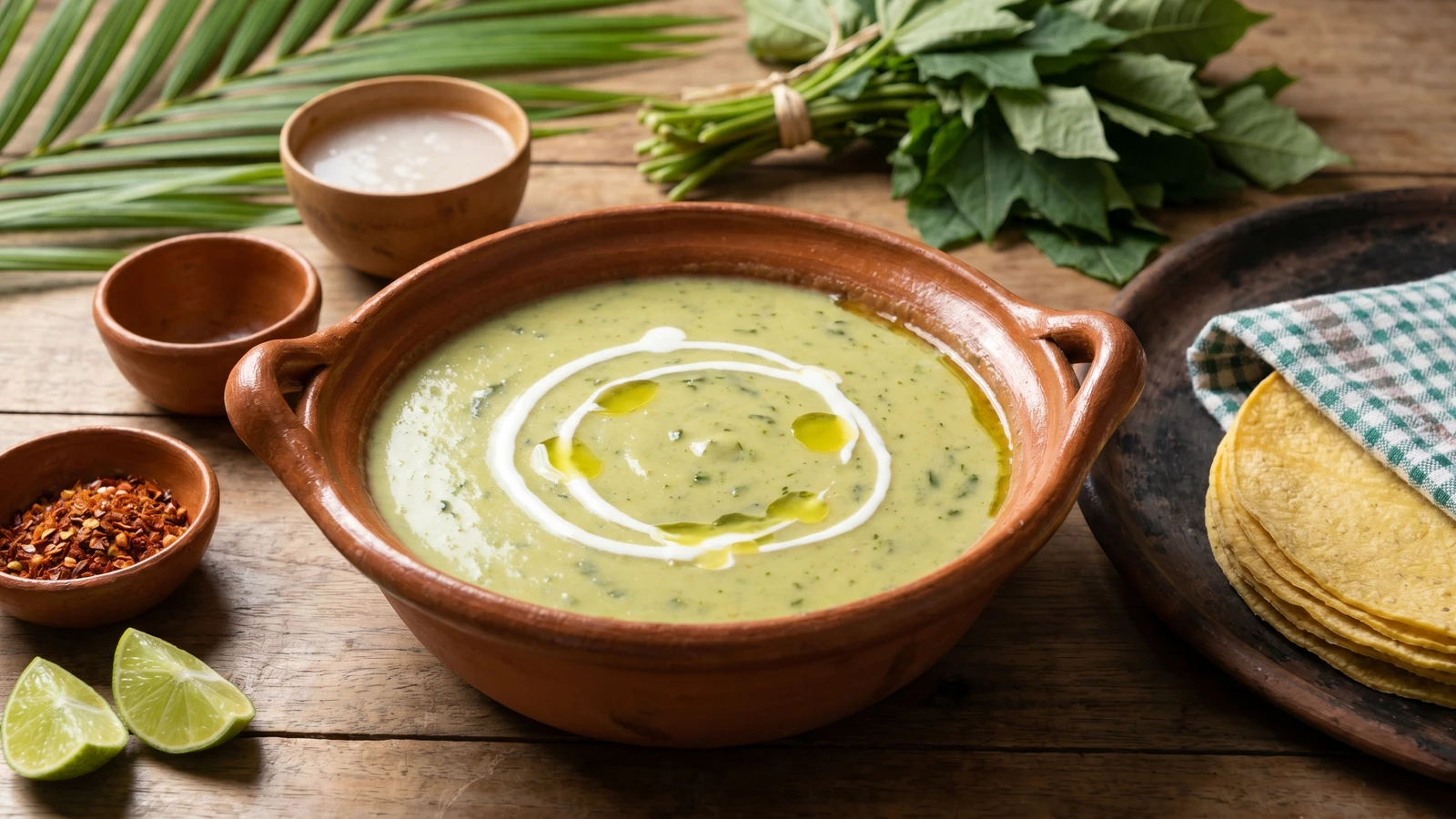
Tabasco's lowland chaya soup, built on cooked Maya spinach, white onion, milk, and manteca de cerdo, finished with lime and chile amashito only if the table asks for it.
Tabasco, especially the Chontal lowlands around Nacajuca, Jalpa de Méndez, and the humid kitchens near the Grijalva and Usumacinta rivers, knows chaya as daily food, not decoration. This is a green soup from that world: soft, herbal, practical, and made for a weeknight when the market sold good bunches of chaya tied with palma.
Chaya is not spinach. It is chaya, a Maya leaf with its own body and warning. You cook it before you blend it. Never raw. Never tossed into a smoothie by someone who doesn't know the plant. The leaves must darken, soften, and lose their raw edge before they go near the blender. That is not fear, that is knowledge.
The soup is not built to be chile-forward. The Maya south leans hard on aromatic herbs and leaves: chaya, chipilín, momo, hierba santa. Here the fat is manteca de cerdo, the base is onion and garlic, and the body comes from milk and a little masa, not flour. If someone wants heat, put chile amashito on the table with lime and salt. Let the soup stay what it is.
I learned this kind of cooking from women who could feed a house from one bunch of leaves, a cup of milk, and a stack of tortillas. La cocina no es decoración, es trabajo. Cada estado, su propia cocina.
Chaya, Cnidoscolus aconitifolius, is a pre-Hispanic Maya leafy green cultivated across the Yucatán peninsula and the Gulf lowlands, including Tabasco, where it became part of everyday home cooking rather than ceremonial cuisine. Because raw chaya contains cyanogenic compounds, traditional cooks developed the habit of boiling or thoroughly wilting the leaves before grinding, mixing, or serving them. Tabasco's cream soups reflect a later domestic adaptation, combining older Maya greens with milk-based preparations that spread through Mexican home kitchens in the 19th and 20th centuries.
Quantity
2 packed cups
stems removed and rinsed well
Quantity
1 tablespoon
Quantity
1/2 medium
finely chopped
Quantity
2
finely chopped
Quantity
2 tablespoons
mixed with 3 tablespoons water
Quantity
3 cups
warm
Quantity
1 1/2 cups
Quantity
1/2 cup
Quantity
1 teaspoon, plus more to taste
Quantity
1/4 teaspoon
Quantity
for serving
Quantity
for serving
lightly crushed with salt
Quantity
for serving
| Ingredient | Quantity |
|---|---|
| fresh chaya leavesstems removed and rinsed well | 2 packed cups |
| manteca de cerdo | 1 tablespoon |
| white onionfinely chopped | 1/2 medium |
| garlic clovesfinely chopped | 2 |
| fresh masa or masa harinamixed with 3 tablespoons water | 2 tablespoons |
| chicken broth or vegetable brothwarm | 3 cups |
| whole milk | 1 1/2 cups |
| Mexican crema | 1/2 cup |
| kosher salt | 1 teaspoon, plus more to taste |
| freshly ground black pepper | 1/4 teaspoon |
| lime wedges (optional) | for serving |
| fresh chile amashito (optional)lightly crushed with salt | for serving |
| warm corn tortillas (optional) | for serving |
Strip the chaya leaves from the tough stems and rinse the leaves in two changes of water. Look carefully. Market chaya carries dust, small grit, and sometimes a stubborn little stem hiding under the leaf. Use only the leaves and tender tips.
Bring a medium pot of water to a boil in stainless steel or enamelware. Add the chaya and cook for 10 minutes, until the leaves turn dark green and soften completely. Drain well. Do not use raw chaya. Do not cook it in aluminum. Pregúntale a las señoras del mercado, they will tell you the same thing.
In a heavy saucepan or small clay cazuela, melt the manteca de cerdo over medium heat. Add the onion and cook for 4 to 5 minutes, until it turns glossy and sweet but not brown. Add the garlic and cook for 30 seconds. The smell should be soft, not sharp. Burned garlic will bully the chaya.
Put the cooked chaya, onion, garlic, masa mixture, and 1 cup of the warm broth into a blender. Blend until very smooth. The masa gives the soup body the way a Tabasco cook would understand, from corn, not from wheat flour trying to act important.
Pour the green puree back into the saucepan. Add the remaining broth, salt, and black pepper. Simmer over medium-low heat for 8 minutes, stirring often, until the soup thickens lightly and the raw taste of masa disappears. Keep it gentle. This soup should stay green and clean, not turn dull from punishment.
Lower the heat. Stir in the milk and cook for 5 minutes, without boiling. Whisk in the Mexican crema at the end until the surface looks smooth and lightly glossy. Taste for salt. The flavor should be herbal, rounded, and faintly sweet from the onion.
Ladle into warm bowls. Serve with lime wedges, a small dish of crushed chile amashito with salt, and warm corn tortillas. Squeeze the lime over the bowl at the table. The chile is there if you want it. The chaya is the point.
1 serving (about 300g)
Culinary guides, cultural storytelling, and the editorial depth that makes cooking meaningful.
Discover Culinary ExplorerChef Lupita
Aguascalientes' Bajio pozole de lengua, built with cacahuazintle hominy, tender beef tongue, chile ancho and guajillo, with xoconostle brightness and table garnishes.

Chef Lupita
Veracruz's Gulf coast rice from Alvarado, built with seafood stock, tomato, chile chipotle, epazote, shrimp, fish, jaiba, and pulpo, served loose and brothy in a clay cazuela.

Chef Lupita
Costa Chica's wet salt-beef stew, built from chile costeño, guajillo, tomato, manteca, yuca, plantain, and masa dumplings, the ranching pot of Cuajinicuilapa and Pinotepa.

Chef Lupita
Michoacán's P'urhépecha atápakua is a masa-thickened sauce and stew at once, built with pork, chile guajillo, and hierbabuena added only at the end.